



Texas' Fort Bend opens new LAN-designed public transit facility
The $21 million facility includes administrative, operations, maintenance, fuel depot, and bus washing functions.

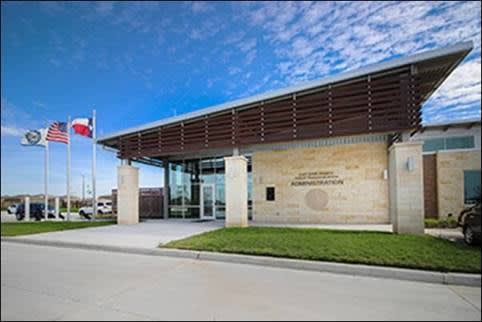
Engineering firm Lockwood, Andrews, & Newnam, Inc. provided planning, engineering, and design services for the new center.
LAN
Engineering firm Lockwood, Andrews, & Newnam, Inc. provided planning, engineering, and design services for the new center.
LAN
Texas’ Fort Bend County cut the ribbon on its new public transportation facility.
The $21 million facility will serve as a one-stop shop for Fort Bend County’s transportation department, including its administrative, operations, maintenance, fuel depot, and bus washing functions. The facility will also accommodate the county’s existing fleet of buses as well as future additions. It includes 18,600 square feet of office space, 28,400 square feet of maintenance bays, covered bus parking, a 7,100-square-foot fuel and washing station, a break area, relaxation lounge, and kitchen spaces.
Fort Bend County is one of the fastest growing counties in Texas and the nation. Its rapid population and employment growth have increased traffic congestion considerably. To address this growth, in January 2011, the Fort Bend County completed a long-range transit plan. The plan includes several proposals to improve its existing bus and van services and expand its system for the next 25 years. The new transportation facility is a significant component of this plan.
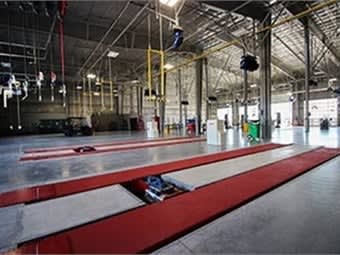
The facility will also accommodate the county’s existing fleet of buses as well as future additions.
LAN
In conjunction with a service provider, the county maintains a fleet of buses, 60 and growing, to serve the needs of the residents. Bus operations, including dispatching and maintenance, are provided by a private contractor while county staff provide reservation, scheduling, and administrative activities. Over the past several years, the county has performed these functions from four different facilities in Sugar Land. The new facility will allow the county to combine its transportation functions into a single location for improved efficiency and service.
Engineering firm Lockwood, Andrews, & Newnam Inc. (LAN) provided planning, engineering, and design services for the new center while SpawGlass served as the contractor. Other firms involved in the project include RdlR Architects as the architect, Huitt Zollars as construction manager, Asakura Robinson as the landscape architect, and HDR | Maintenance Design Group for specialty equipment and systems. The Federal Transit Administration and Fort Bend County provided the funding for the $21 million project.
More Management
People Movement: Dan Dipert Coaches Adds Third-Generation Leader, Keolis Names New Valley Metro VP/GM, and More
In this edition, we also cover recent appointments and announcements at the Wabtec, SilverRide, HNTB, and more, showcasing the individuals helping to shape the future of transportation.
Read More →
METRO Opens Submissions for 2026 Motorcoach Awards
Nominations are now being accepted for METRO Magazine’s Operator of the Year and Innovative Operator of the Year awards.
Read More →
New York MTA Advances Final Contract for Second Avenue Subway Expansion
Contract Four is the largest in the Second Avenue Subway Phase 2 project and includes construction of station infrastructure, tracks, and signals for the subway expansion, MTA officials said. Work on Contract Four will begin in 2027.
Read More →

Transit Agencies Highlight Safety Gains at National Summit
Leaders from 15 major transit systems shared crime-reduction results and safety initiatives while discussing the role of continued federal support.
Read More →
NITA Names New Leadership, Expands Reduced-Fare Program at First Board Meeting
The new regional transit authority appointed its first board chair and interim executive director while extending reduced fares across CTA, Metra, and Pace for eligible riders.
Read More →
Beyond the Checklist: A Structured Approach to Transit Maintenance
Reliability-Centered Maintenance helps transit agencies move beyond routine checklists to focus limited resources on the assets and failures that have the greatest impact on safety, reliability, and service.
Read More →
APTA 2026 Nominating Committee Selects Leadership Slate, Names Chair and Vice Chair Nominees
Leadership changes will help shape the association’s priorities and its representation of the transportation industry during the 2026–2027 term.
Read More →
DART Launches Major Security, Fare Enforcement Initiative
The 90-day demonstration will deploy coordinated security teams at five light rail stations while testing controlled access and gathering data to guide future investments.
Read More →
Advancing Fare Collection Through Technology and Innovation
Learn about delivering 1300 gates at 91 stations while managing fare evasion. Explore the large scale deployment, solution customization and real-world results that affect the region. Prepare for deployment in your region now.
Read More →
Game Day in Motion: Moving Millions During the 2026 World Cup
Between packed transit stations and team motorcoaches, see how agencies and operators across North America tackled the transportation demands of the 2026 FIFA World Cup.
Read More →