



2013 APTA Award Profile: GO Transit focuses on customer needs
GO Transit launched the innovative “Service Guarantee” program in May 2012, which offers customers refunds if their train is more than 15 minutes late, except when the delays are caused by extreme weather, police investigations, accidents and medical emergencies.

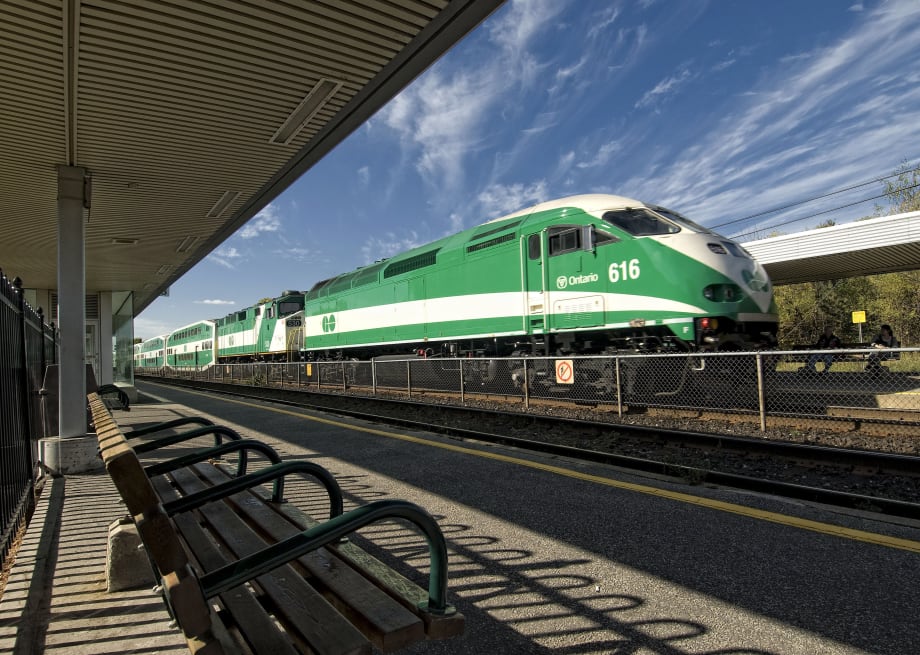
Gary McNeil, president for Toronto’s GO Transit wants to be clear that his agency being named APTA’s “Outstanding Public Transit System,” carrying more than 20 million passengers per year, doesn’t reflect a year of great work but rather the culmination of a long journey.
“It is not like all of a sudden in one year we did all these great things, it’s actually building on a long period of success,” he says. “This award is all about five to 10 years of slow and gradual improvement to finally hit that pinnacle.”
An important catalyst to that long trek to success has been GO’s efforts to improve its system by listening to what their customers want through everything from surveys to panels to the monitoring of years of complaints that have come into their call centers.
“We are in the business to help people and get them to where they want to go, so we listen to our customers carefully,” says McNeil. “Our customers responded to us that on-time performance was important to them, so we put a big focus on that by working with our partners to improve.”
By working with the freight operators GO shares tracks with on its commuter rail system as well as Bombardier, which maintains the agency’s rolling stock and provides train crews, the agency was able to grow its commuter rail system’s on-time performance from 87% to 95% over a three-year period.
“It is really is about responding to what our customers’ needs are as opposed to what the transit agency itself would like to do,” says McNeil,
To put its money where its mouth is, so to speak, GO launched the innovative “Service Guarantee” program in May 2012, which offers customers refunds if their train is more than 15 minutes late, except when the delays are caused by extreme weather, police investigations, accidents and medical emergencies.
“If a person is on a qualified trip — and through our smart card system we can verify whether they were on that trip by the travel time showing on the card — we can actually put money right back onto their smart card,” McNeil explains. “There are transit agencies in North America that have a fare guarantee, but as far as we know, we are the only agency in North America that does it electronically right back onto a smart card.”
Rather than take advantage of the program, McNeil says GO’s customers see the agency is serious about meeting its intended goals and communicative when it does not, and so they tend to give the agency a “bit of slack.”
“They see that GO is trying, and therefore, they don’t necessarily always ask for their money back,” he explains.
With McNeil set to retire at the end of the year, he says winning this prestigious award now is “icing on the cake.” He also adds that over the 15 years he’s been at GO, he has seen public transit’s stature grow.
“Public transit used to be a backburner issue, but it has really increased its prominence. People see it creates jobs, and at the same time, encourages the development of offices, housing and all the other aspects that make for a positive urban environment,” he says. “I think we will look back at this first 10 to 20 years of the 21st century as the Golden Age for public transit.”
More Bus

New York MTA Plans Largest Bus Fleet Upgrade in More Than a Decade
The agency is seeking manufacturers for 650 new CNG buses to replace aging vehicles, improve reliability, and advance its broader fleet modernization strategy.
Read More →
Building a Flexible Path to Transit Electrification
John Hroncich discusses BAE Systems’ modular and scalable approach, lessons learned from decades of real-world operations, and how agencies can identify electrification strategies that fit their fleets.
Read More →
Bus Tech Talk: Keeping Transit Technicians Ahead of the Technology Curve
LA Metro’s Obed Mejia discusses technician training, evolving maintenance technology, fleet replacement, and strategies for getting the most out of today’s transit fleets.
Read More →
Biz Briefs: RIPTA Unveils New Frontrunners, Clevland RTA Adds New Siemens, and More
In METRO's latest installment, we take a look at recent news from Siemens, Prevost, Dodge, and more partnerships making headlines across the transportation sector.
Read More →
People Movement: Holly Arnold Joins Transdev and More
In this edition, we also cover recent appointments and announcements at Pace, CamTran, MCI, and more, showcasing the individuals helping to shape the future of transportation.
Read More →
The High Cost of Transit Buses: Industry Leaders Look to Procurement Reform
Transit leaders and policymakers examine how standardized bus designs, streamlined procurement, and predictable funding could help agencies stretch budgets and deliver better service.
Read More →
The Business Voice Behind Public Transportation
As chair of APTA’s Business Members Board of Governors, Ray Melleady explains how more than 850 business members are partnering with transit agencies to advance funding, innovation, and industry-wide collaboration.
Read More →
From Surviving to Thriving: Building Stronger Transportation Organizations
Bus Business Consultants founder Brian Dickson shares lessons on leadership, organizational health, and creating options for long-term success in a changing transportation industry.
Read More →
Finding the ‘Happy Medium’: Optimizing Maintenance Without Sacrificing Reliability
The key to maintenance optimization isn’t doing less work—it’s doing the right work at the right time on the right assets.
Read More →
LA Metro, City of West Hollywood, and Partners Advance Smarter Bus Lane Enforcement
The award-winning partnership combines AI-powered detection with human oversight to improve bus reliability, accessibility, and enforcement efficiency.
Read More →