



$4.8B WMATA Budget Maintains Service, Avoides Drastic Cuts
Last year, WMATA faced catastrophic cuts to service as it faced an unprecedented $750 million budget gap because of record inflation, more people working from home, and exhausting the last of the federal COVID relief funds for transit.

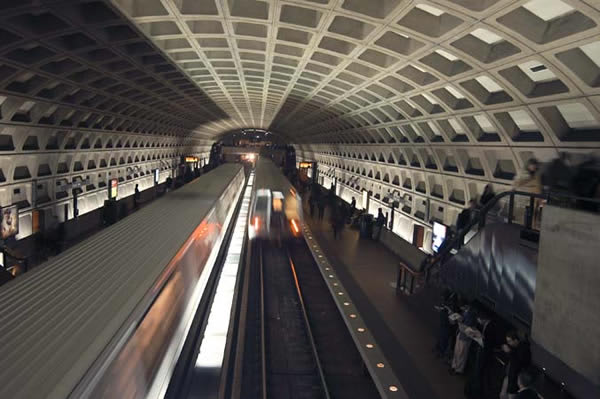
WMATA's plan allocates money for purchasing 256 new 8000-series railcars, investing in more electric buses, replacing aging bus garages, maintaining track and vehicles, and working toward a modern automated train control signaling system.
Photo: WMATA/Larry Levine
The Washington Metropolitan Area Transit Authority (WMATA) board approved a $4.8 billion capital and operating budget, which largely maintains bus and rail service levels when the new budget year begins on July 1.
With investments from around the region, the agency will be able to continue to provide great transit service customers are familiar with today.
WMATA Budget Avoids Catastrophic Cuts
Last year, WMATA faced catastrophic cuts to service as it faced an unprecedented $750 million budget gap because of record inflation, more people working from home, and exhausting the last of the federal COVID relief funds for transit.
The agency averted those cuts thanks to investments from regional partners and sacrifices from many different parties, including:
All three jurisdictions, D.C., Maryland, and Virginia each provided hundreds of millions of dollars of additional funding to help meet the fiscal year 2025 budget gap.
WMATA found $50 million in cost efficiencies.
Customers will see a 12.5% fare increase, which keeps fares in line with inflation.
“We appreciate the collaboration of our regional partners on this board-approved budget that will keep our community moving,” said WMATA GM/CEO Randy Clarke. “This region is a great place to live, work, and play, and our recent ridership reflects the vital role Metro plays in getting people where they need to go.”
New Budget Focus
WMATA will continue to deliver frequent all-day, all-week Metrorail service to drive ridership. Bus customers will see similar levels of service as this year. In the next fiscal year, the agency will begin to implement its Better Bus Network Redesign plan.
Bus fares and base rail fares will increase from $2 to $2.25. The maximum rail fare will increase from $6 to $6.75. Late-night and weekend fares will rise from a flat $2 to a variable charge between $2.25 and $2.50 based on distance.
MetroAccess fares will be capped at $4.50, up from $4. Pass products will also increase. WMATA is also equipping bicycle lockers with an hourly rental feature, with a rate of 5 cents an hour, up to $1 per day. Parking fees will not change.
Addressing Needs
The $2.3 billion capital budget invests in the system to modernize and provide safe, efficient, and reliable service for customers, employees, and the region by addressing a backlog of overdue state-of-good-repair needs and replacing aging equipment.
The plan allocates money for purchasing 256 new 8000-series railcars, investing in more electric buses, replacing aging bus garages, maintaining track and vehicles, and working toward a modern automated train control signaling system.
Next fiscal year, WMATA officials say they will face a similarly difficult budget without dedicated funding. The agency is the only major transit system in the country that does not have some form of predictable, sustainable funding.
More Management

METRO Opens Submissions for 2026 Motorcoach Awards
Nominations are now being accepted for METRO Magazine’s Operator of the Year and Innovative Operator of the Year awards.
Read More →
New York MTA Advances Final Contract for Second Avenue Subway Expansion
Contract Four is the largest in the Second Avenue Subway Phase 2 project and includes construction of station infrastructure, tracks, and signals for the subway expansion, MTA officials said. Work on Contract Four will begin in 2027.
Read More →
Transit Agencies Highlight Safety Gains at National Summit
Leaders from 15 major transit systems shared crime-reduction results and safety initiatives while discussing the role of continued federal support.
Read More →

NITA Names New Leadership, Expands Reduced-Fare Program at First Board Meeting
The new regional transit authority appointed its first board chair and interim executive director while extending reduced fares across CTA, Metra, and Pace for eligible riders.
Read More →
Beyond the Checklist: A Structured Approach to Transit Maintenance
Reliability-Centered Maintenance helps transit agencies move beyond routine checklists to focus limited resources on the assets and failures that have the greatest impact on safety, reliability, and service.
Read More →
APTA 2026 Nominating Committee Selects Leadership Slate, Names Chair and Vice Chair Nominees
Leadership changes will help shape the association’s priorities and its representation of the transportation industry during the 2026–2027 term.
Read More →
DART Launches Major Security, Fare Enforcement Initiative
The 90-day demonstration will deploy coordinated security teams at five light rail stations while testing controlled access and gathering data to guide future investments.
Read More →
Advancing Fare Collection Through Technology and Innovation
Learn about delivering 1300 gates at 91 stations while managing fare evasion. Explore the large scale deployment, solution customization and real-world results that affect the region. Prepare for deployment in your region now.
Read More →
Game Day in Motion: Moving Millions During the 2026 World Cup
Between packed transit stations and team motorcoaches, see how agencies and operators across North America tackled the transportation demands of the 2026 FIFA World Cup.
Read More →
Surface Transportation Extension Averts Shutdown, Leaves Transit Funding Gap
The stopgap keeps federal transportation programs moving, but missing advance funding could complicate the transit and rail projects agencies are planning next.
Read More →