The reopening of Glenmont, Wheaton, Forest Glen, and Silver Spring marks the end of Red Line rehabilitation work that was completed while the Maryland Transit Administration built part of a new Purple Line mezzanine at Silver Spring.
The reopening of Glenmont, Wheaton, Forest Glen, and Silver Spring marks the end of Red Line rehabilitation work that was completed while the Maryland Transit Administration (MTA) built part of a new Purple Line mezzanine at Silver Spring.
Ad Loading...
MTA’s Purple Line Work Continues
Purple Line mezzanine work will continue on the platform at Silver Spring with scaffolding covering about one-third of the platform, but the WMATA station will be open for customers.
During the summer, Purple Line crews built columns that will support the walkway from the Purple Line station over the tracks to the WMATA Red Line platform.
Completed Construction Work
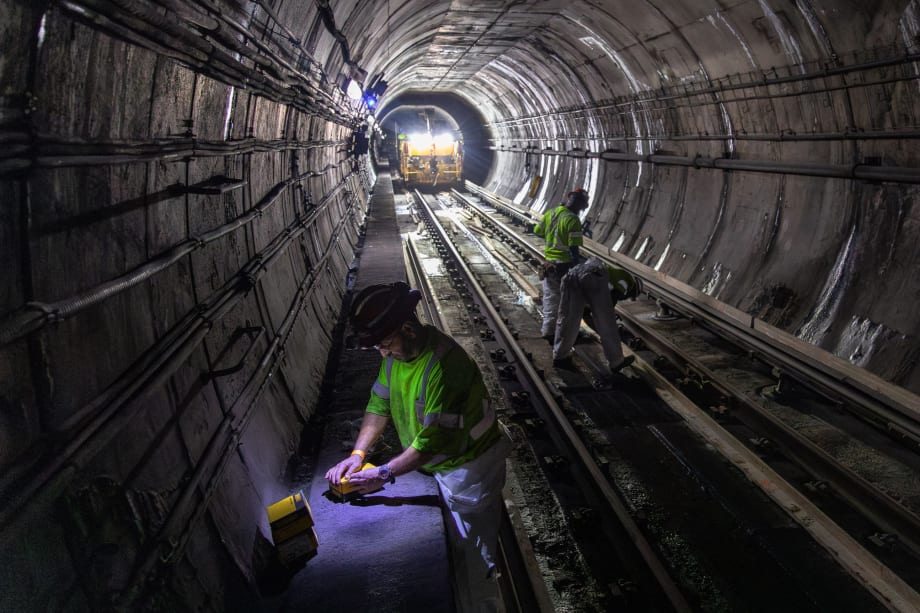
During the construction, WMATA crews:
Replaced 6,500 feet of rail.
Replaced 6,000 feet of grout pads, which improve ride quality.
Repaired 857 areas for leak mitigation.
Restored 1,350 square feet of concrete.
Installed 102,000 feet of fiber optic cable for communications.
Replaced 183 track signs.
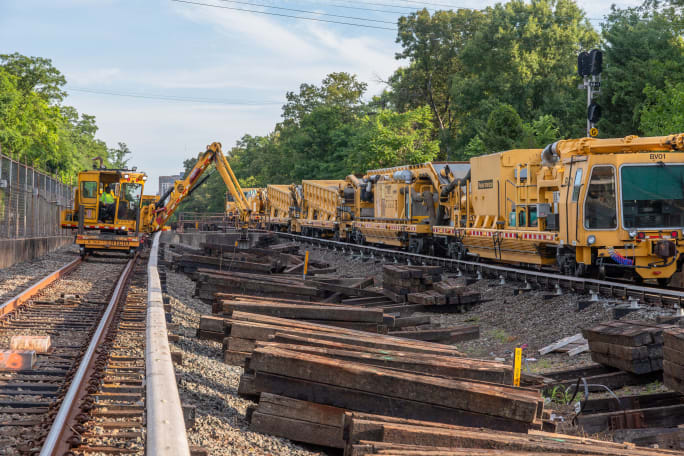
Replaced 2,500 crossties that support the rails.
Replaced 1,000 fasteners that hold the rail to the grout pads.
Replaced six switch machines.
Replaced 12 train control processers.
Replaced 650 insulators that insulate electricity around the third rail.
Repaired 72,000 square feet of tile joints.
Cleaned 40,000 feet of track bed.
Cleaned 8,500 feet of drains.
Repaired sidewalks.
Replaced 354 signs on mezzanines, platforms, and entrances.
Painted 12,700 square-feet of interior and exterior surfaces.
Restriped parking and bus loop traffic directional arrows and crosswalks.
Additional work included replacing automatic train control systems, installing traction power cables, replacing drain pumping stations, replacing the tunnel standpipe, and maintaining the elevators and escalators.
Ad Loading...
Crews replaced crossties along the Red Line during the summer construction.
Photo: WMATA
Additional Work
WMATA also rebuilt an interlocking switch area between Fort Totten and Takoma before that stretch of track reopened in late June.
Crews were able to complete the equivalent of eight months of weekend closures and disruptions into the summer construction period.
Later this year, WMATA will install new digital passenger information displays on platforms and station entrance digital screens at all five stations. Supply chain issues held up installation during the construction window.
Contract Four is the largest in the Second Avenue Subway Phase 2 project and includes construction of station infrastructure, tracks, and signals for the subway expansion, MTA officials said. Work on Contract Four will begin in 2027.
The Garden State Initiative analysis examines the roles of Amtrak infrastructure, fleet management, and agency operations while recommending a more performance-based approach to improving reliability.
Beginning in 2027, Stadler will provide on-site technical expertise, spare parts support, training, and obsolescence management to help extend the reliability and longevity of CapMetro’s GTW fleet.
In METRO's latest installment, we take a look at recent news from Complete Coach Works, Beep, FlixBus, and more partnerships making headlines across the transportation sector.
Pedestrian microsimulation is helping rail planners identify bottlenecks, test station designs, and prepare complex transit hubs for growing passenger volumes.
The privately developed project would offer a 15-minute trip between downtown and O’Hare’s Terminal 2, with trains operating every 15 minutes on a dedicated track. The service would use battery-electric trains and three existing freight rail rights-of-way.
The draft feasibility report identifies strategies to protect the coastal rail line for decades as the agency continues near-term stabilization and sand placement efforts.