



Alexandria DASH GM announces retirement
DASH announces the retirement of ATC CEO/GM Sandy Modell at the end of this year.



Alexandria Transit Co. (DASH) announces the retirement of ATC CEO/GM Sandy Modell, at the end of this year.
Modell began her transit career in college, driving a bus part-time in Harrisonburg, Virginia. Unbeknownst to her, that would be the start of a 38-year career in the transit industry. She moved up rapidly in that agency once she graduated college and did everything from dispatching to operations supervision, planning, scheduling, grant writing, and negotiating a contract with James Madison University to expand the bus system to better meet the needs of the students, while providing the students free transportation under a contract with the University. This contract remains in effect 32 years later.
Modell was hired by the City of Alexandria in 1984 to help with the start-up of its new local bus system, DASH. Modell assisted the new bus system with its service planning, scheduling, marketing, and coordination with the regional Metrobus system. She negotiated the first transfer arrangements between DASH and Metro. And, she garnered support of the system from the community, who at the time questioned the need for Alexandria to have its own local bus system.
Modell also convinced the ATC Board that DASH was the best name for the new system. Five years later, the Board hired Modell to take over the helm of the fledging bus system. At that time, Modell was
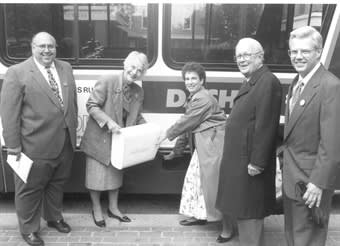
one of only three women transit GMs in the county. Within a short period of time, after taking over the leadership of the system, she created opportunities for the system to grow and expanded services beyond the original four routes, and saved money for the city by taking over a number of local Metrobus routes that could be operated more responsively and at a lower cost. She will be leaving behind a legacy of being the city’s transit expert, building significant employee engagement and high morale, a solid customer satisfaction rate, strong community and business partnerships, and a successful and award-winning transit system that has been recognized for its outstanding services and programs regionally, statewide, and across the country.
Modell also leaves the agency she led for 28 of those 38 years with a number of accomplishments during her tenure as DASH general manager including:
Record ridership – DASH ridership increased from just over a million riders to over four million riders during her tenure
Increased service miles by over one million miles annually, expanding DASH service throughout the City
Improved efficiencies and effectiveness, operating one of the highest operating ratios, passengers per hour, and miles between road calls in the region
Increased the size of the DASH fleet from 19 buses to 85 buses Introduced eco-friendly hybrid electric buses that now make up over 50% of the fleet
Took over the operation of the popular King Street Trolley with hybrid trolley buses, increasing ridership over 50 percent
Opened up new doors for recruiting and hiring women in the transit industry and promoting women from within the organization, receiving the Commission on Women’s’ Salute to Women Award for Business and Career Development
Helped to craft $35 million in VDOT capital projects funding, flexing road money to transit, for the new William B. Hurd Transit Facility, allowing DASH to be poised for growth
Served as project manager on the construction of the new DASH facility, which was the City’s first design build project, and received LEED Gold certification
Served as chair of the Virginia Transit Liability Pool (VTLP) and helped to create the statewide insurance pool for Virginia transit systems, which has operated successfully for the past 30 years
Created an employee and customer focused organization rated one of the top City services in Alexandria
More Bus

New York MTA Plans Largest Bus Fleet Upgrade in More Than a Decade
The agency is seeking manufacturers for 650 new CNG buses to replace aging vehicles, improve reliability, and advance its broader fleet modernization strategy.
Read More →
Building a Flexible Path to Transit Electrification
John Hroncich discusses BAE Systems’ modular and scalable approach, lessons learned from decades of real-world operations, and how agencies can identify electrification strategies that fit their fleets.
Read More →
Bus Tech Talk: Keeping Transit Technicians Ahead of the Technology Curve
LA Metro’s Obed Mejia discusses technician training, evolving maintenance technology, fleet replacement, and strategies for getting the most out of today’s transit fleets.
Read More →
Biz Briefs: RIPTA Unveils New Frontrunners, Clevland RTA Adds New Siemens, and More
In METRO's latest installment, we take a look at recent news from Siemens, Prevost, Dodge, and more partnerships making headlines across the transportation sector.
Read More →
People Movement: Holly Arnold Joins Transdev and More
In this edition, we also cover recent appointments and announcements at Pace, CamTran, MCI, and more, showcasing the individuals helping to shape the future of transportation.
Read More →
The High Cost of Transit Buses: Industry Leaders Look to Procurement Reform
Transit leaders and policymakers examine how standardized bus designs, streamlined procurement, and predictable funding could help agencies stretch budgets and deliver better service.
Read More →
The Business Voice Behind Public Transportation
As chair of APTA’s Business Members Board of Governors, Ray Melleady explains how more than 850 business members are partnering with transit agencies to advance funding, innovation, and industry-wide collaboration.
Read More →
From Surviving to Thriving: Building Stronger Transportation Organizations
Bus Business Consultants founder Brian Dickson shares lessons on leadership, organizational health, and creating options for long-term success in a changing transportation industry.
Read More →
Finding the ‘Happy Medium’: Optimizing Maintenance Without Sacrificing Reliability
The key to maintenance optimization isn’t doing less work—it’s doing the right work at the right time on the right assets.
Read More →
LA Metro, City of West Hollywood, and Partners Advance Smarter Bus Lane Enforcement
The award-winning partnership combines AI-powered detection with human oversight to improve bus reliability, accessibility, and enforcement efficiency.
Read More →