



Allied Specialty Vehicles announces 2 alt-fuel partnerships
Under the partnership with CleanFUEL USA, the company will provide products and services to expand ASV’s line of alternative fuel vehicles, namely propane autogas. Meanwhile, the Westport WING Power System is a dedicated natural gas fuel system for light-duty specialty vehicles built on Ford truck chassis and backed by a Ford factory three-year/36,000-mile engine and powertrain warranty.

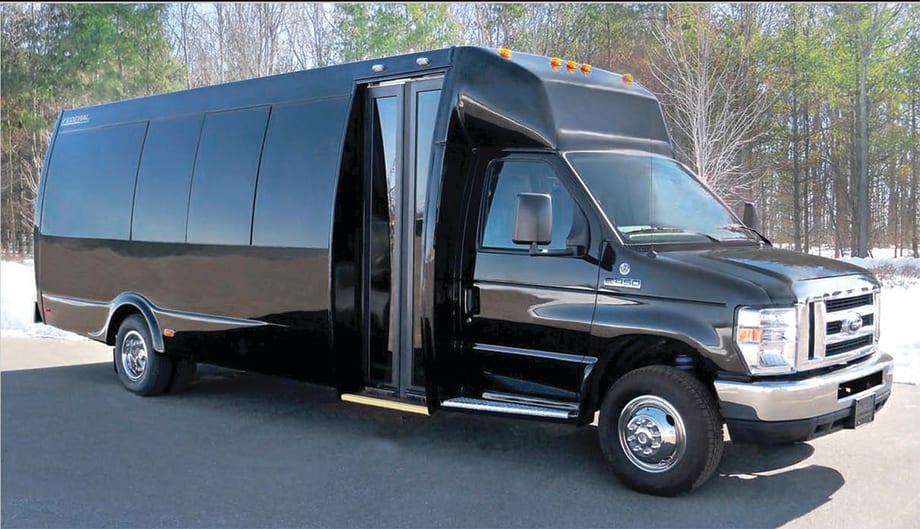
Allied Specialty Vehicles (ASV) announced separate exclusive partnerships with CleanFUEL USA and Westport.
Under the partnership with CleanFUEL USA, the company will provide products and services to expand ASV’s line of alternative fuel vehicles, namely propane autogas.
Meanwhile, the Westport partnership will expand the availability of the compressed natural gas (CNG) Westport WING Power System currently offered as an option on ASV’s Type A school buses manufactured by Collins Bus, to the company’s commercial bus, emergency and other vehicle products.
The partnership agreement calls for CleanFUEL USA’s propane autogas systems currently installed by third-party upfitters to be transitioned to ASV factory-certified installations.
Tim Sullivan, ASV president/CEO, said this change will not only offer customers a full OEM warranty, but it will increase installation efficiency and improve overall quality control. The two companies will also work together to develop customer service centers that will offer spare parts and maintenance services for a full-suite of CleanFUEL USA propane autogas systems for multiple ASV product lines and their customers.
Meanwhile, the Westport WING Power System is a dedicated natural gas fuel system for light-duty specialty vehicles built on Ford truck chassis and backed by a Ford factory three-year/36,000-mile engine and powertrain warranty.
As the leading CNG Ford Qualified Vehicle Modifier (QVM), Westport designed its system to meet Ford’s OEM standards. Westport also conducts rigorous OEM-approved safety testing including extensive simulations and physical crash testing that meets or exceeds OEM and U.S. federal safety standards.
Westport’s WING systems are primarily installed in Dallas; however, the systems will be transitioned to ASV factory-certified installations to increase vehicle manufacturing efficiency.
More Management

LIT Marks 10-Year Milestone at Annual Summit
Hosted by the COTA from September 10 to 13, the Summit carried the theme “Celebrating 10 Years of Excellence, Leadership, and Impact,” with every part of the program honoring the people, agencies, and partners who built LIT over its first decade.
Read More →
People Movement: Dan Dipert Coaches Adds Third-Generation Leader, Keolis Names New Valley Metro VP/GM, and More
In this edition, we also cover recent appointments and announcements at the Wabtec, SilverRide, HNTB, and more, showcasing the individuals helping to shape the future of transportation.
Read More →
METRO Opens Submissions for 2026 Motorcoach Awards
Nominations are now being accepted for METRO Magazine’s Operator of the Year and Innovative Operator of the Year awards.
Read More →

New York MTA Advances Final Contract for Second Avenue Subway Expansion
Contract Four is the largest in the Second Avenue Subway Phase 2 project and includes construction of station infrastructure, tracks, and signals for the subway expansion, MTA officials said. Work on Contract Four will begin in 2027.
Read More →
Transit Agencies Highlight Safety Gains at National Summit
Leaders from 15 major transit systems shared crime-reduction results and safety initiatives while discussing the role of continued federal support.
Read More →
NITA Names New Leadership, Expands Reduced-Fare Program at First Board Meeting
The new regional transit authority appointed its first board chair and interim executive director while extending reduced fares across CTA, Metra, and Pace for eligible riders.
Read More →
Beyond the Checklist: A Structured Approach to Transit Maintenance
Reliability-Centered Maintenance helps transit agencies move beyond routine checklists to focus limited resources on the assets and failures that have the greatest impact on safety, reliability, and service.
Read More →
APTA 2026 Nominating Committee Selects Leadership Slate, Names Chair and Vice Chair Nominees
Leadership changes will help shape the association’s priorities and its representation of the transportation industry during the 2026–2027 term.
Read More →
DART Launches Major Security, Fare Enforcement Initiative
The 90-day demonstration will deploy coordinated security teams at five light rail stations while testing controlled access and gathering data to guide future investments.
Read More →
Advancing Fare Collection Through Technology and Innovation
Learn about delivering 1300 gates at 91 stations while managing fare evasion. Explore the large scale deployment, solution customization and real-world results that affect the region. Prepare for deployment in your region now.
Read More →