



APTA's Capitol Hill forum addresses benefits of public transportation investment
The forum comes as Trump's proposed budget would cut the US DOT's budget by $2.4 billion and severely impact the Capital Investment Grants and TIGER programs.

Kevin McCoy
Kevin McCoy
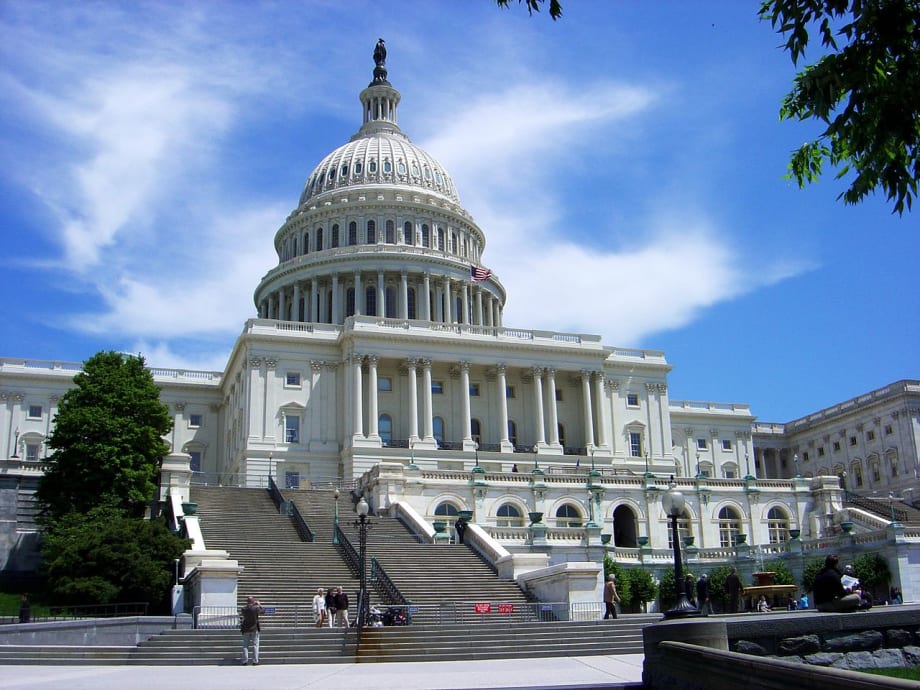
In a forum held on Wednesday on Capitol Hill, the American Public Transportation Association (APTA) brought together leaders from communities of various sizes including non-traditional transit oriented places that make up "Main Street America," to discuss the significant impact federal investment in public transit has already had on local economic development, job growth, and quality of life in each of their communities as the Trump Administration’s budget threatens to cut the federal role in public transportation funding.
Hosted by APTA’s Interim President/CEO Richard A. White, the panel included Kirk Dillard, chairman of Chicago RTA; Scott Smith, CEO of Phoenix’s Valley Metro; and Mark Fisher, VP, government relations and policy development, for the Indianapolis Chamber of Commerce and board member at IndyGo.
“In its American Blueprint budget for Fiscal Year 2018, the Administration is proposing a $2.4 billion, or 13 percent cut in the U.S. DOT’s budgets,” said White. “These cuts will directly impact two programs important to public transit expansion in our local communities: the Capital Investment Grants Program and the Transportation Investment Generating Economic Recovery, or TIGER grant program.”
RELATED: APTA issues 'alert' to contact Congress to support Capital Investment Grants program
If fully implemented, the proposed budget cuts would put at risk 800,000 jobs, including 502,000 construction and related jobs; and an additional 300,000 longer term jobs associated with economic productivity, resulting in an overall possible loss of $90 billion in economic output, according to an analysis prepared by the Economic Development Research Group for APTA, noted White.
The “Economic Implications of Proposed Public Transit Capital Funding Cuts” analysis shows that the Administration's cuts will provide for a severe loss of investment spending, putting in jeopardy $38 billion worth of projects in 23 states. The 502,000 jobs at risk equate to 49,000 jobs every year in America's local communities over a 10-year period, with the type of jobs directly impacted, including general construction and public transit equipment manufacturing. In addition, 300,000 longer-term jobs associated with permanent, ongoing, economic growth and development are also in jeopardy, according to the report.
“These projects spend 10, 15, and 20 years in the development cycle, and to now be at the stage of readiness for implementation to face the risk of continued of implementation, because of the scaling back of federal funding, will be devastating to these projects and to these communities,” White said, before adding that APTA is calling on Congress to fully fund the FAST Act and to make public transportation a vital part of any new infrastructure initiative.
RELATED: Trump's 'Skinny Budget' cuts US DOT funding by $2.4B
Following White’s comments, each of the speakers discussed how public transportation and infrastructure investment has greatly impacted their communities.
In Chicago, Dillard discussed how public transportation has been a key driver in the relocation of several corporations, including Motorola, Google, and Caterpillar, adding that about half of the region’s workforce are millennials who are more prone to live in areas with access to public transportation, which has been a key reason 42 corporations have chosen to relocate to the area. He also discussed how public transportation even impacts those who don’t even use it.
“It is very clear that a major area of economic success in Illinois is due to mass transit and our return on investment is huge,” he said. “I like to remind folks that they benefit from mass transit, whether they use it or not. Even if you don’t take it and they live along the [CTA’s] Brown Line or any of our Metra stations, their property values are much higher than they would be without it.”
Meanwhile, Smith discussed how light rail has been a game changer in the Phoenix where there has been more than $9 billion in real estate investment along the 26-mile corridor over the last eight years. He also discussed the national trend of light rail systems having success in non-traditional areas, such as Phoenix, San Diego, Dallas, and Salt Lake.
“In each case, the debate was will the investment payoff and the system succeed, and in nearly every case, whether it’s through ridership, investment, or other projections being used, they have far exceeded what was projected before those systems were built,” said Smith, who also added that investment in public transportation is a “no-brainer” and that the investment in capital projects is like “honey that attracts private investment bees.”
RELATED: Senate Dems propose $1 trillion infrastructure plan
Fisher discussed Indianapolis’ recent victory at the ballot box, which will help the area realign its bus system, taking it from a coverage model to a system that will provide service to areas where ridership is high and necessary for customers to have access to jobs, educational opportunities, and health care.
"Indianapolis, like many communities across the nation, said ‘yes’ to better transit in November by voting to support a local, dedicated revenue to right-size our transit system,” he said. “Federal support for key transit infrastructure investments will ensure that local communities have the resources to operate frequent and reliable transit service — an absolute necessity for access to employment opportunities."
To view APTA’s “Economic Implications of Proposed Public Transit Capital Funding Cuts” report, click here.
More Management

METRO Opens Submissions for 2026 Motorcoach Awards
Nominations are now being accepted for METRO Magazine’s Operator of the Year and Innovative Operator of the Year awards.
Read More →
New York MTA Advances Final Contract for Second Avenue Subway Expansion
Contract Four is the largest in the Second Avenue Subway Phase 2 project and includes construction of station infrastructure, tracks, and signals for the subway expansion, MTA officials said. Work on Contract Four will begin in 2027.
Read More →
Transit Agencies Highlight Safety Gains at National Summit
Leaders from 15 major transit systems shared crime-reduction results and safety initiatives while discussing the role of continued federal support.
Read More →

NITA Names New Leadership, Expands Reduced-Fare Program at First Board Meeting
The new regional transit authority appointed its first board chair and interim executive director while extending reduced fares across CTA, Metra, and Pace for eligible riders.
Read More →
Beyond the Checklist: A Structured Approach to Transit Maintenance
Reliability-Centered Maintenance helps transit agencies move beyond routine checklists to focus limited resources on the assets and failures that have the greatest impact on safety, reliability, and service.
Read More →
APTA 2026 Nominating Committee Selects Leadership Slate, Names Chair and Vice Chair Nominees
Leadership changes will help shape the association’s priorities and its representation of the transportation industry during the 2026–2027 term.
Read More →
DART Launches Major Security, Fare Enforcement Initiative
The 90-day demonstration will deploy coordinated security teams at five light rail stations while testing controlled access and gathering data to guide future investments.
Read More →
Advancing Fare Collection Through Technology and Innovation
Learn about delivering 1300 gates at 91 stations while managing fare evasion. Explore the large scale deployment, solution customization and real-world results that affect the region. Prepare for deployment in your region now.
Read More →
Game Day in Motion: Moving Millions During the 2026 World Cup
Between packed transit stations and team motorcoaches, see how agencies and operators across North America tackled the transportation demands of the 2026 FIFA World Cup.
Read More →
Surface Transportation Extension Averts Shutdown, Leaves Transit Funding Gap
The stopgap keeps federal transportation programs moving, but missing advance funding could complicate the transit and rail projects agencies are planning next.
Read More →