



As storm approaches, D.C., Maryland to suspend weekend service
The region is bracing for a snow storm predicted to drop up to three-feet of snow. D.C. Metro calls the move "unprecedented."

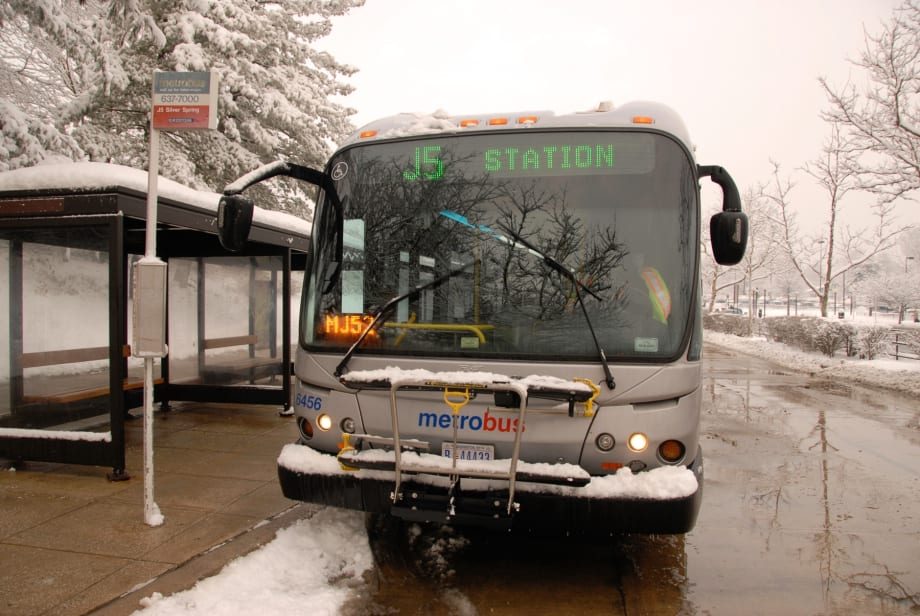
Metro bus after snowstorm in 2010. Photo: WMATA/Larry Levine
Metro bus after snowstorm in 2010. Photo: WMATA/Larry Levine
WASHINGTON, D.C. — As the region braces for a snow storm expected to drop close to three-feet of snow, the Washington Metropolitan Area Transit Authority (Metro) and the Maryland Transit Administration (MTA) are planning to shutdown their subway and bus systems for the weekend, several news outlets, including The Hill reported.
WMATA announced Thursday that in an "unprecedented" move, it will stop running trains at 11 p.m. on Friday evening and halt buses after 5 p.m.
“This is not a storm that anyone should take lightly, and I would urge all residents to plan to get to a safe place before the storm arrives Friday afternoon,” METRO GM Paul Wiedefeld said in a statement. “The actions we are taking today are all in the interest of our customers’ and employees’ safety, and will help us return to service once the storm passes and the snow is cleared.”
Meanwhile, the MTA is set to halt service after midnight on Friday.
"A major storm is about to hit our region and we, at the MTA, care about our customers and want them to be prepared, safe and well-informed,” said MTA Administrator/CEO Paul Comfort in a statement. “To make that happen, we’re telling people our plans for transit in advance; however, these plans may change depending on the severity of the storm. We encourage the public to get to their destinations quickly as transit schedules are based upon weather conditions...The steps we are taking today are to protect the safety of our customers and operators, allow first responders and snow removal equipment unimpeded access to the roads, and allow the MTA to return more quickly to normal operations after the storm.”
More Security and Safety

Public Transit Conference Returning to GFX in 2027, Call for Papers Now Open
The Call for Papers is now open, allowing transit agency professionals and industry experts to help shape the PTC educational program by submitting session ideas for consideration.
Read More →
Safe Transit Act Proposes New Security Requirements for Federal Transit Funding
Proposed legislation would link federal transit dollars to safety measures while requiring security investments, onboard cameras, and new fare collection standards.
Read More →
FTA Ends Direct Oversight of MBTA Safety Actions
The federal agency closed its remaining special directive to the Massachusetts Department of Public Utilities following a safety review that began in 2022.
Read More →
Transit Agencies Highlight Safety Gains at National Summit
Leaders from 15 major transit systems shared crime-reduction results and safety initiatives while discussing the role of continued federal support.
Read More →
DART Launches Major Security, Fare Enforcement Initiative
The 90-day demonstration will deploy coordinated security teams at five light rail stations while testing controlled access and gathering data to guide future investments.
Read More →
RTD Launches NextRide App to Consolidate Trip Planning, Fares, Security Reporting
The app expands on RTD’s existing NextRide web application and allows customers to view real-time vehicle locations and service alerts, purchase and store digital fares, and access customer support.
Read More →
TAPTCO Updates OSHA Compliance Training for Transit Maintenance Operations
The revamped program addresses 26 OSHA standards for maintenance facilities, with TAPTCO pointing to training, documentation, and everyday shop hazards as continuing challenges for transit operations.
Read More →
FRA Announces $5.3B in Rail Investments, Including $2B for Amtrak
Funding will support grade-crossing improvements, infrastructure upgrades, and new Amtrak equipment in 23 states.
Read More →
Chicago, Maryland Expand Non-Law-Enforcement Safety, Rider Support
The CTA and MTA are launching new programs aimed at de-escalation, crisis response, rider assistance, and greater transparency.
Read More →
LA Metro, City of West Hollywood, and Partners Advance Smarter Bus Lane Enforcement
The award-winning partnership combines AI-powered detection with human oversight to improve bus reliability, accessibility, and enforcement efficiency.
Read More →