



BART, unions reach agreement, resume service
Extending the current contracts for 30 days. Trains began running again last Friday.

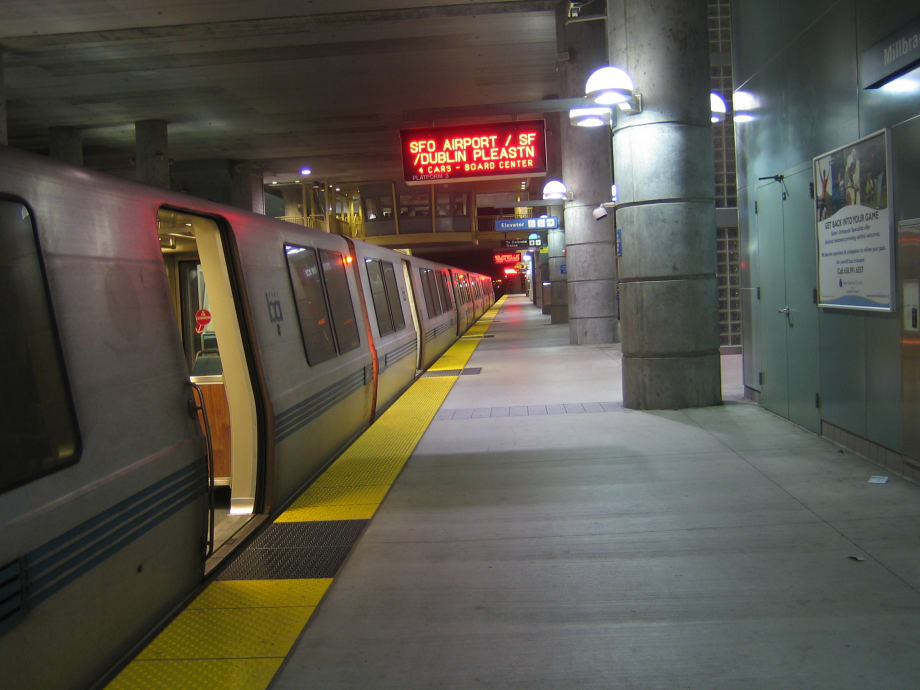
Photo courtesy lensovet, Wikimedia Commons.
Photo courtesy lensovet, Wikimedia Commons.
The Bay Area Rapid Transit District (BART) and its unions reached an agreement late last Thursday to extend the current contracts for 30 days. BART trains began running at 3 p.m. last Friday, ending the strike.
Last week, BART released the following statement from GM Grace Crunican regarding the agreement between BART and its unions to extend the current agreement for 30 days:
"I am happy to announce the BART system will be open and fully operational at 3 p.m. on Friday.
I want to thank Labor Secretary Marty Morgenstern and his fine mediation team for all their help and support in crafting this deal, which will allow us to continue bargaining while running the trains.
We look forward to continuing our work with Secretary Morgenstern and his mediators.
Unfortunately, the issues that brought us to this point remain unresolved. Despite lots of hard work, BART and its unions have failed to come to an agreement on contract issues that matter to all of us today and into the future. We still have a wide gap of disagreements to bridge over the next 30 days.
What we share in common is a commitment to our passengers and the mission of public transit.
That focus is why we stand together tonight to announce that we will continue working to reach an agreement during the next 30 days while the trains continue to run. It is my resolve to bargain in good faith and to keep the trains running.
The BART bargaining teams on both sides of the table have worked tirelessly to bargain a new contract under difficult circumstances. Their work is appreciated. Most importantly for me, I want to welcome back all the BART employees who have been on strike during the past week.
Now let's get the trains moving."
More Management
Financing, Fleet Replacement Requires a More Strategic Approach
Executives from ABC Companies and MCI discuss how rising costs, changing market conditions, and post-pandemic challenges are prompting motorcoach operators to rethink financing strategies, fleet replacement cycles, and long-term planning.
Read More →
Bringing Austin’s First Light Rail System to Life
Austin Transit Partnership CEO Greg Canally discusses the city's nearly 10-mile light rail project, its collaborative approach to project delivery, the importance of community engagement, and the milestones ahead as construction approaches in 2027.
Read More →
ETA CEO John Maglio on Transit Technology, Innovation, and Building Agency Trust
ETA founder and CEO John Maglio explores the evolution of transit technology, the importance of reliable systems, and how stronger partnerships can help agencies improve operations and the passenger experience.
Read More →
Metra Draft Plan Outlines Costs, Service Improvements for Regional Rail
The Systemwide Network Plan identifies infrastructure needs and potential investments to expand all-day, bidirectional rail service across the Chicago region.
Read More →
New Orleans RTA Names Augustine III as New CEO
In this edition, we also spotlight recent personnel moves at HDR, PATH, STV, and more, highlighting the people taking on new roles across the transportation industry.
Read More →
How Transit Agencies Are Using Free Rides to Improve Voting Access
Transit agencies are using fare-free service, trip-planning tools, and targeted rides to improve voting access. See what other agencies can learn from these efforts.
Read More →
Caltrain’s Electrification Drives a New Era of Ridership Growth
The railroad’s shift to electric service has brought more frequent trains, stronger customer satisfaction, and increased ridership, earning it APTA’s Outstanding Public Transportation System award.
Read More →
Chicago, Charlotte Transit Agencies Expand Rider Support Programs
CTA launched crisis intervention teams as CATS prepares to deploy fare ambassadors, expanding customer assistance and security efforts across both systems.
Read More →
New York MTA Launches Historic $1.9B Signal, Track Modernization Project
Funded in part by congestion pricing revenue, the project will replace nearly century-old signals along the A and C lines in Brooklyn and Queens.
Read More →
Brian Dickson on Building Stronger, More Resilient Transportation Organizations
Bus Business Consultants Founder Brian Dickson discusses the leadership principles, operational discipline, and strategic planning that separate transportation companies positioned for long-term success from those stuck in survival mode.
Read More →