



Being a ‘lifelong learner’ key for CapMetro’s Watson
Q&A with Linda Watson, President/CEO, Capital Metro, Austin, Texas

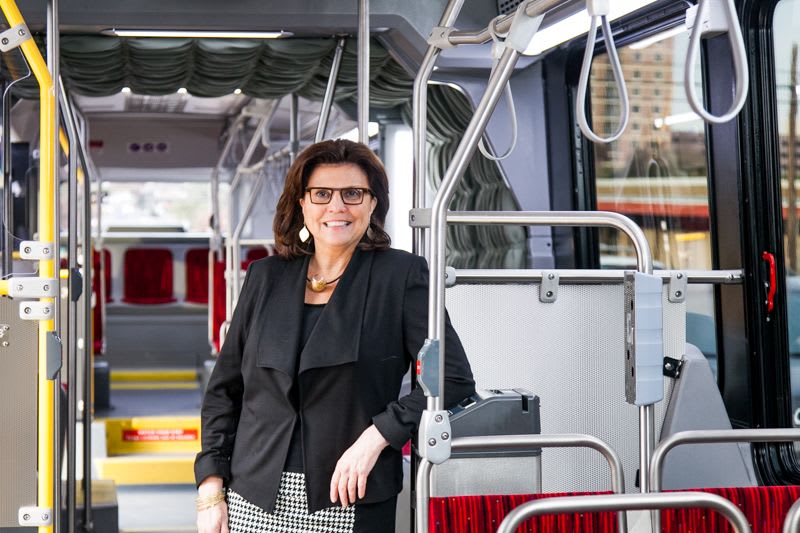
Watson has nearly 35 years of experience in the transit industry, with more than 20 years as a CEO.
Capital Metro/Brio Photography
Watson has nearly 35 years of experience in the transit industry, with more than 20 years as a CEO.
Capital Metro/Brio Photography
Austin, Texas’ Capital Metro President/CEO Linda Watson will retire at the end of this year after more than seven years as head of the agency. She joined Capital Metro in August 2010.
Watson has nearly 35 years of experience in the transit industry, with more than 20 years as a CEO. She came to Austin from Orlando, Fla., where she held the same position at LYNX, the Central Florida Regional Transportation Authority. Prior to that, she held the positions of CEO of the Corpus Christi Regional Transportation Authority and deputy CEO at the Fort Worth Transportation Authority.
Some key accomplishments during Watson’s tenure include stabilizing the labor structure by transitioning bus operators and maintenance staff to private contractors, overseeing the planning and implementation of improvements to MetroRail, launching MetroRapid bus rapid transit service, and breaking ground on the 10-acre Plaza Saltillo redevelopment project in East Austin.
Watson has also overseen the planning of a new and larger Downtown Station and the purchase of four new trains to increase frequency and capacity on the line, funded by a $50-million TxDOT grant. In addition, she recently directed the complete overhaul of the agency’s extensive bus system to increase frequency and reliability through a strategic long-range plan called Connections 2025. The agency also introduced one of the country’s first mobile ticketing apps in 2014, which has already sold more than $8 million in tickets and won multiple national awards for innovation.
How did you get involved in the public transportation industry?
I graduated with a master’s degree in urban and regional affairs and had an interest in city government. I learned about a grants position at the Fort Worth Transportation Authority, which was then organized under the City of Fort Worth Transportation Department. I called about the grants job one afternoon, had an interview the following morning, accepted an offer that afternoon and began work the morning after: a new career in less than 48 hours.
What did you take away from that experience?
I learned so much about transit while in Fort Worth. Like so many others in our industry, I started at the bottom and progressed from there. I had the opportunity to learn a little bit about everything involved in running a transit system. The other takeaway from that experience was the reinforcement of the idea that there is nothing better than being a lifelong learner; I learned something new every day.
What pivotal moment in your career helped you get to where you are today?
I was humbled to be selected for the first International Transit Studies Program in 1994. The study mission included a group of about 15 transit professionals and we traveled to cities such as London, Amsterdam, Paris, and Stuttgart; cities that have long been on the forefront of advances in transportation. While the primary purpose was to learn about practices and innovations in these cities, it had a much more profound impact on me. The value of transit to people in these cities inspired me to learn even more and further my leadership career.
Name some projects/initiatives you’ve worked on that you’re proud of?
I am very proud to have had the opportunity for team building, employee development and improvement of the credibility and image of transit in communities. The successful projects, initiatives and partnerships that build systems and services don’t happen without this.
What are some key lessons you’ve learned throughout your career?
Numbers 1, 2 and 3 on the list are relationship-building. Becoming the face of the organization makes the difference between being just another CEO and being someone that the community, the stakeholders, and the organization can trust, support, and believe in. Someone once told me, ‘I can say no to the agency, but I can’t say no to Linda.’
What are you looking forward to doing once you retire?
If anyone is looking for me, I plan to be in a small café in Paris reading Du Monde (when I learn French), oil painting, and, of course, hanging with my granddaughter in Charlotte, N.C.
More Management

METRO Opens Submissions for 2026 Motorcoach Awards
Nominations are now being accepted for METRO Magazine’s Operator of the Year and Innovative Operator of the Year awards.
Read More →
New York MTA Advances Final Contract for Second Avenue Subway Expansion
Contract Four is the largest in the Second Avenue Subway Phase 2 project and includes construction of station infrastructure, tracks, and signals for the subway expansion, MTA officials said. Work on Contract Four will begin in 2027.
Read More →
Transit Agencies Highlight Safety Gains at National Summit
Leaders from 15 major transit systems shared crime-reduction results and safety initiatives while discussing the role of continued federal support.
Read More →

NITA Names New Leadership, Expands Reduced-Fare Program at First Board Meeting
The new regional transit authority appointed its first board chair and interim executive director while extending reduced fares across CTA, Metra, and Pace for eligible riders.
Read More →
Beyond the Checklist: A Structured Approach to Transit Maintenance
Reliability-Centered Maintenance helps transit agencies move beyond routine checklists to focus limited resources on the assets and failures that have the greatest impact on safety, reliability, and service.
Read More →
APTA 2026 Nominating Committee Selects Leadership Slate, Names Chair and Vice Chair Nominees
Leadership changes will help shape the association’s priorities and its representation of the transportation industry during the 2026–2027 term.
Read More →
DART Launches Major Security, Fare Enforcement Initiative
The 90-day demonstration will deploy coordinated security teams at five light rail stations while testing controlled access and gathering data to guide future investments.
Read More →
Advancing Fare Collection Through Technology and Innovation
Learn about delivering 1300 gates at 91 stations while managing fare evasion. Explore the large scale deployment, solution customization and real-world results that affect the region. Prepare for deployment in your region now.
Read More →
Game Day in Motion: Moving Millions During the 2026 World Cup
Between packed transit stations and team motorcoaches, see how agencies and operators across North America tackled the transportation demands of the 2026 FIFA World Cup.
Read More →
Surface Transportation Extension Averts Shutdown, Leaves Transit Funding Gap
The stopgap keeps federal transportation programs moving, but missing advance funding could complicate the transit and rail projects agencies are planning next.
Read More →