




RELATED: AVs Have the Potential to Deliver Array of Benefits
Bestmile raises $11M in Series A funding
The investment will power the company’s global expansion; strengthen its mobility cloud platform technology; and extend its customer relationships with service providers, strategic OEMs, and technology partners.
March 23, 2018

Bestmile works with mobility service providers, including Transportation Network Companies, public transit agencies, transportation operators, and private communities and campuses.
Bestmile
2 min to read
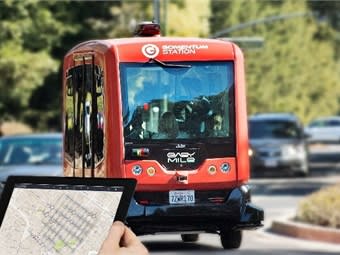
Bestmile works with mobility service providers, including Transportation Network Companies, public transit agencies, transportation operators, and private communities and campuses.
Bestmile
Bestmile, a mobility platform that enables service providers to manage, operate, and optimize autonomous vehicle fleets, announced it raised $11 million in a Series A funding round led by Road Ventures SA with participation from Partech Ventures, Groupe ADP, Airbus Ventures, Serena Capital, and MobilityFund. The investment will power the company’s global expansion; strengthen its mobility cloud platform technology; and extend its customer relationships with service providers, strategic OEMs, and technology partners.
“We are bullish in the mobility services market and see Bestmile as a disruptive force to not only transform the current human-driven environment, but also autonomous vehicle fleets,” said Patrice Crisinel, managing director of Road Ventures SA.
Bestmile’s Mobility Services Platform enables the intelligent operation and optimization of autonomous vehicle fleets, regardless of their brand or type, for both fixed-route and on-demand service types. The platform offers features such as fleet and resource management, mobility service operations and optimization, business back office support, and data intelligence. The company’s platform also provides front-end and back-end interfaces for operators and travelers, including control center dashboards, mobile and web applications, and APIs. The company’s expansion to ride-hailing will offer flexibility to customers with the operation of hybrid fleets comprised of human-driven and autonomous vehicles to support mobility providers’ transition to autonomous mobility.
“Over the next several years, mobility services will experience a transitional phase where autonomous and human-driven vehicles will coexist within the same fleets,” said Raphael Gindrat, CEO of Bestmile. “New micro-transit services will develop into the transportation ecosystem as well. This large opportunity in a booming market, coupled with our innovative technology, are major reasons why so many prestigious investors are backing Bestmile.”
Bestmile works with mobility service providers, including Transportation Network Companies (TNCs), public transit agencies, transportation operators, and private communities and campuses. The company will expand its micro-transit on-demand services, as well as its multi-modal services with existing transportation systems, operators, and cities. Bestmile is also continuing to build strong partnerships with vehicle manufacturers and automotive OEMs. The company has notably worked with Navya, EasyMile, Local Motors, and partnered with Paravan, Next Future Transportation, Hi-tech Robotic Systemz among others.
More New Mobility

From Hardware to Digital Partner: Luminator Charts Its Next Chapter
CEO Magnus Friberg discusses Luminator’s shift toward becoming a digital partner, the growing importance of software and interoperability, and how AI can help agencies improve operations and passenger experience.
Read More →
Biz Briefs: Alstom Lands Canadian Contract, LYT to Supply California TSP, and More
In METRO's latest installment, we take a look at recent news from Complete Coach Works, Beep, FlixBus, and more partnerships making headlines across the transportation sector.
Read More →
CharterUP’s Armir Harris on Technology, AI, and the Future of Group Mobility
In a recent episode of METROspectives, CharterUP Founder/CEO Armir Harris discussed the company’s evolution from an online charter bus marketplace into a technology platform supporting public- and private-sector mobility and much more.
Read More →
Jacksonville’s NAVI Project Charts a New Course for Autonomous Public Transportation
Through its NAVI program, JTA is showing how autonomous vehicles, intelligent infrastructure, and coordinated operations can work together to deliver everyday public transportation.
Read More →
Biz Briefs: Luminator Marks Milestone and More
From manufacturers and suppliers to transit agencies and motorcoach operators, these updates offer a snapshot of the projects, partnerships and business moves driving the industry forward.
Read More →
New Tricks for Old Bureaucracies: Joshua Schank on Making Transit Innovation Stick
Former LA Metro Chief Innovation Officer Joshua Schank discusses why good ideas aren't enough, how transit agencies can overcome resistance to change, and why today's challenges demand more innovation.
Read More →
How DART's GoPass Is Redefining Regional Mobility
Serving 14 transit agencies, GoPass simplifies multimodal travel by allowing riders to plan, pay for, and manage an entire trip through one app.
Read More →
Biz Briefs: OCTA Taps Clean Energy for Hydrogen Station, Stadler to Supply Via Rail Vehicles, and More
From manufacturers and suppliers to transit agencies and motorcoach operators, these updates offer a snapshot of the projects, partnerships and business moves driving the industry forward.
Read More →CharterUP Expands Into New Mobility and Autonomous Transportation
Vice President of New Mobility Stephen Joos discusses how CharterUP is leveraging its nationwide transportation network, technology platform, and autonomous vehicle partnerships to expand into workforce mobility, campus shuttles, and transit solutions.
Read More →
METRO Magazine Announces 2026 Innovative Solutions Awards Winners
Projects Recognized for Advancing Mobility Through Technology, Accessibility, Workforce Innovation, and Operational Excellence
Read More →