




Related: Mass. school developing app for visually impaired travelers
Blind Institute of Technology, Uber team for Colorado job access initiative
Thanks to the agreement, a tap of the Uber app will help remove the employment barrier of getting to job interviews for blind and visually impaired BIT candidates in Colorado.
July 11, 2016
2 min to read
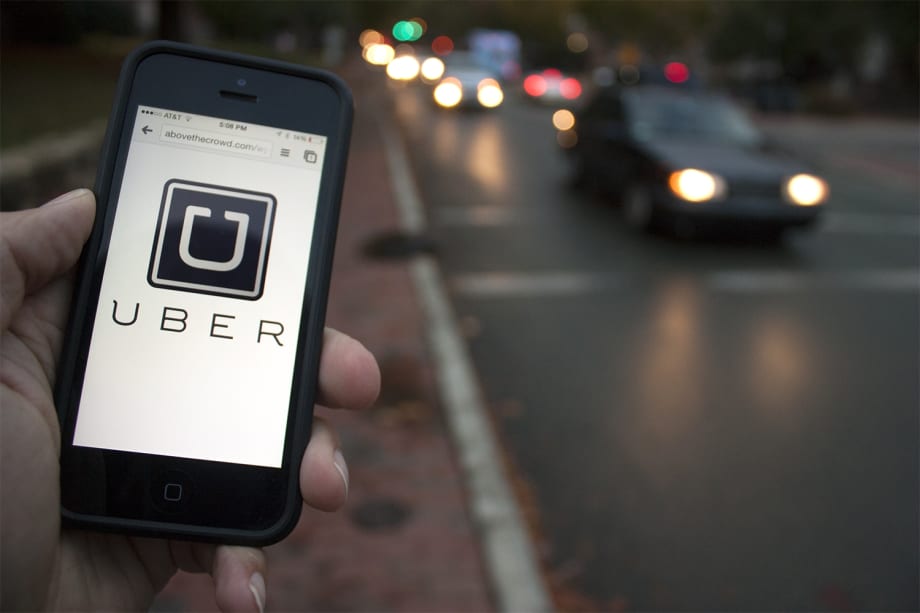
The Blind Institute of Technology (BIT) and Uber Colorado announced an initiative to help qualified blind and visually impaired people travel to job interviews. Thanks to the agreement, a tap of the Uber app will help remove the employment barrier of getting to job interviews for blind and visually impaired BIT candidates in Colorado. Uber will provide two free rides (up to $25) to and from job interviews.
University of Denver graduate Mike Kemp understands firsthand the value the service will provide. When he was interviewing for jobs, he often spent more than a day organizing his travel to an interview. Not unusual, but in addition to making sure his suit was hanging neatly in the closet and that he rehearsed answers to potential interview questions, Kemp literally had to take extra steps.
Now a consultant for Denver's Breo Solutions, Kemp is one of the estimated 22.5 million Americans 18 and older who are blind or visually impaired (BVI), according to the 2014 National Health Interview Survey.
Unlike most job seekers, Kemp couldn't drive himself to an interview, which meant he had to spend extra time learning and memorizing bus routes and times. To ensure he arrived on time the day of his interview, Kemp often had to practice his route the day before to determine how long the journey would take. The difficulty of the process led him to approach the Blind Institute of Technology about creating a program to help others with transportation to employment opportunities.
"Statistics show that the unemployment and underemployment rate among blind and visually impaired Americans is a staggering 80 percent," said Mike Hess, founder and executive director of the Blind Institute of Technology. "BIT appreciates Uber's support in helping us solve this national diversity and inclusion epidemic so all motivated and qualified BVI candidates receive the same opportunities for employment as everyone else striving to achieve their career aspirations."
"We're excited to team with the Blind Institute of Technology and connect the population they serve with a convenient and reliable transportation option," said Uber Colorado GM Dave Britton. "Uber's mission is to make transportation as reliable as running water, everywhere for everyone, and this agreement is another example of how we are working to make that mission a reality."
The partnership with Uber represents a central and important aspect of BIT's new Eyes on the Road program, which is dedicated to making transportation for BVI individuals — from their initial job interview to their daily commute to work — easy, convenient, affordable and stress-free.
More New Mobility

From Hardware to Digital Partner: Luminator Charts Its Next Chapter
CEO Magnus Friberg discusses Luminator’s shift toward becoming a digital partner, the growing importance of software and interoperability, and how AI can help agencies improve operations and passenger experience.
Read More →
Biz Briefs: Alstom Lands Canadian Contract, LYT to Supply California TSP, and More
In METRO's latest installment, we take a look at recent news from Complete Coach Works, Beep, FlixBus, and more partnerships making headlines across the transportation sector.
Read More →
CharterUP’s Armir Harris on Technology, AI, and the Future of Group Mobility
In a recent episode of METROspectives, CharterUP Founder/CEO Armir Harris discussed the company’s evolution from an online charter bus marketplace into a technology platform supporting public- and private-sector mobility and much more.
Read More →
Jacksonville’s NAVI Project Charts a New Course for Autonomous Public Transportation
Through its NAVI program, JTA is showing how autonomous vehicles, intelligent infrastructure, and coordinated operations can work together to deliver everyday public transportation.
Read More →
Biz Briefs: Luminator Marks Milestone and More
From manufacturers and suppliers to transit agencies and motorcoach operators, these updates offer a snapshot of the projects, partnerships and business moves driving the industry forward.
Read More →
New Tricks for Old Bureaucracies: Joshua Schank on Making Transit Innovation Stick
Former LA Metro Chief Innovation Officer Joshua Schank discusses why good ideas aren't enough, how transit agencies can overcome resistance to change, and why today's challenges demand more innovation.
Read More →
How DART's GoPass Is Redefining Regional Mobility
Serving 14 transit agencies, GoPass simplifies multimodal travel by allowing riders to plan, pay for, and manage an entire trip through one app.
Read More →
Biz Briefs: OCTA Taps Clean Energy for Hydrogen Station, Stadler to Supply Via Rail Vehicles, and More
From manufacturers and suppliers to transit agencies and motorcoach operators, these updates offer a snapshot of the projects, partnerships and business moves driving the industry forward.
Read More →CharterUP Expands Into New Mobility and Autonomous Transportation
Vice President of New Mobility Stephen Joos discusses how CharterUP is leveraging its nationwide transportation network, technology platform, and autonomous vehicle partnerships to expand into workforce mobility, campus shuttles, and transit solutions.
Read More →
METRO Magazine Announces 2026 Innovative Solutions Awards Winners
Projects Recognized for Advancing Mobility Through Technology, Accessibility, Workforce Innovation, and Operational Excellence
Read More →