



Bus Takes Pages from Rail Playbook at the APTA Bus Conference
Bus technology that emulated railcar concepts got the most significant attention at the recently held American Public Transportation Association’s Bus & Paratransit Conference in Houston, Tex.

Bus technology that emulated railcar concepts got the most significant attention at the recently held American Public Transportation Association’s Bus & Paratransit Conference in Houston, Tex. In the conference sessions, several showcased and discussed bus rapid transit (BRT) ideas both abroad and in the U.S. BRT is a service concept that uses fixed, dedicated guideways, frequent service and upgraded stops and civil works, ideally coordinated with local land-use planning. The concept has been employed successfully in Ottawa, Ontario and Curitiba, Brazil, with far less cost than a light rail line. However, in some places like Ottawa, the local transit agency is now examining LRT to boost ridership further. The FTA is looking to leverage research and other federal programs with transit agencies and the private sector in ways that help get BRT off the ground, FTA officials told METRO. “What’s important is that these be viewed as a total system,” said John Marino, head of North American marketing for Irisbus, a new company formed from the bus operations of Renault and Iveco. He used as an example the installation of Civis in Rouen and Lyon, France. Civis his company’s dual-mode guided articulated vehicle; ALSTOM supplied the propulsion and Siemens Matra, both headquartered in France, supplied the optical guidance system. Meanwhile, the accompanying product trade show was also highlighted by rail-like concepts. Chance introduced its new Opus low-floor under-30-foot bus. The frame, designed by Irish builder Walter Alexander, is bolted aluminum and built so that the lower half can be unbolted in sections, even when a collision causes structural damage. Its large windows and bright interior “remind people of railcars when they see it,” says Chance vice president of new product development Fred Gilliam. The first Opus prototype was on display at the APTA conference. A test article will be bound for Altoona soon, Gilliam added. Also, North American Bus Industries, Inc. (NABI) announced the availability of its new Model 30-LFN MidiBus at the APTA meeting. The new lightweight bus, which is made of stainless steel and aluminum, is available with a highly efficient powertrain combination using a Cummins ISB-185 engine and Allison Series 2000 5-speed electronic transmission in a traditional T-drive configuration. It is available with one or two doors, seating up to 32 passengers and is ADA compliant with a ramp in the front or rear door. With the axle forward design at the front, maneuverability of wheelchairs at the front door is unusually easy and the tie-down locations are readily accessible. In addition to the air-ride suspension, this model boasts all-wheel air operated disc brakes as standard equipment. Rail concepts also ventured into passenger information systems. NextBus Inc., a new company based out of the San Francisco area, showed off its system of the same name. It’s designed to tell passengers waiting at stations the arrival of the next several buses due at that stop in real time. Although the idea is not new, it hasn’t been commercialized in the U.S., said Bruce Thomas, head of marketing for NextBus. Currently, the NextBus system is being tested on a San Francisco Muni line, he added.
More Management
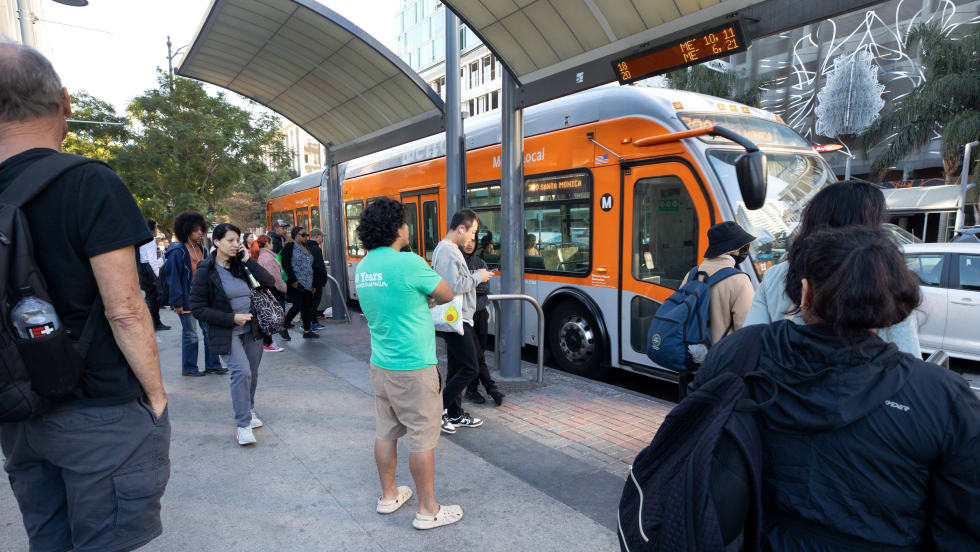
LA Metro Ridership Continues Growth as Rail Gains Accelerate
New rail connections and major events help drive continued ridership gains, with Metro recording its eighth consecutive month of year-over-year rail growth.
Read More →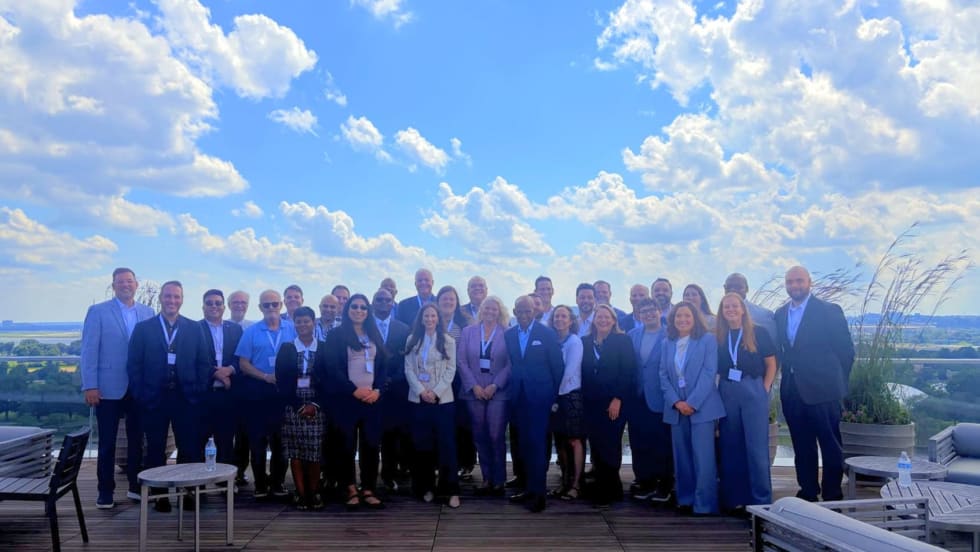
TransDASH Summit Focuses on Measuring What Matters in Transit
Transit agencies unveil a national performance platform designed to benchmark customer experience, safety, community value, and other outcomes.
Read More →
Jacksonville’s NAVI Project Charts a New Course for Autonomous Public Transportation
Through its NAVI program, JTA is showing how autonomous vehicles, intelligent infrastructure, and coordinated operations can work together to deliver everyday public transportation.
Read More →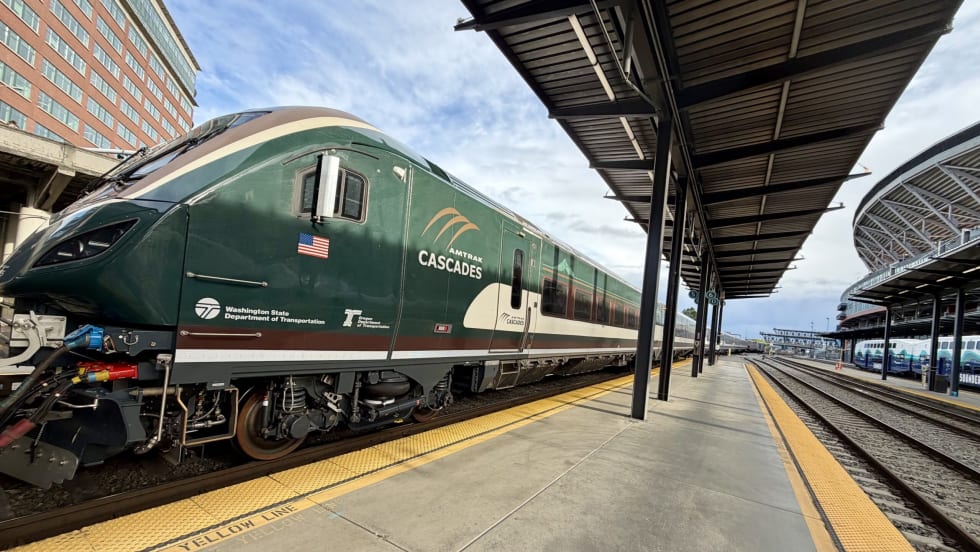
FRA Announces $5.3B in Rail Investments, Including $2B for Amtrak
Funding will support grade-crossing improvements, infrastructure upgrades, and new Amtrak equipment in 23 states.
Read More →
Finding the ‘Happy Medium’: Optimizing Maintenance Without Sacrificing Reliability
The key to maintenance optimization isn’t doing less work—it’s doing the right work at the right time on the right assets.
Read More →
People Movement: MARTA Drops Interim Tag on GM/CEO Hunt and More
In this edition, METRO covers recent appointments and announcements at the FMCSA, HDR, SilverRide, and more, showcasing the individuals helping to shape the future of transportation.
Read More →
VIA Metropolitan Transit Reports 2 Million More Passenger Trips as Better Bus Plan Gains Momentum
San Antonio's transit agency said accelerated service improvements are driving ridership growth, offering another example of how increased frequency and workforce investments can translate into stronger transit performance.
Read More →
ABAF Study Reveals Growing Insurance Crisis for Motorcoach Operators
Preliminary findings show 98% of operators faced premium increases over the past five years, while shrinking insurer participation is putting added pressure on businesses and customers.
Read More →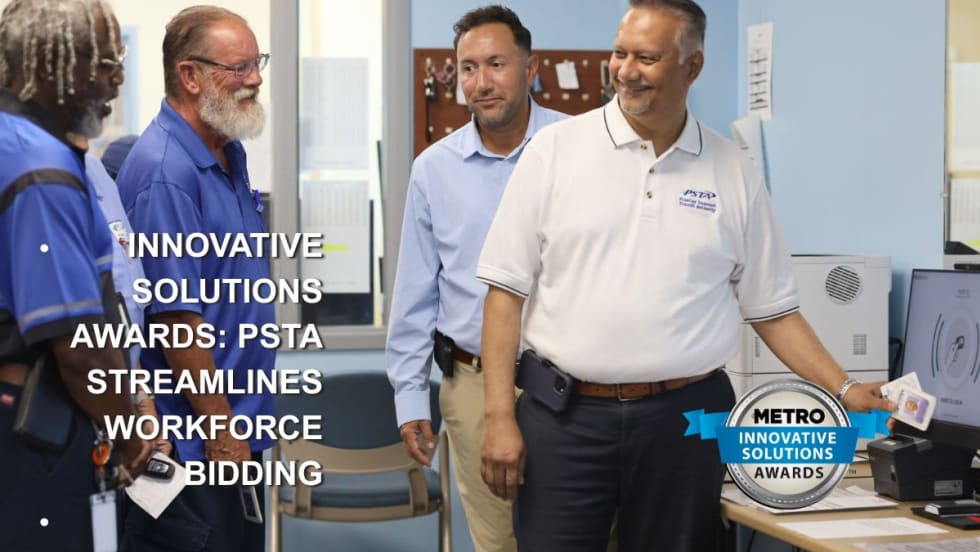
PSTA Modernizes Workforce Management with Digital Bidding System
The award-winning Workforce Transit Modernization project replaced paper bidding with a transparent digital platform, cutting administrative effort while improving access for operators.
Read More →
Chicago to Host Public Transportation's Biggest Gathering at APTA TRANSform & EXPO 2026
North America’s largest public transportation gathering returns to Chicago, connecting transit decision-makers with the technologies, ideas, and partnerships driving the industry forward.
Read More →