



BYD delivers first 60-foot all-electric bus to IndyGo
The bus will serve IndyGo’s Red Line, a 13.1-mile BRT route that runs between Broad Ripple on the north side of the city and the University of Indianapolis on the south side.

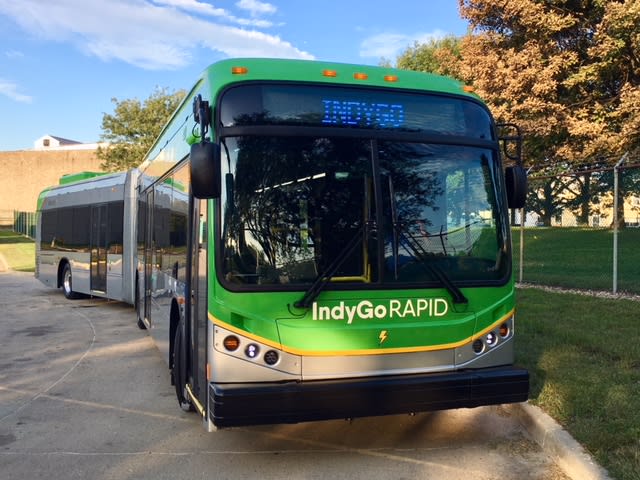
By using electric buses, IndyGo will reduce noise and its use of diesel fuel and the emissions that come from it.
BYD
By using electric buses, IndyGo will reduce noise and its use of diesel fuel and the emissions that come from it.
BYD
IndyGo and BYD (Build Your Dreams) announced the delivery of the first K11 60-foot battery-electric bus to serve Indianapolis. The bus is the first of 13 ordered for the Red Line by IndyGo.
“BYD has delivered the first bus on time and this allows us to begin working with operations and emergency services on training and testing battery range,” said Justin Stuehrenberg, VP, planning and capital projects, at IndyGo. “IndyGo is committed to our transition to an all-electric fleet over the next 15 years.”
This K11 will serve IndyGo’s Red Line, a 13.1-mile route that runs between Broad Ripple on the north side of the city and the University of Indianapolis on the south side, offering more frequent service and longer hours than current routes. The Red Line is the densest corridor in terms of population and employment within Marion County.
The bus purchases are part of IndyGo’s plans to replace all its diesel buses with electric models by 2032; reducing pollution and operating costs, while improving service for Indianapolis residents and visitors.
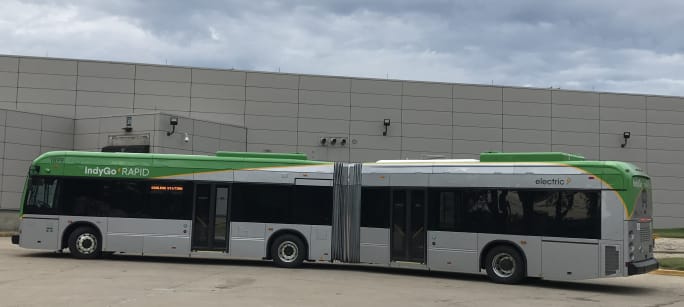
By using electric buses, IndyGo will reduce noise and its use of diesel fuel and the emissions that come from it. At least some of the energy required to charge the buses will be derived from a 1 megawatt solar system mounted atop IndyGo’s garage.
BYD was the first firm in the world to design and manufacture a 60-foot battery-electric bus, according to the company. The K11 is an affordable, dependable, and American-manufactured bus that can integrate easily into a transit fleet, offering a clean, zero-emission alternative to diesel-fueled buses. The K11 is powered by revolutionary iron-phosphate batteries that are non-toxic and environmentally friendly. The safest in the industry, the batteries come with a 12-year warranty, and BYD was the first to offer such a plan.
Powerful in-wheel motors provide instant torque for great performance in all driving conditions. Regenerative breaking reduces wear while capturing energy to charge the battery. This bus can be charged in 3.5 hours and can also be used as a mobile power supply.
BYD North America also recently announced its joint venture with Generate Capital Inc. to launch the first electric bus leasing program of its kind in the U.S.
Officials from IndyGo will discuss electric bus infrastructure and more at the Transit Maintenance Forum, which will be held in conjunction with BusCon 2018, Oct. 1 to 3 in Indianapolis. For info, click here.
More Technology
Almaviva Looks to Open Architecture to Advance Transit Technology
Eric Reese discusses how interoperability, open architecture, and modular design can help transit agencies control costs, reduce vendor lock-in, and upgrade technology without starting over.
Read More →
Driving Smarter Paratransit
John Hanlon shares how AlphaRoute is leveraging AI-powered technology to help paratransit providers optimize operations, support frontline staff, and enhance the rider experience.
Read More →
From Hardware to Digital Partner: Luminator Charts Its Next Chapter
CEO Magnus Friberg discusses Luminator’s shift toward becoming a digital partner, the growing importance of software and interoperability, and how AI can help agencies improve operations and passenger experience.
Read More →

Beyond the Checklist: A Structured Approach to Transit Maintenance
Reliability-Centered Maintenance helps transit agencies move beyond routine checklists to focus limited resources on the assets and failures that have the greatest impact on safety, reliability, and service.
Read More →
NJ TRANSIT Advances Bus Technology Upgrades Across Statewide Fleet
More than 1,500 buses now feature upgraded technology designed to improve arrival predictions and provide free Wi-Fi, with deployment expected to reach nearly 2,000 buses by the end of 2026.
Read More →
Building a Flexible Path to Transit Electrification
John Hroncich discusses BAE Systems’ modular and scalable approach, lessons learned from decades of real-world operations, and how agencies can identify electrification strategies that fit their fleets.
Read More →
Biz Briefs: Alstom Lands Canadian Contract, LYT to Supply California TSP, and More
In METRO's latest installment, we take a look at recent news from Complete Coach Works, Beep, FlixBus, and more partnerships making headlines across the transportation sector.
Read More →
From Legacy Silos to Conversational Intelligence
What if transit leaders could ask any operational question and get a trusted answer in seconds? Conversational AI is transforming how agencies use their data.
Read More →
USDOT Announces Rail Vehicle Replacement Grants, Chattanooga AV Shuttle Funding
More than $191 million in federal funding will help three transit agencies replace aging rail vehicles and support a new autonomous shuttle service in Chattanooga.
Read More →
Bus Tech Talk: Keeping Transit Technicians Ahead of the Technology Curve
LA Metro’s Obed Mejia discusses technician training, evolving maintenance technology, fleet replacement, and strategies for getting the most out of today’s transit fleets.
Read More →