




RELATED: California to require airport shuttles to go zero emissions
Calif.'s move to zero-emission vehicles will boost state's revenues
If the target of five million EVs by 2030 is met, the state will collect $2B more in revenue than if it moves at slower rate, new report says.
July 25, 2019
Fast growth in ZEVs means that the state will more than replace lost fuel tax revenue through higher receipts from two annual fees assessed on vehicles.
Car2Go
2 min to read
Fast growth in ZEVs means that the state will more than replace lost fuel tax revenue through higher receipts from two annual fees assessed on vehicles.
Car2Go
If California zero-emission vehicle (ZEV) ownership grows fast enough to meet the state’s target of five million vehicles in the fleet by 2030, then by 2040 the state will collect $2 billion more transportation revenue than it would if ZEV adoption continues at the current slow rate (see figure), according to a new study.
The research from the Mineta Transportation Institute (MTI) investigates how growth in zero-emission vehicles (ZEV) will impact transportation revenue raised by the State of California through 2040.
“Because the single largest source of state-generated transportation revenue is taxes on gasoline and diesel fuel, people may be surprised by our finding that the state will collect more state transportation revenue overall if ZEV ownership grows faster,” notes lead investigator Dr. Martin Wachs.
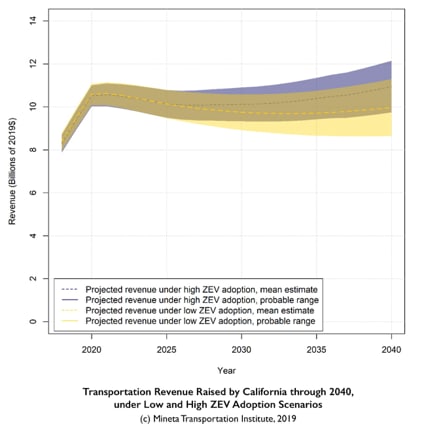
Fast growth in ZEVs means that the state will more than replace lost fuel tax revenue through higher receipts from two annual fees assessed on vehicles: the “Road Improvement Fee” (RIF) that all vehicles pay, and the “Transportation Improvement Fee” (TIF) that ZEVs will pay starting in 2020.
Co-author Hannah King explains that, “this study used common projection methods and widely-used sources of data to predict future transportation revenue in California through 2040.” The authors looked at two scenarios: a low-adoption scenario assuming that the number of ZEVs in the state continues to grow at the current rate of 26,000 new ZEVs per year, and a high-adoption scenario in which California reaches its goal of five million ZEVs in the state fleet by 2030. The relevant taxes projected for the analysis are:
State gasoline excise taxes
Diesel excise taxes
Diesel sales taxes
TIF (a tax on all vehicles, with the rate set according to the vehicle’s value)
RIF (a flat fee charged annually on ZEVs).
As with any projections, readers should keep in mind that these rely on numerous assumptions about future trends — gasoline prices, inflation rates, fleet changes, and so on. With the horizon year of 2040 over 20 years away, many unforeseen changes in conditions can — and undoubtedly will — intervene.
“For example,” notes co-author Dr. Asha Weinstein Agrawal, “if population were to drop markedly due to some unanticipated economic change, then actual revenues could fall outside the projection bands. Of particular relevance to this analysis is the price for ZEVs in the future. If purchase prices fall much faster than assumed, then revenues may fall outside the values projected in this report.”
To view the report, click here.
More Zero Emissions
Ohio’s METRO RTA Turns Electric Buses into Mobile Power Sources at PorchROKR
See how three Gillig battery-electric buses powered festival stages while the agency’s new Park & Ride service carried approximately 1,000 attendees, demonstrating another potential use for transit agencies’ electric fleets.
Read More →
CALSTART and Forth Combine to Form Catalyst Mobility
The new name represents a renewed vision for the nonprofit focused on advancing clean, equitable, and affordable transportation solutions that move people and goods.
Read More →
Building a Flexible Path to Transit Electrification
John Hroncich discusses BAE Systems’ modular and scalable approach, lessons learned from decades of real-world operations, and how agencies can identify electrification strategies that fit their fleets.
Read More →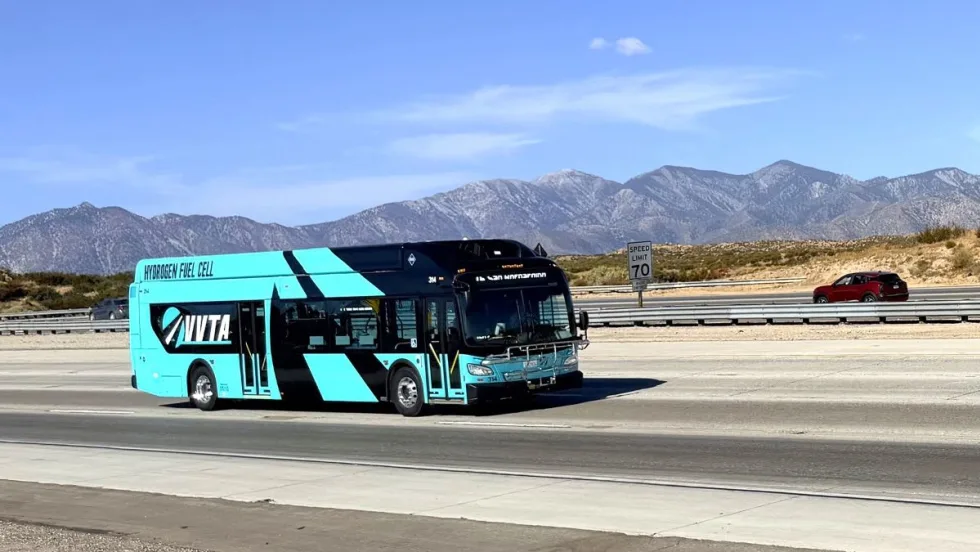
California's VVTA Begins Phased Rollout of Hydrogen Fuel Cell Buses
The agency is introducing 13 zero-emission buses into revenue service while evaluating performance across its urban, rural, and long-distance routes.
Read More →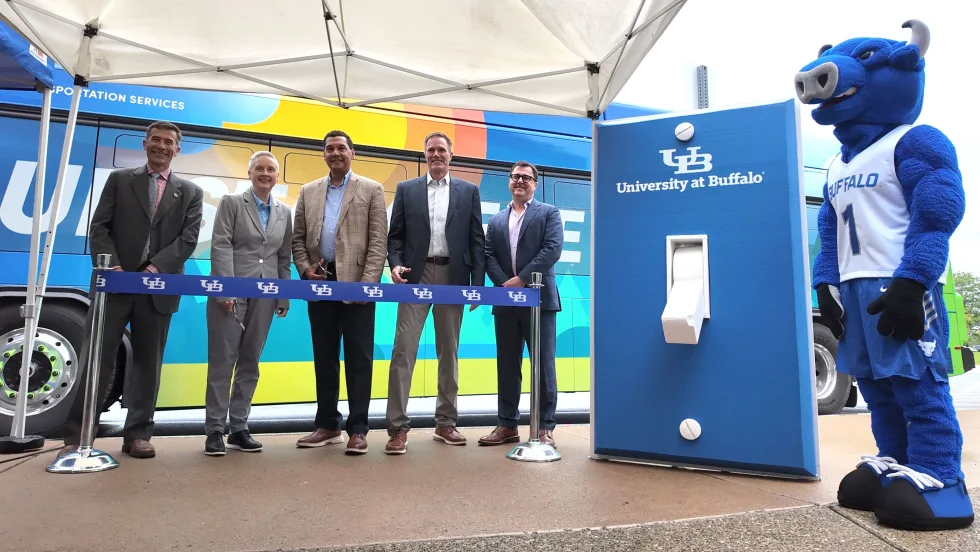
Inside Look: University at Buffalo Puts First 8 Electric Buses Into Stampede Service
UB, transportation solutions provider WeDriveU, and fleet electrification specialist Zenobē marked the deployment in the presence of students, university administrators, and local officials.
Read More →
Biz Briefs: OCTA Taps Clean Energy for Hydrogen Station, Stadler to Supply Via Rail Vehicles, and More
From manufacturers and suppliers to transit agencies and motorcoach operators, these updates offer a snapshot of the projects, partnerships and business moves driving the industry forward.
Read More →
AC Transit’s Cecil Blandon on Building the Next Generation of Transit Maintenance Leaders
The agency’s maintenance chief discusses leadership, workforce development, zero-emission technology, and preparing technicians for the future of public transportation.
Read More →
CTDOT Taps STV for Electric Bus Facility Design
The firm will work with CTDOT and RVT to define the facility layout, operational requirements, and long-term flexibility for RVT’s growing electric fleet.
Read More →
Chicago’s Pace Deploys 24 Hybrid-Electric Buses in Will County
The new buses reduce emissions and fuel consumption while advancing the agency's long-term goal of transitioning to a fully zero-emission fleet.
Read More →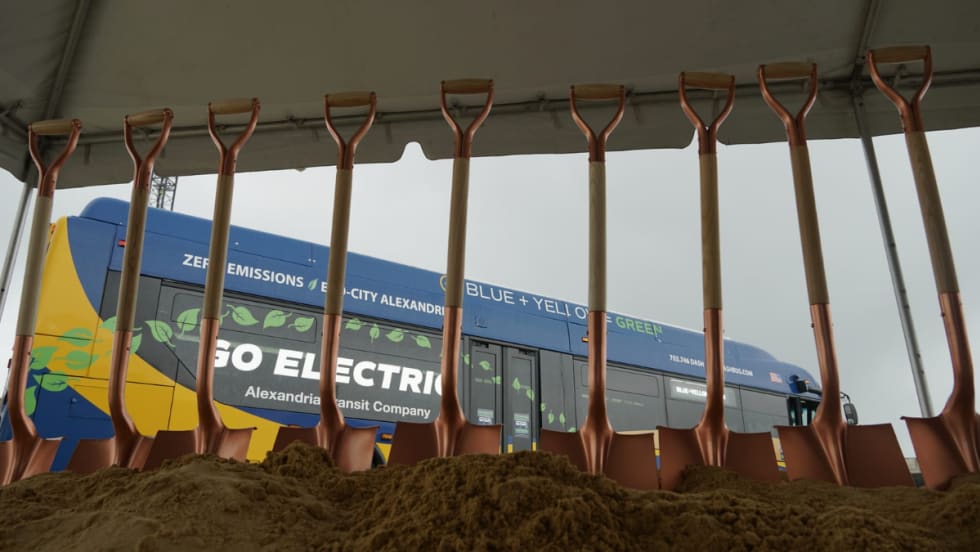
DASH Breaks Ground on First On-Route Electric Bus Chargers in D.C. Region
The fast-charging infrastructure will help extend electric bus range, improve fleet utilization, and support DASH's goal of transitioning to a fully zero-emission fleet.
Read More →