



Calif.'s OCTA takes lead on OC Streetcar project
Up to seven streetcars are planned to run along the 4-mile route, stopping at 12 stations. Initial estimates put the cost of the project at $250 million and it will be jointly funded with OCTA pursuing local, state and federal dollars.

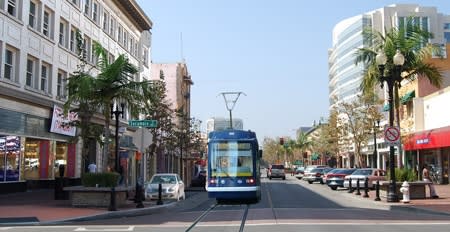
OC Streetcar renderings courtesy OCTA
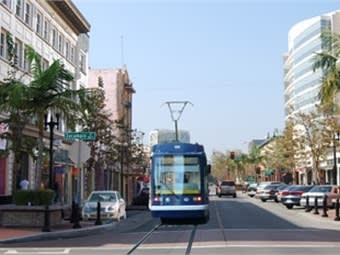
OC Streetcar renderings courtesy OCTA
Orange County, Calif. transportation, city and community leaders gathered at the Santa Ana Regional Transportation Center on Monday afternoon to mark a number milestones toward the construction of Orange County’s first modern streetcar.
RELATED:Streetcars: The Flexible Rail Transit Mode
The OC Streetcar project, planned to travel through the cities of Santa Ana and Garden Grove, has advanced significantly in recent weeks, according to officials. Plans for the streetcar project have been approved by city councils in both cities and received environmental clearances from the Federal Transit Administration.
RELATED:Cost of 3-week Cincinatti streetcar delay could total $2 million
The OC Streetcar, expected to be partly funded by Measure M – the county’s half-cent sales tax for transportation improvements – was recently accepted into the project development phase of the New Starts federal grant program, making it a candidate for future funding.
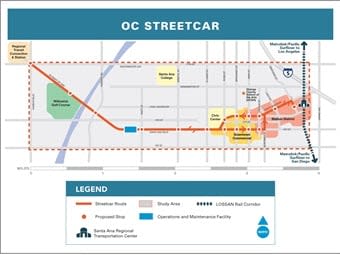
The Orange County Transportation Authority (OCTA) has taken over as the lead agency to design, build and operate the OC Streetcar.
“For years, we’ve been talking about the concept of a streetcar in Orange County, and now we want people to know that the future of the OC Streetcar is on track,” said OCTA Chairman Jeff Lalloway, also mayor pro tem of Irvine. “We’re excited as we look to fulfill another promise made to the voters who approved Measure M by providing better connections between transit centers and the places where people live, work and shop.”
Expected to begin operations in late 2019, the OC Streetcar will link the bustling Santa Ana Regional Transportation Center (SARTC), which provides regional rail, OCTA bus, and intercity and international bus services, to a new multimodal hub at Harbor Boulevard/Westminster Avenue in Garden Grove. Along the way, OC Streetcar will connect directly with 18 OCTA bus routes. OC Streetcar will serve the historic downtown Santa Ana and Civic Center which includes government offices, federal, state and local courthouses, unique restaurants and shops, an artists’ village, several colleges and a variety of community enrichment organizations.
OC Streetcar will increase transportation options and provide greater access along its 4.15-mile route (in each direction) along Santa Ana Boulevard, 4th Street, and the Pacific Electric right-of-way to Harbor Boulevard in Garden Grove.
The streetcar is intended to provide easy connections for people traveling from trains and buses to employment, retail and recreational areas in the heart of Orange County.
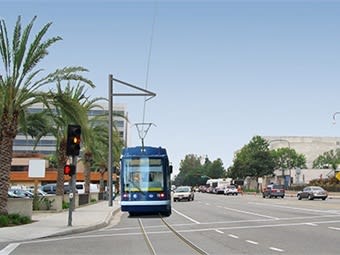
The OC Streetcar is planned to operate along a route just more than 4 miles, from the Santa Ana train station, through Downtown Santa Ana and the Civic Center. It would run along 4th Street and Santa Ana Boulevard. The route would continue along the Pacific Electric right of way and connect to a new multimodal transit hub at Harbor Boulevard and Westminster Avenue in Garden Grove.
Up to seven streetcars are planned to run along the route, stopping at 12 stations. It’s expected that by 2035, the streetcar would carry more than 6,000 riders a day. Initial estimates put the cost of the project at $250 million and it will be jointly funded with OCTA pursuing local, state and federal dollars.
It’s expected the project will move into the design phase later this year with construction planned to begin in 2017. On the current schedule, the streetcar would begin operating in 2019.
More Rail
Amtrak, CN Reach Agreements to Strengthen Passenger Rail Service, Safety
The agreement resolves a more than decade-long proceeding before the Surface Transportation Board concerning the terms and conditions for Amtrak services, such as the City of New Orleans, Illini/Saluki, and Wolverine.
Read More →
New York MTA Advances Final Contract for Second Avenue Subway Expansion
Contract Four is the largest in the Second Avenue Subway Phase 2 project and includes construction of station infrastructure, tracks, and signals for the subway expansion, MTA officials said. Work on Contract Four will begin in 2027.
Read More →
San Diego MTS Breaks Monthly Trolley Ridership Record
Agency officials said July’s ridership indicates MTS’s continued recovery from the pandemic.
Read More →
Report Examines NJ TRANSIT Reliability, Funding Challenges
The Garden State Initiative analysis examines the roles of Amtrak infrastructure, fleet management, and agency operations while recommending a more performance-based approach to improving reliability.
Read More →
Stadler, CapMetro Sign Long-Term Rail Fleet Support Agreement
Beginning in 2027, Stadler will provide on-site technical expertise, spare parts support, training, and obsolescence management to help extend the reliability and longevity of CapMetro’s GTW fleet.
Read More →
Biz Briefs: Alstom Lands Canadian Contract, LYT to Supply California TSP, and More
In METRO's latest installment, we take a look at recent news from Complete Coach Works, Beep, FlixBus, and more partnerships making headlines across the transportation sector.
Read More →
CATS Gold Line Marks 5 Years of Service, 2.8M Passenger Trips
With a six-mile expansion planned, the Charlotte streetcar is positioned to connect more neighborhoods and major transit hubs across the region.
Read More →
Why Simulating Pedestrian Movement Has Become Essential for Modern Rail Stations
Pedestrian microsimulation is helping rail planners identify bottlenecks, test station designs, and prepare complex transit hubs for growing passenger volumes.
Read More →
Amtrak Begins Major Construction at New York’s Sunnyside Yard
The new maintenance facility will support Amtrak’s Airo trainsets while improving maintenance efficiency and turnaround times in New York.
Read More →
Chicago Leaders Unveil Plans for O’Hare Airport Express Train
The privately developed project would offer a 15-minute trip between downtown and O’Hare’s Terminal 2, with trains operating every 15 minutes on a dedicated track. The service would use battery-electric trains and three existing freight rail rights-of-way.
Read More →