




Read More: Amtrak, Private Partners Join to Rebuild America’s Railroad, Deliver Infrastructure Investments
Feds to Review California High-Speed Rail Project
With rising cost estimates and delays in completion, the FRA has begun a review of the California High-Speed Rail Project to see if grant obligations are being met.
February 20, 2025
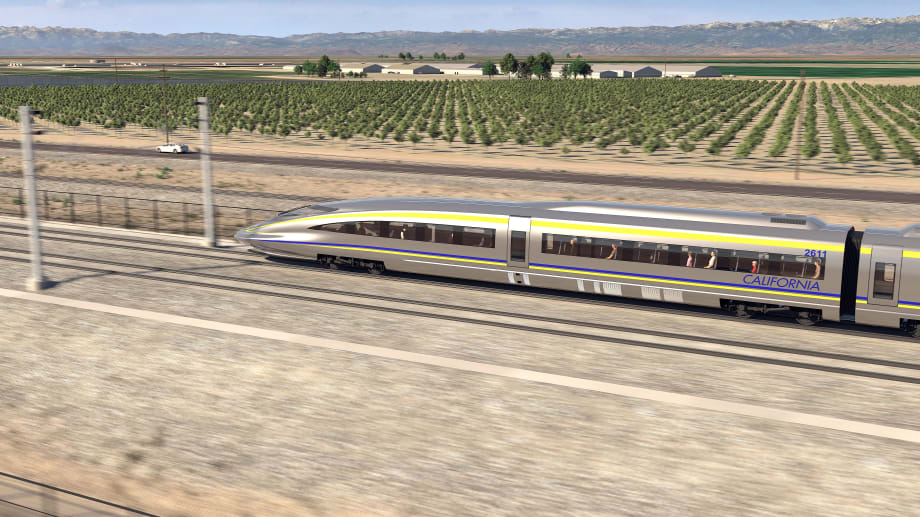
The California High-Speed Rail Authority is under review to determine if they have met the grant obligations agreed to in FRA-administered grants.
Photo: California High-Speed Rail Authority
2 min to read
The California High-Speed Rail Project is being reviewed by the Federal Railroad Administration (FRA) under the direction of Secretary of Transportation Sean P. Duffy.
The review will help determine whether the roughly $4 billion in taxpayer money should remain committed to the proposed project to bring high-speed rail to the California Central Valley between Merced and Bakersfield.
Increasing Costs an Issue
Initially projected for completion by 2020 with a cost of $33 billion, the San Francisco to Los Angeles project has fallen behind those estimations. Currently, the Merced to Bakersfield segment alone is estimated to cost more than the original projection for the entire project.
The latest estimates for the project estimate a cost of $106 billion, more than three times the original estimate.
“For too long, taxpayers have subsidized the massively over-budget and delayed California High-Speed Rail project,” said U.S. Transportation Secretary Sean P. Duffy. “President Trump is right that this project is in dire need of an investigation. That is why I am directing my staff to review and determine whether the CHSRA has followed through on the commitments it made to receive billions of dollars in federal funding. If not, I will have to consider whether that money could be given to deserving infrastructure projects elsewhere in the United States.”
The California High-Speed Rail Office of the Inspector General recently noted that the Merced to Bakersfield segment alone has a funding gap of at least $6.5 billion. The gap remains despite California being due to receive over $4 billion from the Biden administration.
The Inspector General also found that the project has barely a projected ridership of about two million due to its failure to connect California’s larger cities and is unlikely to be completed by 2033.
Project Facing Funding Gap
In March of 2023, the California High-Speed Rail Authority (CHSRA) Peer Review Group evaluated their funding plans and reported an unfunded gap of $92.6 billion to $103.1 billion between estimated costs and known state and federal funding.
The Federal Railroad Administration is investigating the delays and cost overruns through a compliance and performance review.
The Federal Railroad Administration review will examine the CHSRA and the progress made on the Merced to Bakersfield Corridor. The detailed review will also examine the California High-Speed Rail Administration’s compliance with the Federal Railroad Administration grant agreements to determine whether obligations have been fully met.
More Rail

New York MTA Advances Final Contract for Second Avenue Subway Expansion
Contract Four is the largest in the Second Avenue Subway Phase 2 project and includes construction of station infrastructure, tracks, and signals for the subway expansion, MTA officials said. Work on Contract Four will begin in 2027.
Read More →
San Diego MTS Breaks Monthly Trolley Ridership Record
Agency officials said July’s ridership indicates MTS’s continued recovery from the pandemic.
Read More →
Report Examines NJ TRANSIT Reliability, Funding Challenges
The Garden State Initiative analysis examines the roles of Amtrak infrastructure, fleet management, and agency operations while recommending a more performance-based approach to improving reliability.
Read More →
Stadler, CapMetro Sign Long-Term Rail Fleet Support Agreement
Beginning in 2027, Stadler will provide on-site technical expertise, spare parts support, training, and obsolescence management to help extend the reliability and longevity of CapMetro’s GTW fleet.
Read More →
Biz Briefs: Alstom Lands Canadian Contract, LYT to Supply California TSP, and More
In METRO's latest installment, we take a look at recent news from Complete Coach Works, Beep, FlixBus, and more partnerships making headlines across the transportation sector.
Read More →
CATS Gold Line Marks 5 Years of Service, 2.8M Passenger Trips
With a six-mile expansion planned, the Charlotte streetcar is positioned to connect more neighborhoods and major transit hubs across the region.
Read More →
Why Simulating Pedestrian Movement Has Become Essential for Modern Rail Stations
Pedestrian microsimulation is helping rail planners identify bottlenecks, test station designs, and prepare complex transit hubs for growing passenger volumes.
Read More →
Amtrak Begins Major Construction at New York’s Sunnyside Yard
The new maintenance facility will support Amtrak’s Airo trainsets while improving maintenance efficiency and turnaround times in New York.
Read More →
Chicago Leaders Unveil Plans for O’Hare Airport Express Train
The privately developed project would offer a 15-minute trip between downtown and O’Hare’s Terminal 2, with trains operating every 15 minutes on a dedicated track. The service would use battery-electric trains and three existing freight rail rights-of-way.
Read More →
OCTA Maps Out 30-Year Strategy to Protect Coastal Rail Corridor
The draft feasibility report identifies strategies to protect the coastal rail line for decades as the agency continues near-term stabilization and sand placement efforts.
Read More →