




Read More: California Envisions a Zero-Emission Connected Rail Network By 2050
Officials Highlight the Economic Benefits of California's High-Speed Rail Project
A $13 billion investment into high-speed rail generates nearly $22 billion in total economic activity.
January 27, 2025
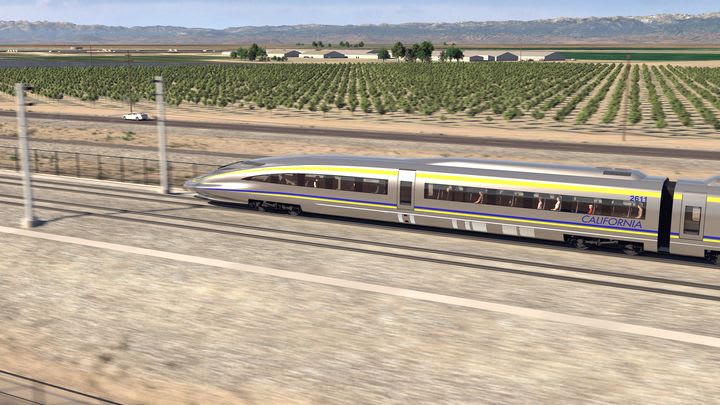
The California High-Speed Rail network is estimated to cut trip times between San Francisco and Los Angeles by half once the line has been completed.
Photo: California High-Speed Rail Authority
2 min to read
In the California High-Speed Rail Authority’s 2024 Economic Impact Analysis Report substantial benefits to the state were highlighted that underscore the high-speed rail project’s role in stimulating economic growth.
This growth comes as work continues to build the first high-speed rail system in the United States.
Projected Economic Growth
Ninety-nine percent of the project’s 2023-24 fiscal year expenditures have gone to California businesses and workers, with two out of every three dollars going to disadvantaged communities to drive economic activity in those areas.
The Authority estimates that the project has created approximately 109,000 job-years of employment, which is equal to more than $8 billion in total labor income earned and nearly $22 billion in total economic activity.
Upon completing the 171-mile Merced to Bakersfield initial passenger service it is estimated that existing trip times will be cut in half, and more trips will be made. This will result in a total of 333,000 job-years of employment and total economic activity of $70.3 billion.
Looking to the completion of the 494-mile Phase 1 System between San Francisco and Los Angeles/Anaheim via the underway Central Valley Section, estimates show the creation of 1,034,000 job-years of employment and $221.8 billion in economic activity.
This analysis is updated annually and currently reflects data as of June 2024.
The full report can be found here.
Construction Progress
Currently there are 171 miles of the high-speed rail project under construction from Merced to Bakersfield. More than 60 miles of guideway has been completed and 50 of the 93 structures needed are complete with 25 more under construction between Madera, Fresno, Kings, Tulare, and Kern counties.
The beginning of a railhead project in Kern County was announced earlier this month that includes the installation of temporary freight tracks that will help transport materials to build the future electrified, high-speed rail tracks.
The railhead construction is a major step n the track and systems process and marks the beginning of the next phase of the program. The railhead was made possible due to the completion of Construction Package 4 which comprised of 22 miles and 11 structures.
Since the start of high-speed rail construction, more than 14,500 construction jobs have been created, mostly going to Central Valley residents.
Environmental clearance on 463 miles of the high-speed rail program from the Bay Area to downtown Los Angeles has been given.
More Rail

New York MTA Advances Final Contract for Second Avenue Subway Expansion
Contract Four is the largest in the Second Avenue Subway Phase 2 project and includes construction of station infrastructure, tracks, and signals for the subway expansion, MTA officials said. Work on Contract Four will begin in 2027.
Read More →
San Diego MTS Breaks Monthly Trolley Ridership Record
Agency officials said July’s ridership indicates MTS’s continued recovery from the pandemic.
Read More →
Report Examines NJ TRANSIT Reliability, Funding Challenges
The Garden State Initiative analysis examines the roles of Amtrak infrastructure, fleet management, and agency operations while recommending a more performance-based approach to improving reliability.
Read More →
Stadler, CapMetro Sign Long-Term Rail Fleet Support Agreement
Beginning in 2027, Stadler will provide on-site technical expertise, spare parts support, training, and obsolescence management to help extend the reliability and longevity of CapMetro’s GTW fleet.
Read More →
Biz Briefs: Alstom Lands Canadian Contract, LYT to Supply California TSP, and More
In METRO's latest installment, we take a look at recent news from Complete Coach Works, Beep, FlixBus, and more partnerships making headlines across the transportation sector.
Read More →
CATS Gold Line Marks 5 Years of Service, 2.8M Passenger Trips
With a six-mile expansion planned, the Charlotte streetcar is positioned to connect more neighborhoods and major transit hubs across the region.
Read More →
Why Simulating Pedestrian Movement Has Become Essential for Modern Rail Stations
Pedestrian microsimulation is helping rail planners identify bottlenecks, test station designs, and prepare complex transit hubs for growing passenger volumes.
Read More →
Amtrak Begins Major Construction at New York’s Sunnyside Yard
The new maintenance facility will support Amtrak’s Airo trainsets while improving maintenance efficiency and turnaround times in New York.
Read More →
Chicago Leaders Unveil Plans for O’Hare Airport Express Train
The privately developed project would offer a 15-minute trip between downtown and O’Hare’s Terminal 2, with trains operating every 15 minutes on a dedicated track. The service would use battery-electric trains and three existing freight rail rights-of-way.
Read More →
OCTA Maps Out 30-Year Strategy to Protect Coastal Rail Corridor
The draft feasibility report identifies strategies to protect the coastal rail line for decades as the agency continues near-term stabilization and sand placement efforts.
Read More →