



Capital Metro Board approves transit system overhaul
Key elements of the new plan involve creating a more frequent, reliable and connected network of services.

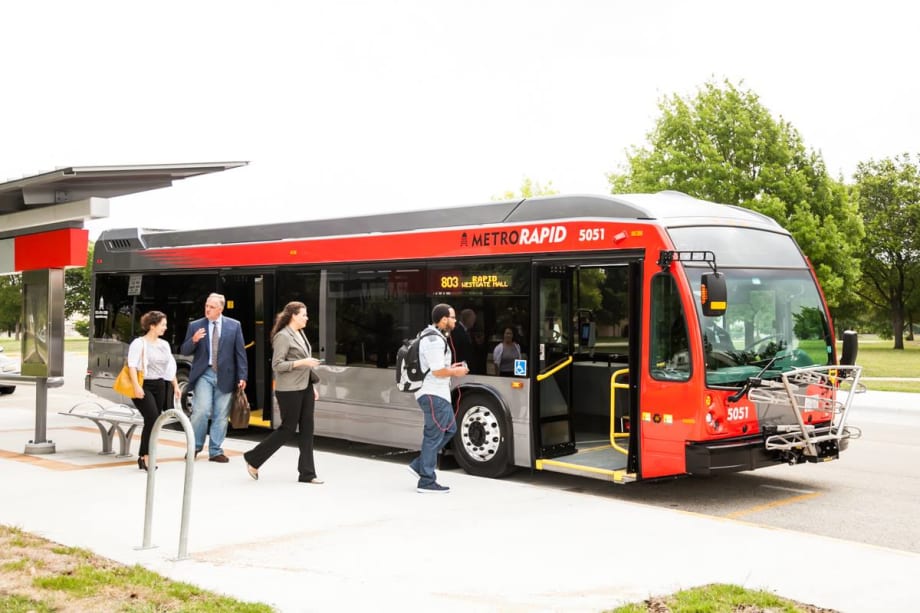
Capital Metro
Capital Metro
Capital Metro’s board of directors approved the agency’s draft transit plan, which will involve creating a more frequent, reliable and connected network of services.
In response to feedback from thousands of people around Central Texas, Capital Metro’s updated network will take a frequency-first approach, tripling the number of bus routes running every 15 minutes or better. The agency follows industry peers TriMet in Portland, Sound Transit in Seattle, Denver RTD and Houston Metro by investing in key corridors to build core frequent service and ridership, while reducing waiting times.
Capital Metro’s new plan, Connections 2025, is designed to improve the rider experience — creating a 24/7 transit system that will see expanded MetroExpress and MetroRapid service, and more east-west options.
Feature of the new network:
2 fare types (Local and Commuter)
4 MetroRapid routes (running every 7-15 minutes)
13 Frequent Local routes (running every 15 minutes)
23 Local routes (running every 30 minutes)
4 downtown circulator routes
6 UT Shuttles
8 Express routes
The year-long Connections 2025 study focused on creating a financially sustainable network that tailors the right service to lifestyle, commuter and coverage markets, anticipating projected growth. By reorganizing bus routes and substituting low-performing service with six Mobility Innovation Zones, the agency will transform its system within its budgetary constraints. These innovation zones will allow Capital Metro to pilot new services that may include on-demand, micro-transit or flex routes, connecting to the larger transit network.
The first year of operations of the new network is expected to cost an additional $9 million, bringing the total to an estimated $267.8 million compared to $259 million for the existing system.
The Connections 2025 plan will guide the evolution of Capital Metro’s service over the next five years, and identifies long-range opportunities over the next 10 years. Each implementation phase will require a subsequent public hearing process, and review and approval by the Capital Metro board.
Later this year, Capital Metro will begin hosting public open houses to discuss the first significant phase of changes, anticipated for spring 2018. Changes stemming from Connections 2025 that have already received board approval include the fare restructure implemented on Jan. 8, and improvements to Express service that will operate in the MoPac Managed Lanes.
To date, Capital Metro has met with more than 100 organizations, participated in 125 community meetings with nearly 4,000 attendees, and received 6,500 survey responses related to Connections 2025. The plan has received support from the Downtown Austin Alliance, Rocky Mountain Institute, Urban Transportation Commission, AURA, Alliance for Public Transportation in Austin, Austin Chamber of Commerce, Vision Zero, Pedestrian Advisory Council, Bicycle Advisory Committee, Downtown Commission and Zipcar.
More Management

METRO Opens Submissions for 2026 Motorcoach Awards
Nominations are now being accepted for METRO Magazine’s Operator of the Year and Innovative Operator of the Year awards.
Read More →
New York MTA Advances Final Contract for Second Avenue Subway Expansion
Contract Four is the largest in the Second Avenue Subway Phase 2 project and includes construction of station infrastructure, tracks, and signals for the subway expansion, MTA officials said. Work on Contract Four will begin in 2027.
Read More →
Transit Agencies Highlight Safety Gains at National Summit
Leaders from 15 major transit systems shared crime-reduction results and safety initiatives while discussing the role of continued federal support.
Read More →

NITA Names New Leadership, Expands Reduced-Fare Program at First Board Meeting
The new regional transit authority appointed its first board chair and interim executive director while extending reduced fares across CTA, Metra, and Pace for eligible riders.
Read More →
Beyond the Checklist: A Structured Approach to Transit Maintenance
Reliability-Centered Maintenance helps transit agencies move beyond routine checklists to focus limited resources on the assets and failures that have the greatest impact on safety, reliability, and service.
Read More →
APTA 2026 Nominating Committee Selects Leadership Slate, Names Chair and Vice Chair Nominees
Leadership changes will help shape the association’s priorities and its representation of the transportation industry during the 2026–2027 term.
Read More →
DART Launches Major Security, Fare Enforcement Initiative
The 90-day demonstration will deploy coordinated security teams at five light rail stations while testing controlled access and gathering data to guide future investments.
Read More →
Advancing Fare Collection Through Technology and Innovation
Learn about delivering 1300 gates at 91 stations while managing fare evasion. Explore the large scale deployment, solution customization and real-world results that affect the region. Prepare for deployment in your region now.
Read More →
Game Day in Motion: Moving Millions During the 2026 World Cup
Between packed transit stations and team motorcoaches, see how agencies and operators across North America tackled the transportation demands of the 2026 FIFA World Cup.
Read More →
Surface Transportation Extension Averts Shutdown, Leaves Transit Funding Gap
The stopgap keeps federal transportation programs moving, but missing advance funding could complicate the transit and rail projects agencies are planning next.
Read More →