




RELATED: Chicago taps 3 firms to bid for rail line modernization
Chicago Transit approves 2018 budget, includes first fare increase in 9 years
The Chicago Transit Board also approved a $2.7 billion five-year capital budget for 2018-2022, continuing more than $8 billion of historic transit investment completed, begun or announced by Mayor Rahm Emanuel since 2011.
December 14, 2017
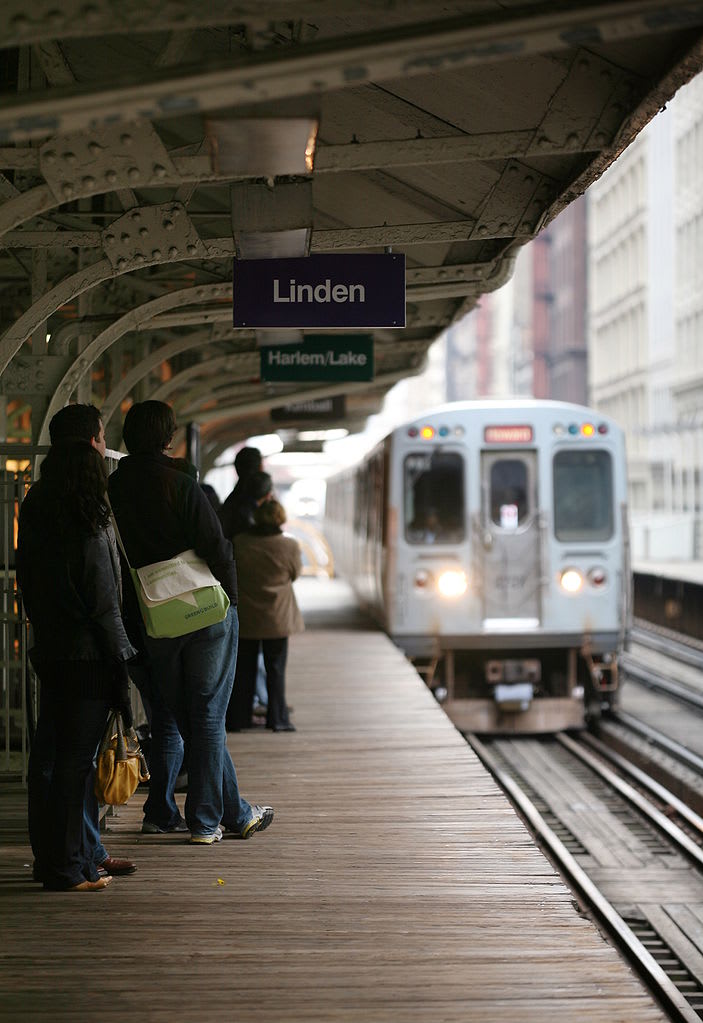
The budget preserves bus and rail service, including expanded bus and rail service put into place in recent years. Includes additional service begun in 2017 on six bus routes on the South Side and during rush periods on Red, Blue, Green, and Purple lines.
Daniel Schwen
3 min to read
The budget preserves bus and rail service, including expanded bus and rail service put into place in recent years. Includes additional service begun in 2017 on six bus routes on the South Side and during rush periods on Red, Blue, Green, and Purple lines.
Daniel Schwen
The Chicago Transit Authority’s (CTA) board approved a $1.51 billion operating budget that preserves bus and rail service levels, while continuing historic investments to modernize the CTA and improve the customer experience. Following a reduction of $33 million in state support for CTA’s 2018 budget, the board approved a spending plan that makes significant cuts and reforms, and includes a modest increase in CTA’s base fare and the price of a 30-day pass.
“CTA’s budget demonstrates our commitment to financial stability, and maintaining and investing in the quality bus and rail service that our customers expect and deserve, in spite of state budget cuts and other challenges the agency faces,” said Chicago Transit Board Chairman Terry Peterson. “As the nation’s second-largest transit agency, CTA provides vital transit services for millions of riders every year. I am pleased that this responsible, structurally sound budget continues our efforts to better serve Chicagoans across our city and our service area.”
The Chicago Transit Board also approved a $2.7 billion five-year capital budget for 2018-2022, continuing more than $8 billion of historic transit investment completed, begun or announced by Mayor Rahm Emanuel since 2011. Those projects include rehabilitating rail stations and building new ones, modernizing rail and bus fleets, removing rail slow zones, and adding new technologies — work that improves reliability, reduces commuting times, strengthens safety and security, and improves the overall commuting experience.
“Our balanced budget for 2018 reflects CTA’s commitment to modernizing and improving its bus and rail system for our customers,” said CTA President Dorval R. Carter, Jr. “We have been able to offer a responsible budget for 2018 by making tough decisions that included finding $23 million in savings and reforms and making the first increase in base fares in nearly a decade, all of which allow us to continue to preserve bus and rail service that our customers depend on. And we’ll continue to invest and modernize CTA with the help of new money from ride-hailing fees, thanks to the support and leadership of Mayor Emanuel and the Chicago City Council.”
Operating budget highlights
Preserves bus and rail service, including expanded bus and rail service put into place in recent years. Includes additional service begun in 2017 on six bus routes on the South Side and during rush periods on Red, Blue, Green, and Purple lines.
Budget includes $23 million of savings and reforms, including eliminating 45 vacant positions and freezing 70 positions ($12.5 million); locking in low fuel and power prices ($4.7 million) and holding the line on contractual expenses and increasing advertising/concession revenue (more than $5 million).
Increase in base fare, first in nine years, of 25 cents to $2.25 bus/$2.50 rail; 10-cent and 15-cent increases in reduced fares to $1.10/bus and $1.25/rail; $5 increase in 30-day unlimited-ride pass price. All other fares and passes — including student fares — remain at the current price.
Since 2011, CTA has focused on identifying cost savings and implementing operational efficiencies through our organization—resulting in nearly $300 million in savings.
CTA capital budget highlights
CTA in 2018 will continue to pursue long-term priorities which focus on improving service to customers. CTA’s capital budget for 2018-2022 includes support for capital improvement projects via the City of Chicago’s ride-hailing fee — the first such fee of its kind in the U.S. — which is dedicated solely to transit capital investment. Due to the absence of a state capital program and with competition for federal funding increasing, this new source of funding is critical to allow CTA to continue investing in the modernization of its infrastructure.
The ride-hailing fee will fund two important CTA initiatives: FastTracks, which includes track improvements to provide faster, smoother trips that will save up to six minutes per trip; and Safe and Secure, which includes security camera expansion and upgrades; lighting improvements; and other repairs.
More New Mobility

From Hardware to Digital Partner: Luminator Charts Its Next Chapter
CEO Magnus Friberg discusses Luminator’s shift toward becoming a digital partner, the growing importance of software and interoperability, and how AI can help agencies improve operations and passenger experience.
Read More →
Biz Briefs: Alstom Lands Canadian Contract, LYT to Supply California TSP, and More
In METRO's latest installment, we take a look at recent news from Complete Coach Works, Beep, FlixBus, and more partnerships making headlines across the transportation sector.
Read More →
CharterUP’s Armir Harris on Technology, AI, and the Future of Group Mobility
In a recent episode of METROspectives, CharterUP Founder/CEO Armir Harris discussed the company’s evolution from an online charter bus marketplace into a technology platform supporting public- and private-sector mobility and much more.
Read More →
Jacksonville’s NAVI Project Charts a New Course for Autonomous Public Transportation
Through its NAVI program, JTA is showing how autonomous vehicles, intelligent infrastructure, and coordinated operations can work together to deliver everyday public transportation.
Read More →
Biz Briefs: Luminator Marks Milestone and More
From manufacturers and suppliers to transit agencies and motorcoach operators, these updates offer a snapshot of the projects, partnerships and business moves driving the industry forward.
Read More →
New Tricks for Old Bureaucracies: Joshua Schank on Making Transit Innovation Stick
Former LA Metro Chief Innovation Officer Joshua Schank discusses why good ideas aren't enough, how transit agencies can overcome resistance to change, and why today's challenges demand more innovation.
Read More →
How DART's GoPass Is Redefining Regional Mobility
Serving 14 transit agencies, GoPass simplifies multimodal travel by allowing riders to plan, pay for, and manage an entire trip through one app.
Read More →
Biz Briefs: OCTA Taps Clean Energy for Hydrogen Station, Stadler to Supply Via Rail Vehicles, and More
From manufacturers and suppliers to transit agencies and motorcoach operators, these updates offer a snapshot of the projects, partnerships and business moves driving the industry forward.
Read More →CharterUP Expands Into New Mobility and Autonomous Transportation
Vice President of New Mobility Stephen Joos discusses how CharterUP is leveraging its nationwide transportation network, technology platform, and autonomous vehicle partnerships to expand into workforce mobility, campus shuttles, and transit solutions.
Read More →
METRO Magazine Announces 2026 Innovative Solutions Awards Winners
Projects Recognized for Advancing Mobility Through Technology, Accessibility, Workforce Innovation, and Operational Excellence
Read More →