




Related: Clean Energy wins $3M Santa Monica Big Blue Bus contract
Clean Energy announces the CleanCNG heavy-duty compressor
The introduction is the culmination of 35 years in leadership in the compressor industry and the result of a complete ground-up re-engineering of the CleanCNG Standard.
June 14, 2016
Clean Energy
2 min to read
Clean Energy
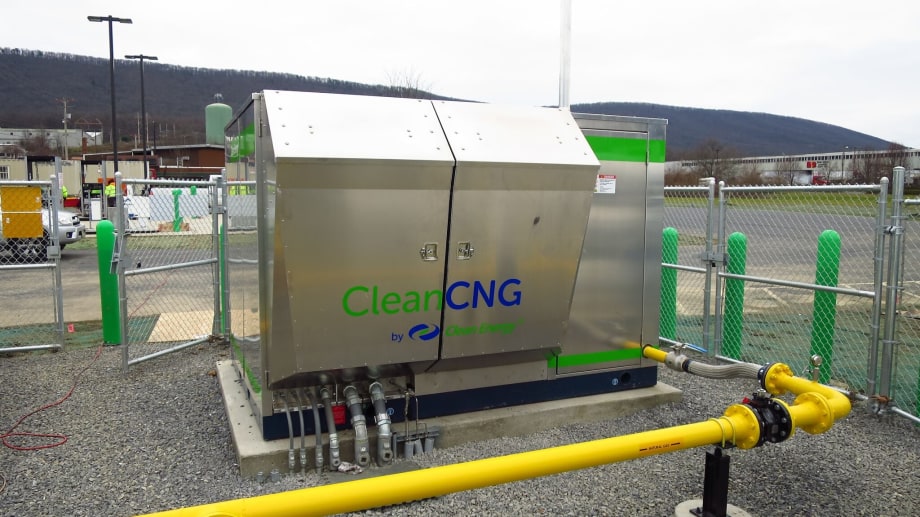
Clean Energy Fuels Corp. introduced a heavy-duty non-lubricated compressor for the natural gas fueling market. The CleanCNG™, developed by engineers at Clean Energy’s subsidiary Clean Energy Compression in Chilliwack B.C., incorporates revolutionary improvements in compressor design and intelligent engineering, resulting in ultra-low vibration and noise in a compressor that is unparalleled in scalability, parts commonality and overall performance.
The CleanCNG™ is the culmination of 35 years in leadership in the compressor industry and the result of a complete ground-up re-engineering of the CleanCNG Standard.
The New Compressor Features:
Standardized & Modular Construction. Streamlined modular engineering improves initial specification and cost-effectiveness, quicker delivery time and more reliable operation with extended service intervals. Specifically designed for expansion, the CleanCNG™ is available in 150 HP – 300 HP configurations.
Ultra-Low Vibration & Noise. At 75 dBA @ 3m, low operating noise is a standard feature of the CleanCNG™, making it suitable for even residential neighborhood installations. Vibration measurements exceed API 618 and recommended industry guidelines.
Scalable by Design. CleanCNG™ is the only natural gas compressor whose control systems, assembly and enclosure are designed and built to be mated together in an expandable manner. Proprietary heat management ensures that heated air is not recirculated between compressors, and performance remains consistent regardless of the number of compressors. .
TransLink, the regional transit authority to Metro Vancouver, B.C., and the first Canadian transportation provider to achieve Platinum sustainability status from the American Transportation Association, recently purchased six of the new CleanCNG™ units.
Clean Energy Compression facilities meets all ISO 9001:2008 Quality Management System requirements. CleanCNG compressors are available using a variety of cylinder configurations and inlet pressures. Multiple compressor systems, using two or three modular compressor packages that can be integrated together on-site, offer higher overall flow rates and system redundancy.
More Technology

From Hardware to Digital Partner: Luminator Charts Its Next Chapter
CEO Magnus Friberg discusses Luminator’s shift toward becoming a digital partner, the growing importance of software and interoperability, and how AI can help agencies improve operations and passenger experience.
Read More →
Beyond the Checklist: A Structured Approach to Transit Maintenance
Reliability-Centered Maintenance helps transit agencies move beyond routine checklists to focus limited resources on the assets and failures that have the greatest impact on safety, reliability, and service.
Read More →
NJ TRANSIT Advances Bus Technology Upgrades Across Statewide Fleet
More than 1,500 buses now feature upgraded technology designed to improve arrival predictions and provide free Wi-Fi, with deployment expected to reach nearly 2,000 buses by the end of 2026.
Read More →

Building a Flexible Path to Transit Electrification
John Hroncich discusses BAE Systems’ modular and scalable approach, lessons learned from decades of real-world operations, and how agencies can identify electrification strategies that fit their fleets.
Read More →
Biz Briefs: Alstom Lands Canadian Contract, LYT to Supply California TSP, and More
In METRO's latest installment, we take a look at recent news from Complete Coach Works, Beep, FlixBus, and more partnerships making headlines across the transportation sector.
Read More →
Sponsored•September 8, 2026
From Legacy Silos to Conversational Intelligence
What if transit leaders could ask any operational question and get a trusted answer in seconds? Conversational AI is transforming how agencies use their data.
Read More →
USDOT Announces Rail Vehicle Replacement Grants, Chattanooga AV Shuttle Funding
More than $191 million in federal funding will help three transit agencies replace aging rail vehicles and support a new autonomous shuttle service in Chattanooga.
Read More →
Bus Tech Talk: Keeping Transit Technicians Ahead of the Technology Curve
LA Metro’s Obed Mejia discusses technician training, evolving maintenance technology, fleet replacement, and strategies for getting the most out of today’s transit fleets.
Read More →
Biz Briefs: RIPTA Unveils New Frontrunners, Clevland RTA Adds New Siemens, and More
In METRO's latest installment, we take a look at recent news from Siemens, Prevost, Dodge, and more partnerships making headlines across the transportation sector.
Read More →
Why Simulating Pedestrian Movement Has Become Essential for Modern Rail Stations
Pedestrian microsimulation is helping rail planners identify bottlenecks, test station designs, and prepare complex transit hubs for growing passenger volumes.
Read More →