




RELATED: Redefining Traditional Public Transit to Integrate Mobility Services
Collin County Transit adds new city to on-demand service roster
Expanding service footprint and will begin operating in the city of Prosper effective Monday, June 3.
May 20, 2019

Irving Holdings
3 min to read
Irving Holdings
Texas-based Collin County Transit – a partnership between the City of McKinney, the McKinney Urban Transit District (MUTD) and the Denton County Transportation Authority (DCTA) – is expanding its service footprint and will begin operating in the Town of Prosper effective Monday, June 3.
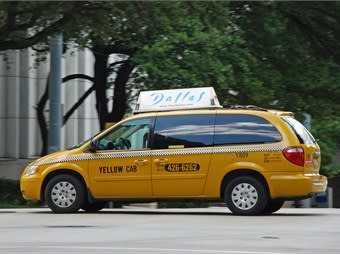
The service consists of a subsidized taxi voucher program that provides transit options for participating MUTD cities including McKinney, Lowry Crossing, Melissa, Princeton, Celina and now the Town of Prosper.
On April 10, the Town of Prosper joined the MUTD, which makes transit decisions and manages federal and state transit funding on behalf of the participating cities. Prosper residents will now be able to use MUTD services such as Collin County Transit, which provides on-demand transportation for older adults, individuals with disabilities and low-income residents in its service area.
Collin County Transit operates Monday through Friday from 6 a.m. to 6 p.m., and on Saturdays from 8 a.m. to 6 p.m. The service consists of three main programs:
Older Adult Program – Must be a resident of one of the member cities and 65 years or older.
Individuals with Disabilities Program - Must be a resident of one of the member cities and meet one of the seven criteria.
Low Income Transit Subsidy Program – Must be a resident of one of the member cities and have an annual household income (before taxes) at the required program amounts based on the U.S. Federal Poverty Guidelines.
Trips can be booked 24 hours a day, seven days a week, 365 days a year. A variety of taxis operate Collin County Transit, including wheelchair accessible vehicles. A resident of one of the participating cities can apply for Collin County Transit via email, fax, online, phone or mail and must provide a completed application, signed terms and conditions, and copies of all required documentation. Irving Holdings, DCTA’s contractor, operates and manages the taxi voucher program.
Customers pay the fare for the taxi voucher program using a pre-issued taxi debit card that they can load a maximum of $150 each month (in $5 increments). The customer contribution will be matched three to one for a total value of up to $600 maximum per month. Taxi drivers will accept cash and credit card for any additional payments required.
One-way taxi fare is based on the origin and destination requested by the customer. Basic meter rates apply:
$2.25 is the boarding fare plus $1.80 per mile
There is a traffic delay/waiting time charge of $.45 per every 1.5 minutes
Riders may be responsible for any toll charges the trip may require (tolls may be paid using the debit card)
A total of 8,876 trips have been completed with Collin County Transit from inception in June 2017 through February 2019. The program has steadily increased from the first month of service with less than 100 trips to more than 800 trips in February 2019.
More New Mobility

From Hardware to Digital Partner: Luminator Charts Its Next Chapter
CEO Magnus Friberg discusses Luminator’s shift toward becoming a digital partner, the growing importance of software and interoperability, and how AI can help agencies improve operations and passenger experience.
Read More →
Biz Briefs: Alstom Lands Canadian Contract, LYT to Supply California TSP, and More
In METRO's latest installment, we take a look at recent news from Complete Coach Works, Beep, FlixBus, and more partnerships making headlines across the transportation sector.
Read More →
CharterUP’s Armir Harris on Technology, AI, and the Future of Group Mobility
In a recent episode of METROspectives, CharterUP Founder/CEO Armir Harris discussed the company’s evolution from an online charter bus marketplace into a technology platform supporting public- and private-sector mobility and much more.
Read More →
Jacksonville’s NAVI Project Charts a New Course for Autonomous Public Transportation
Through its NAVI program, JTA is showing how autonomous vehicles, intelligent infrastructure, and coordinated operations can work together to deliver everyday public transportation.
Read More →
Biz Briefs: Luminator Marks Milestone and More
From manufacturers and suppliers to transit agencies and motorcoach operators, these updates offer a snapshot of the projects, partnerships and business moves driving the industry forward.
Read More →
New Tricks for Old Bureaucracies: Joshua Schank on Making Transit Innovation Stick
Former LA Metro Chief Innovation Officer Joshua Schank discusses why good ideas aren't enough, how transit agencies can overcome resistance to change, and why today's challenges demand more innovation.
Read More →
How DART's GoPass Is Redefining Regional Mobility
Serving 14 transit agencies, GoPass simplifies multimodal travel by allowing riders to plan, pay for, and manage an entire trip through one app.
Read More →
Biz Briefs: OCTA Taps Clean Energy for Hydrogen Station, Stadler to Supply Via Rail Vehicles, and More
From manufacturers and suppliers to transit agencies and motorcoach operators, these updates offer a snapshot of the projects, partnerships and business moves driving the industry forward.
Read More →CharterUP Expands Into New Mobility and Autonomous Transportation
Vice President of New Mobility Stephen Joos discusses how CharterUP is leveraging its nationwide transportation network, technology platform, and autonomous vehicle partnerships to expand into workforce mobility, campus shuttles, and transit solutions.
Read More →
METRO Magazine Announces 2026 Innovative Solutions Awards Winners
Projects Recognized for Advancing Mobility Through Technology, Accessibility, Workforce Innovation, and Operational Excellence
Read More →