



Commuter rail making strong progress on PTC, APTA says
Advancements reflect the commuter rail industry's commitment to safety and to implementing PTC by the statutory deadline.

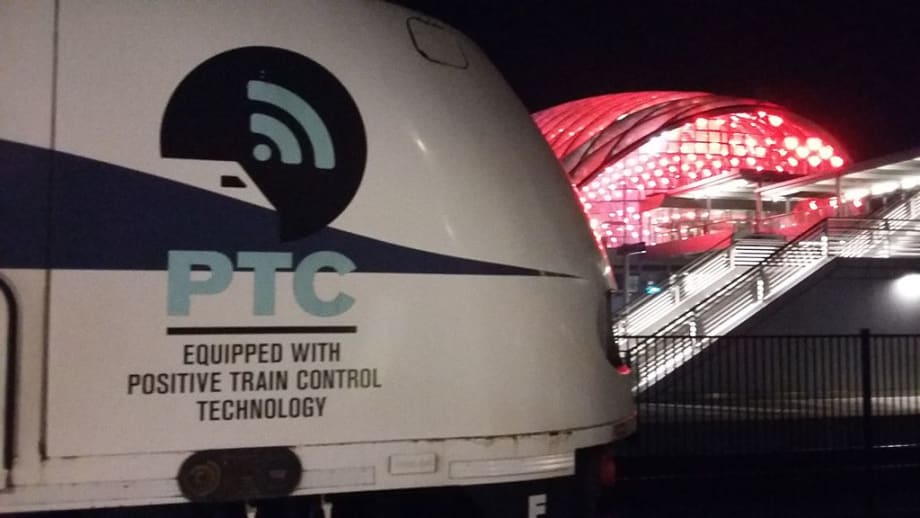
Upon reaching these milestones by the end of 2018, the commuter railroads must implement PTC as soon as practicable and no later than Dec. 31, 2020.
Upon reaching these milestones by the end of 2018, the commuter railroads must implement PTC as soon as practicable and no later than Dec. 31, 2020.
Strong and continuous progress is being made by the commuter rail industry toward installing and implementing Positive Train Control (PTC), according to an analysis by the American Public Transportation Association (APTA). These advancements reflect the commuter rail industry's commitment to safety and to implementing PTC by the statutory deadline.
The commuter rail industry is making substantial progress, and as of June 30, 2018:
91% of spectrum has been acquired.
85% of 13,698 pieces of onboard equipment have been installed on locomotives and cab cars etc.
79% of 14,083 wayside (on track equipment) installations have been completed.
78% of back office control systems are ready for operation.
74% of 14,847 employees have been trained in PTC.
34% of commuter railroads are in testing, revenue service demonstration, or are operating their trains with PTC.
"Every year, 30 commuter railroads across America safely carry passengers on 501 million trips," said APTA President/ CEO Paul P. Skoutelas. "With safety as our number one priority, the commuter railroads are making strong and continuous progress in implementing Positive Train Control."
Under current law (49 U.S.C. 20157), commuter railroads are required to meet the following milestones by Dec. 31, 2018. As defined in 49 U.S.C. 20157(a)(3)(B), they are to have:
Installed all PTC hardware (wayside and onboard equipment).
Acquired all necessary spectrum for PTC implementation.
Completed all employee training.
Initiated testing on at least one territory subject to the PTC requirement (or other criteria).
Submitted a plan and schedule to the Secretary of Transportation for implementing a PTC system.
Upon reaching these milestones by the end of 2018, the commuter railroads must implement PTC as soon as practicable and no later than Dec. 31, 2020.
"Positive Train Control is a critical commuter rail safety enhancement," said SEPTA GM Jeffrey D. Knueppel. "Implementing PTC at SEPTA, during a challenging period of capital funding, has been an authority-wide commitment. Throughout this effort, our in-house team has been working continuously with Amtrak, our freight partners, and third-party contractors to address technical and interoperability challenges. SEPTA trains on all 13 Regional Rail Lines are equipped and operating with PTC, and SEPTA is proud to have implemented this safety technology for our customers and employees."
"Implementing Positive Train Control in Chicago's dense and busy railroad network has been very challenging, but Metra is right where we said we'd be in terms of finishing the job," said Jim Derwinski, Metra's CEO/executive director. "Working with our freight partners, we expect to have PTC implemented or in revenue service demonstration on six of our 11 lines by the end of 2018, and to complete the job by 2020."
The commuter rail industry is moving aggressively to implement PTC as it faces considerable technical and financial constraints. At a time when the national transit state of good repair backlog stands at an estimated $90 billion, the commuter railroad industry's cost to implement PTC will exceed $4.1 billion, diverting funds from other critical infrastructure priorities. Since Congress mandated PTC, the federal government has awarded $272 million in PTC grants. Additionally, another $250 million was made available in May 2018.
More Security and Safety

Transit Agencies Highlight Safety Gains at National Summit
Leaders from 15 major transit systems shared crime-reduction results and safety initiatives while discussing the role of continued federal support.
Read More →
DART Launches Major Security, Fare Enforcement Initiative
The 90-day demonstration will deploy coordinated security teams at five light rail stations while testing controlled access and gathering data to guide future investments.
Read More →
RTD Launches NextRide App to Consolidate Trip Planning, Fares, Security Reporting
The app expands on RTD’s existing NextRide web application and allows customers to view real-time vehicle locations and service alerts, purchase and store digital fares, and access customer support.
Read More →

TAPTCO Updates OSHA Compliance Training for Transit Maintenance Operations
The revamped program addresses 26 OSHA standards for maintenance facilities, with TAPTCO pointing to training, documentation, and everyday shop hazards as continuing challenges for transit operations.
Read More →
How VaporVision Adds Value to Transit Door Systems
Wabtec engineers explain how the system improves doorway detection, strengthens diagnostics and gives transit agencies and OEMs greater operating flexibility.
Read More →
FRA Announces $5.3B in Rail Investments, Including $2B for Amtrak
Funding will support grade-crossing improvements, infrastructure upgrades, and new Amtrak equipment in 23 states.
Read More →
Chicago, Maryland Expand Non-Law-Enforcement Safety, Rider Support
The CTA and MTA are launching new programs aimed at de-escalation, crisis response, rider assistance, and greater transparency.
Read More →
LA Metro, City of West Hollywood, and Partners Advance Smarter Bus Lane Enforcement
The award-winning partnership combines AI-powered detection with human oversight to improve bus reliability, accessibility, and enforcement efficiency.
Read More →
LA Metro Reports 57% Decline in Homelessness on Transit System Since 2024
The agency's latest homelessness count offers new data on how care-based services and cross-sector partnerships can complement traditional transit security strategies.
Read More →
FTA Launches 'Transit Moves America' Dashboard to Highlight Agency Safety and Performance
The online dashboard transforms National Transit Database information into a public-facing resource that allows users to compare transit agencies on key operational and safety metrics.
Read More →