




RELATED: CTA contract enables SBEs to bid directly on projects
CTA to pilot all-door boarding on two bus routes
Has the potential to reduce boarding times by as much as 50% and improve the overall customer experience.
February 24, 2020
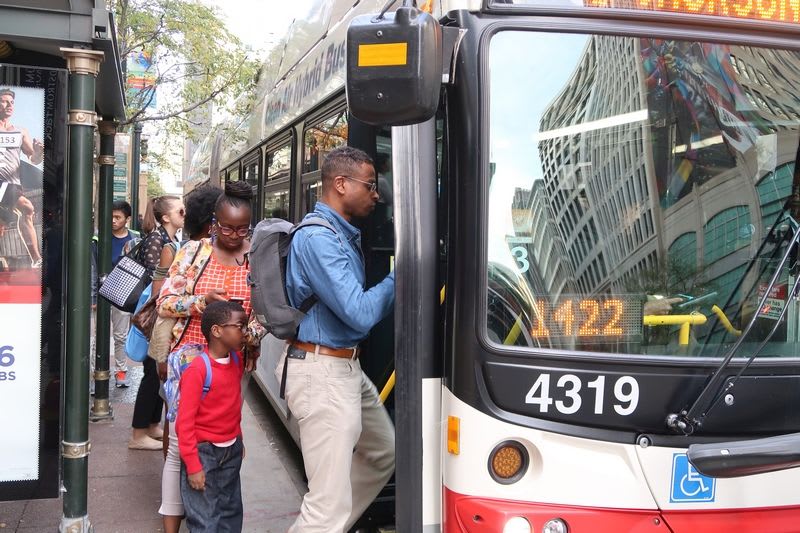
The new pilot is the latest in a series of improvements being made as part of Mayor Lori E. Lightfoot and CTA President Dorval R. Carter Jr.’s ongoing commitment to improve the speed, reliability, and customer experience of CTA’s bus service.
Active Transportation Alliance
2 min to read
The new pilot is the latest in a series of improvements being made as part of Mayor Lori E. Lightfoot and CTA President Dorval R. Carter Jr.’s ongoing commitment to improve the speed, reliability, and customer experience of CTA’s bus service.
Active Transportation Alliance
To help improve the speed and reliability of bus service and to enhance the customer experience, the Chicago Transit Authority (CTA) will launch a pilot that will allow bus riders to board and pay using both the rear and front doors of buses operating along two routes.
The pilot is the latest in a series of improvements being made as part of Mayor Lori E. Lightfoot and CTA President Dorval R. Carter Jr.’s ongoing commitment to improve the speed, reliability, and customer experience of CTA’s bus service, including investing $20 million in the Bus Priority Zones program over the next few years.
Beginning this summer, bus riders traveling the #J14 and #192 routes will be able to use their Ventra cards, contactless credit cards, and bank cards, including those cards on mobile devices, to board and pay using either the rear or front doors of the bus. Riders paying with cash will continue to board through the front doors.
Allowing riders to use both sets of doors to pay has the potential to reduce boarding times by as much as 50% and improve the overall customer experience, according to the CTA. The two routes were selected for this six-month pilot due to their limited, high-volume stops. Routes with high-volume stops take longer to board passengers, which can create a ripple effect of delays along the entire route.
The initiative complements other recent pilots that allowed CTA riders at high-volume boarding locations to pre-pay their fares before boarding buses. One such pilot was conducted at the Belmont Blue Line station and resulted in the reduction of bus boarding times by more than 50% during the evening commute. That pilot was made permanent as part of the 2019 rehab of the Belmont Blue Line station, which included a dedicated pre-paid bus boarding area.
As with all pilots, CTA personnel will evaluate bus and ridership data, as well as solicit customer feedback along the two routes. Funding for this pilot is a mix of federal grant funds and CTA’s operating budget.
More Bus

New York MTA Plans Largest Bus Fleet Upgrade in More Than a Decade
The agency is seeking manufacturers for 650 new CNG buses to replace aging vehicles, improve reliability, and advance its broader fleet modernization strategy.
Read More →
Building a Flexible Path to Transit Electrification
John Hroncich discusses BAE Systems’ modular and scalable approach, lessons learned from decades of real-world operations, and how agencies can identify electrification strategies that fit their fleets.
Read More →
Bus Tech Talk: Keeping Transit Technicians Ahead of the Technology Curve
LA Metro’s Obed Mejia discusses technician training, evolving maintenance technology, fleet replacement, and strategies for getting the most out of today’s transit fleets.
Read More →
Biz Briefs: RIPTA Unveils New Frontrunners, Clevland RTA Adds New Siemens, and More
In METRO's latest installment, we take a look at recent news from Siemens, Prevost, Dodge, and more partnerships making headlines across the transportation sector.
Read More →
People Movement: Holly Arnold Joins Transdev and More
In this edition, we also cover recent appointments and announcements at Pace, CamTran, MCI, and more, showcasing the individuals helping to shape the future of transportation.
Read More →
The High Cost of Transit Buses: Industry Leaders Look to Procurement Reform
Transit leaders and policymakers examine how standardized bus designs, streamlined procurement, and predictable funding could help agencies stretch budgets and deliver better service.
Read More →
The Business Voice Behind Public Transportation
As chair of APTA’s Business Members Board of Governors, Ray Melleady explains how more than 850 business members are partnering with transit agencies to advance funding, innovation, and industry-wide collaboration.
Read More →
From Surviving to Thriving: Building Stronger Transportation Organizations
Bus Business Consultants founder Brian Dickson shares lessons on leadership, organizational health, and creating options for long-term success in a changing transportation industry.
Read More →
Finding the ‘Happy Medium’: Optimizing Maintenance Without Sacrificing Reliability
The key to maintenance optimization isn’t doing less work—it’s doing the right work at the right time on the right assets.
Read More →
LA Metro, City of West Hollywood, and Partners Advance Smarter Bus Lane Enforcement
The award-winning partnership combines AI-powered detection with human oversight to improve bus reliability, accessibility, and enforcement efficiency.
Read More →