




RELATED: Inaugural Transit Maintenance Director of the Year Award
DCTA receives $2.6M to construct bus maintenance facility
The new facility will accommodate up to 45 buses and provide cost savings for the agency, with less buses having to travel to an alternate facility.
April 23, 2018
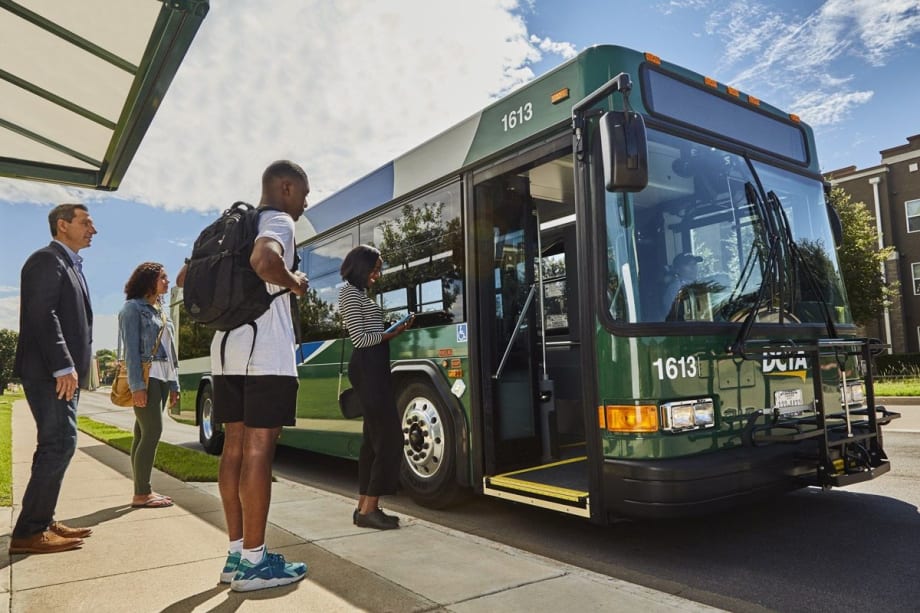
An added benefit of DCTA’s new bus maintenance facility is the potential transportation service opportunities in the region. Photo: DCTA
2 min to read
An added benefit of DCTA’s new bus maintenance facility is the potential transportation service opportunities in the region. Photo: DCTA
The Denton County Transportation Authority (DCTA) was awarded $2.6 million in funding from FTA’s Bus & Bus Facilities Infrastructure Investment Program to construct a new light-duty bus maintenance facility. DCTA’s new bus facility will be located at the agency’s Rail and Operations Maintenance (O&M) facility in Old Town Lewisville.
FTA awarded $264 million to 139 projects in 52 states and territories for capital projects to replace, rehabilitate, purchase or lease buses and related equipment and to rehabilitate, purchase, construct or lease bus-related facilities. DCTA was only one of two public transit agencies in Texas chosen to receive funding. Eighty-percent of DCTA’s grant funds will be reimbursed by FTA, and the remaining 20% will be covered though North Central Texas Council of Government’s (NTCOG) transportation development credit program.
Improved Efficiency for Bus and Contract Services
DCTA does not have a dedicated maintenance facility in southern Denton County which impacts agency service and operational efficiency. The agency’s Rail O&M facility — constructed solely for A-train operations — where DCTA is basing the operations and staging for bus service in Lewisville and Highland Village, and contract service in Frisco and the McKinney Urban Transit District (MUTD) area was not designed to accommodate DCTA’s current fleet of 92 buses. There are no sufficient bus operator facilities, and DCTA is currently utilizing 10 to 12 buses that are being refueled and staged at the Rail O&M facility instead of at the agency’s Bus Operations and Maintenance (O&M) facility in Denton.
Once DCTA’s new bus maintenance facility is constructed, it will accommodate up to 45 buses and improve operational efficiency, improve air quality with fewer buses having to travel to DCTA’s Bus O&M facility in Denton to be serviced and provide cost savings for the agency.
“Our new bus facility will allow us to enhance our service in one of the fastest-growing areas in North Texas,” said Jim Cline, DCTA President. “In addition, receiving this grant demonstrates DCTA’s commitment to being a good financial steward for our communities and providing efficient mobility solutions.”
Service Expansion Opportunities for DCTA
Another added benefit of DCTA’s new bus maintenance facility is the potential transportation service opportunities along Highway 121 and Collin County. Without a proper bus maintenance facility in southern Denton County, DCTA would not have the capacity to expand service into these areas which is essential for future mobility solutions for one of the nation’s fastest-growing counties.
Construction of DCTA’s new bus maintenance facility is slated to begin in 2019, with completion of the facility in 2021.
More Bus

New York MTA Plans Largest Bus Fleet Upgrade in More Than a Decade
The agency is seeking manufacturers for 650 new CNG buses to replace aging vehicles, improve reliability, and advance its broader fleet modernization strategy.
Read More →
Building a Flexible Path to Transit Electrification
John Hroncich discusses BAE Systems’ modular and scalable approach, lessons learned from decades of real-world operations, and how agencies can identify electrification strategies that fit their fleets.
Read More →
Bus Tech Talk: Keeping Transit Technicians Ahead of the Technology Curve
LA Metro’s Obed Mejia discusses technician training, evolving maintenance technology, fleet replacement, and strategies for getting the most out of today’s transit fleets.
Read More →
Biz Briefs: RIPTA Unveils New Frontrunners, Clevland RTA Adds New Siemens, and More
In METRO's latest installment, we take a look at recent news from Siemens, Prevost, Dodge, and more partnerships making headlines across the transportation sector.
Read More →
People Movement: Holly Arnold Joins Transdev and More
In this edition, we also cover recent appointments and announcements at Pace, CamTran, MCI, and more, showcasing the individuals helping to shape the future of transportation.
Read More →
The High Cost of Transit Buses: Industry Leaders Look to Procurement Reform
Transit leaders and policymakers examine how standardized bus designs, streamlined procurement, and predictable funding could help agencies stretch budgets and deliver better service.
Read More →
The Business Voice Behind Public Transportation
As chair of APTA’s Business Members Board of Governors, Ray Melleady explains how more than 850 business members are partnering with transit agencies to advance funding, innovation, and industry-wide collaboration.
Read More →
From Surviving to Thriving: Building Stronger Transportation Organizations
Bus Business Consultants founder Brian Dickson shares lessons on leadership, organizational health, and creating options for long-term success in a changing transportation industry.
Read More →
Finding the ‘Happy Medium’: Optimizing Maintenance Without Sacrificing Reliability
The key to maintenance optimization isn’t doing less work—it’s doing the right work at the right time on the right assets.
Read More →
LA Metro, City of West Hollywood, and Partners Advance Smarter Bus Lane Enforcement
The award-winning partnership combines AI-powered detection with human oversight to improve bus reliability, accessibility, and enforcement efficiency.
Read More →