



DCTA's Stadler railcars receive FRA waiver
Announcement made by Administrator Joseph Szabo at APTA's Annual Rail Conference

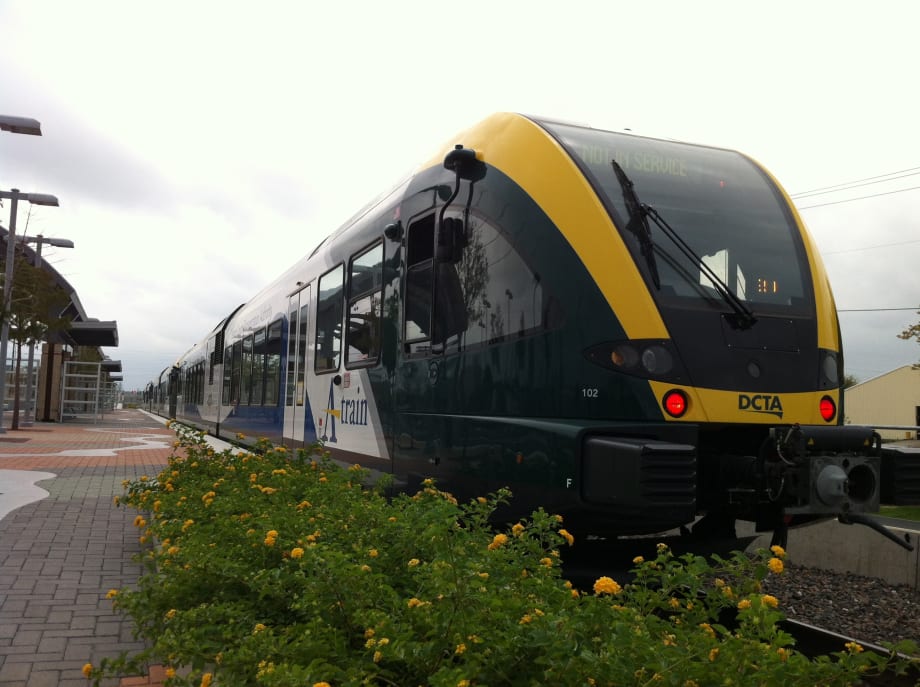
Federal Railroad Administrator Joseph Szabo formally announced the approval of the Texas-based Denton County Transportation Authority’s (DCTA) request to operate the Stadler GTW concurrent with traditional, compliant equipment at the American Public Transportation Association’s (APTA) Annual Rail Conference.
The approval means that for the first time ever; lightweight/fuel efficient, eco-friendly low-floor vehicles will be permitted to operate in rail corridors concurrently with traditionally compliant vehicles. The waiver, a first of its kind, will expand commuter rail options for transportation authorities across the U.S.
In 2009, the FRA’s Rail Safety Advisory Committee (RSAC) prepared a set of technical criteria and procedures for evaluating passenger rail train-sets that have been built to alternative designs. The alternative designs enable lighter, more fuel-efficient rail vehicles equipped with a Crash Energy Management system to commingle with traditionally compliant equipment. The DCTA/Stadler alternative design waiver is the first comprehensive submittal that follows the RSAC Engineering Task Force procedures for Tier I equipment.
The approval of the DCTA/Stadler waiver request demonstrates that the enhanced crashworthiness and passenger protection systems inherent to DCTA’s new rail vehicles meet the latest and most stringent safety standards in the U.S.
Stadler, DCTA and LTK Engineering Services, have been working closely with the FRA to achieve this waiver since 2009. DCTA partnered with Stadler to make modifications and enhancements to the GTW to comply with the required safety guidelines. Modifications include changes to the fuel tank design, window glazing and passenger and operator seats.
DCTA purchased 11 diesel-electric GTW 2/6 articulated rail vehicles from Stadler. The vehicles are compliant with the Americans with Disabilities Act (ADA) and incorporate enhanced air conditioning, passenger information system, video surveillance and numerous FRA compliant elements. The spacious interior has room for wheelchairs, strollers and bicycles. There are 104 seats and standing room for 96 persons in every vehicle along with bright compartments, large windows and comfortable seating.
DCTA and Stadler will begin integrating the cars into service this summer.
More Rail

New York MTA Advances Final Contract for Second Avenue Subway Expansion
Contract Four is the largest in the Second Avenue Subway Phase 2 project and includes construction of station infrastructure, tracks, and signals for the subway expansion, MTA officials said. Work on Contract Four will begin in 2027.
Read More →
San Diego MTS Breaks Monthly Trolley Ridership Record
Agency officials said July’s ridership indicates MTS’s continued recovery from the pandemic.
Read More →
Report Examines NJ TRANSIT Reliability, Funding Challenges
The Garden State Initiative analysis examines the roles of Amtrak infrastructure, fleet management, and agency operations while recommending a more performance-based approach to improving reliability.
Read More →
Stadler, CapMetro Sign Long-Term Rail Fleet Support Agreement
Beginning in 2027, Stadler will provide on-site technical expertise, spare parts support, training, and obsolescence management to help extend the reliability and longevity of CapMetro’s GTW fleet.
Read More →
Biz Briefs: Alstom Lands Canadian Contract, LYT to Supply California TSP, and More
In METRO's latest installment, we take a look at recent news from Complete Coach Works, Beep, FlixBus, and more partnerships making headlines across the transportation sector.
Read More →
CATS Gold Line Marks 5 Years of Service, 2.8M Passenger Trips
With a six-mile expansion planned, the Charlotte streetcar is positioned to connect more neighborhoods and major transit hubs across the region.
Read More →
Why Simulating Pedestrian Movement Has Become Essential for Modern Rail Stations
Pedestrian microsimulation is helping rail planners identify bottlenecks, test station designs, and prepare complex transit hubs for growing passenger volumes.
Read More →
Amtrak Begins Major Construction at New York’s Sunnyside Yard
The new maintenance facility will support Amtrak’s Airo trainsets while improving maintenance efficiency and turnaround times in New York.
Read More →
Chicago Leaders Unveil Plans for O’Hare Airport Express Train
The privately developed project would offer a 15-minute trip between downtown and O’Hare’s Terminal 2, with trains operating every 15 minutes on a dedicated track. The service would use battery-electric trains and three existing freight rail rights-of-way.
Read More →
OCTA Maps Out 30-Year Strategy to Protect Coastal Rail Corridor
The draft feasibility report identifies strategies to protect the coastal rail line for decades as the agency continues near-term stabilization and sand placement efforts.
Read More →