




RELATED: Electric campus shuttle helps U. Alaska- Fairbanks reduce footprint
Driverless shuttle experiment hits the ground at Calif. campus
In addition to colleges, the company envisions these vehicles at theme parks, resorts, industrial campuses, and retirement communities.
September 21, 2015
Auro Robotics
3 min to read
Auro Robotics
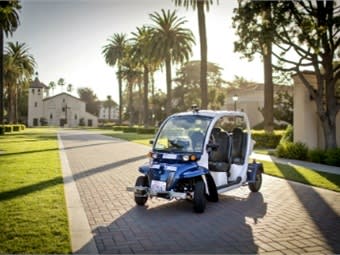
SANTA CLARA, Calif. — The Santa Clara University (SCU) campus is the beta test grounds for an driverless shuttle system being developed by Silicon Valley start-up Auro Robotics. The company conducted a three-day trial in August, and the three-month pilot program begins this fall.
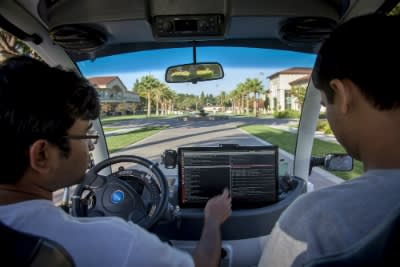
During that time, test engineers will be monitoring technology and safety as well as the user experience in the four-seat modified golf cart.
The pedestrian campus allows Auro to observe and adjust its service in a large but traffic-free area that replicates the target market. In addition to colleges, the company envisions these vehicles at theme parks, resorts, industrial campuses, and retirement communities. Because SCU is a private institution, the experiment does not require government approval.
Auro Robotics
Auro’s business model is based on low upfront costs and a monthly subscription. One primary goal during the pilot program will be learning whether the “shuttle bus” mode (a fixed-route with a number of stops) or the “on demand” mode (think Uber/Lyft) is more feasible and popular.
The benefit could extend to students, faculty and staff not only on campus but in accessing public transit such as Caltrain and the potential BART station nearby. “This may be a solution to the ‘last mile’ problem that has bedeviled transportation planners throughout the valley,” said Chris Shay, SCU’s assistant VP for university operations.
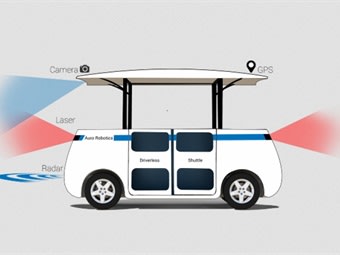
The electric vehicle uses an array of sensors such as laser scanners, radar, cameras and GPS to create a 360-degree view. It is conditioned to avoid pedestrians by adjusting its route, or to stop completely if necessary. The ride should be smooth because the sensors can evaluate as far as 200 yards away, according to Auro officials. Not only does the vehicle sense pedestrians, it measures their speed and direction to assess whether those pedestrians will still be in the path, giving more lead time to adjust the route and speed.
(Watch the shuttle's first venture to campus.)
The prototype at SCU is the company’s only vehicle; as the tests generate more data and feedback, the company will build next-generation vehicles that will look less like golf carts. Future vehicles could hold anywhere from one to five passengers, or even more in (for instance) an amusement park.
Auro Robotics
Among Auro’s goals for the program at Santa Clara University are to determine the viability of the technology and to study how users interact. For the first month of the pilot, the vehicle will not have any University passengers. As Auro gathers data and makes adjustments, the company and University will develop guidelines for faculty, staff, and students to use the service.
Gupta says the experience on campus, with or without passengers, provides valuable information that can’t be produced in a lab. “Every type of environment has some peculiarities. Those kinds of things take the most time and represent the greatest engineering challenge,” says Auro Robotics co-founder/CEO Nalin Gupta.
More New Mobility
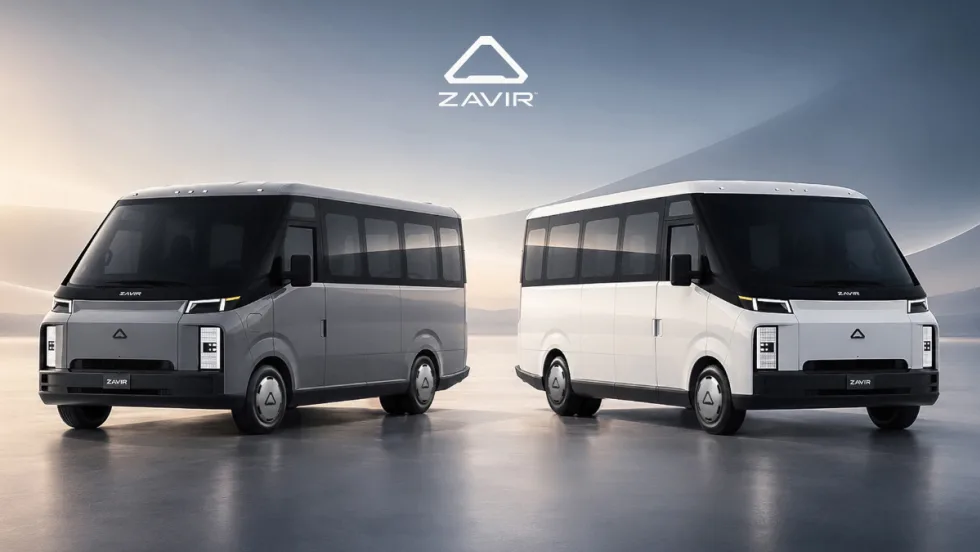
ENC Unveils ZAVIR Medium-Duty Electric Shuttle at APTA EXPO
The new ZAVIR brand targets shuttle and paratransit operations with battery-electric and range-extended electric vehicle options.
Read More →
Public Transit Conference Returning to GFX in 2027, Call for Papers Now Open
The Call for Papers is now open, allowing transit agency professionals and industry experts to help shape the PTC educational program by submitting session ideas for consideration.
Read More →
Everett Transit, Community Transit Outline Consolidation Agreement
The proposed agreement calls for a 50% increase in bus service in Everett, a new microtransit zone, continued paratransit service, and the transfer of Everett Transit operations to Community Transit.
Read More →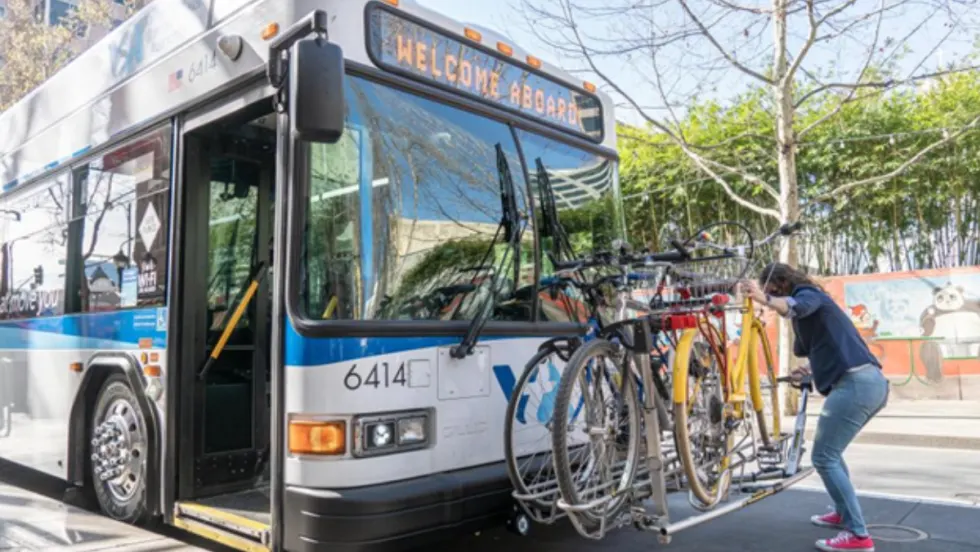
What Multimodal Data Can Tell Transit Agencies About Rider Demand
See how bike-on-bus data is giving transit agencies new insight into rider demand, capacity constraints, and gaps in first- and last-mile connections.
Read More →
From Hardware to Digital Partner: Luminator Charts Its Next Chapter
CEO Magnus Friberg discusses Luminator’s shift toward becoming a digital partner, the growing importance of software and interoperability, and how AI can help agencies improve operations and passenger experience.
Read More →
Biz Briefs: Alstom Lands Canadian Contract, LYT to Supply California TSP, and More
In METRO's latest installment, we take a look at recent news from Complete Coach Works, Beep, FlixBus, and more partnerships making headlines across the transportation sector.
Read More →
CharterUP’s Armir Harris on Technology, AI, and the Future of Group Mobility
In a recent episode of METROspectives, CharterUP Founder/CEO Armir Harris discussed the company’s evolution from an online charter bus marketplace into a technology platform supporting public- and private-sector mobility and much more.
Read More →
Jacksonville’s NAVI Project Charts a New Course for Autonomous Public Transportation
Through its NAVI program, JTA is showing how autonomous vehicles, intelligent infrastructure, and coordinated operations can work together to deliver everyday public transportation.
Read More →
Biz Briefs: Luminator Marks Milestone and More
From manufacturers and suppliers to transit agencies and motorcoach operators, these updates offer a snapshot of the projects, partnerships and business moves driving the industry forward.
Read More →
New Tricks for Old Bureaucracies: Joshua Schank on Making Transit Innovation Stick
Former LA Metro Chief Innovation Officer Joshua Schank discusses why good ideas aren't enough, how transit agencies can overcome resistance to change, and why today's challenges demand more innovation.
Read More →