



Exclusive: Houston METRO gives Hurricane Harvey service update
The agency was able to get about 20 bus routes back on line today along with a portion of its rail, according to a spokesperson.

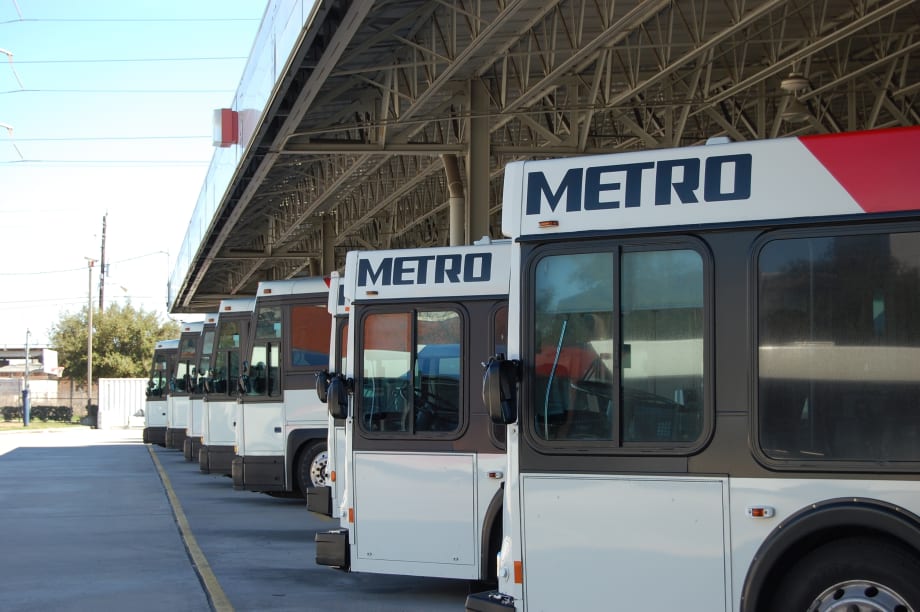
METRO’s team was also beneficial during the rescue efforts, shuttling evacuees to two large shelters in the Central Houston area.
METRO’s team was also beneficial during the rescue efforts, shuttling evacuees to two large shelters in the Central Houston area.
In the wake of Hurricane Harvey, Houston METRO resumed some bus and rail services, on a limited basis, and is continuing to provide medically-necessary and life-sustaining paratransit service in areas that are not still impacted by flood waters, debris, or damage.
“We were able to get about 20 bus routes back on line starting today and a portion of our rail line,” said Laura Whitley, spokesperson for Houston METRO, on Thursday morning. “Those routes represent about 50 percent of our ridership, so we are very excited to be able to re-launch those services.”
Whitley said there are still thousands in METRO’s service area that are still evacuated and expects the majority of those people getting back to work are those working in nearby medical centers and others continuing to help in the hurricane relief efforts.
Although she was not quite up to speed yet on damage incurred to METRO facilities and assets, Whitley said there were a few vehicles damaged when the storm waters rose. She added, however, the agency did plan ahead to minimize possible damage to its vehicles.
“In particular, we parked several buses on an elevated HOV lane to protect them from a lower-lying area,” she said. “Operations did take into account our assets and tried to locate them in places that would protect them.”

METRO officials expect to get its rail line back up after testing communications and power systems.
METRO’s team was also beneficial during the rescue efforts, shuttling evacuees to two large shelters in the Central Houston area.
“METRO is also providing transportation, as needed, for those people at the shelters who need to go to the pharmacy and different things like that,” Whitley said. “And, we will continue to provide support for people who have been displaced, in terms of providing them transportation in the coming days, so we’re working on those go-forward plans right now as well.”
As of now, METRO had no timetable for adding services or getting back up to full service, but are scheduled to their Park & Ride services Tuesday after the Labor Day weekend.
“What we’re doing is going through each route, looking at what roads are open, and basically, where it’s safe to operate our services, and then, we will re-open service on those roads as they are deemed safe,” Whitley said. “I would expect that they’ll be more routes that come on line here in the coming days. In terms of our rail lines, METRO is currently testing the communications and the power that serves those lines to make sure they can resume safe operations.”
In a letter from APTA’s Acting President/CEO Richard A. White to APTA members, he said that the association is teaming with the Texas Transit Association (TTA) and the South West Transit Association in an effort to provide help to those public transit employees impacted by the hurricane.
To help, you can buy gift cards and Meredith Greene, executive director of TTA, will deliver them to the transit systems affected so agencies can distribute them directly to employees in need. Send gift cards to: TEXAS Harvey Relief, TTA, ATTN: Meredith Greene, 106 E 6th Street, Suite 900, Austin, TX 78701. (Please make certain the card does not have additional fees the recipient must pay).
APTA added that cash donations will not be accepted by TTA and SWTA, but urged members to consider a donation to the American Red Cross.
More Management

METRO Opens Submissions for 2026 Motorcoach Awards
Nominations are now being accepted for METRO Magazine’s Operator of the Year and Innovative Operator of the Year awards.
Read More →
New York MTA Advances Final Contract for Second Avenue Subway Expansion
Contract Four is the largest in the Second Avenue Subway Phase 2 project and includes construction of station infrastructure, tracks, and signals for the subway expansion, MTA officials said. Work on Contract Four will begin in 2027.
Read More →
Transit Agencies Highlight Safety Gains at National Summit
Leaders from 15 major transit systems shared crime-reduction results and safety initiatives while discussing the role of continued federal support.
Read More →

NITA Names New Leadership, Expands Reduced-Fare Program at First Board Meeting
The new regional transit authority appointed its first board chair and interim executive director while extending reduced fares across CTA, Metra, and Pace for eligible riders.
Read More →
Beyond the Checklist: A Structured Approach to Transit Maintenance
Reliability-Centered Maintenance helps transit agencies move beyond routine checklists to focus limited resources on the assets and failures that have the greatest impact on safety, reliability, and service.
Read More →
APTA 2026 Nominating Committee Selects Leadership Slate, Names Chair and Vice Chair Nominees
Leadership changes will help shape the association’s priorities and its representation of the transportation industry during the 2026–2027 term.
Read More →
DART Launches Major Security, Fare Enforcement Initiative
The 90-day demonstration will deploy coordinated security teams at five light rail stations while testing controlled access and gathering data to guide future investments.
Read More →
Advancing Fare Collection Through Technology and Innovation
Learn about delivering 1300 gates at 91 stations while managing fare evasion. Explore the large scale deployment, solution customization and real-world results that affect the region. Prepare for deployment in your region now.
Read More →
Game Day in Motion: Moving Millions During the 2026 World Cup
Between packed transit stations and team motorcoaches, see how agencies and operators across North America tackled the transportation demands of the 2026 FIFA World Cup.
Read More →
Surface Transportation Extension Averts Shutdown, Leaves Transit Funding Gap
The stopgap keeps federal transportation programs moving, but missing advance funding could complicate the transit and rail projects agencies are planning next.
Read More →