



GAO: Rail operators years behind schedule implementing PTC
Lawmakers have moved to extend the federal deadline for railroad companies to install PTC, but the effort stalled after a deadly Philadelphia Amtrak crash in May that killed multiple passengers.

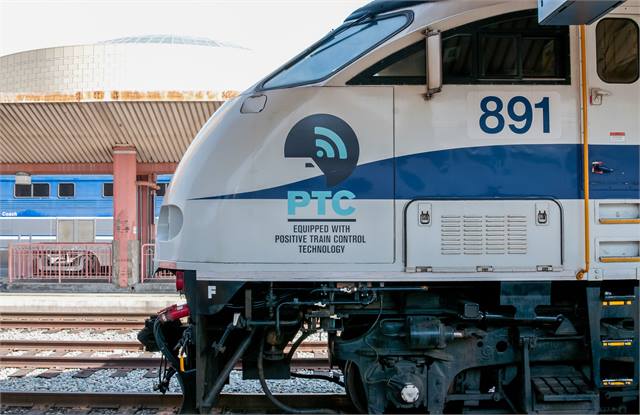
WASHINGTON, D.C. — A U.S. Government Accountability Office (GAO) revealed that two-thirds of the railroads they reviewed have said they will not complete the installation positive train control (PTC) before the looming Dec. 31, 2015, deadline, with most somewhere between one and five years behind, The Hill reported.
To view the full report, click here.
Lawmakers have moved to extend the federal deadline for railroad companies to install PTC, but the effort stalled after a deadly Philadelphia Amtrak crash in May that killed multiple passengers. Freight and passenger rail companies have warned Congress that they will likely have to shut down traffic on major train corridors throughout the country unless lawmakers pass an extension of the deadline this fall. For the full story, click here.
American Public Transportation Association President/CEO Michael Melaniphy released the following statement regarding the GAO’s report:
“A Government Accountability Office (GAO) report released yesterday provides strong evidence that Congress needs to act now to extend the deadline beyond December 31, 2015 for implementing Positive Train Control (PTC) for the nation's railroads.
Safety is the number one priority of the public transportation industry and the commuter railroads are 100 percent committed to developing and installing PTC technology. Therefore it is our goal that this technology and its many components are developed, installed, and tested successfully and safely.
As this objective GAO analysis shows, despite the commuter rail industry's best efforts, implementing PTC nationwide by the end of this year is not possible, which is why Congress should look to provide for an extension as soon as possible.
The report supports what the industry, the Federal Railroad Administration and the GAO have said in the past: significant challenges of technology, spectrum, and funding make the end of year deadline unattainable. These challenges still remain and APTA has shared the specific challenges commuter railroads are facing with the Senate and House Committee leaders.
We support efforts in Congress to craft an extension that would provide for the full effective interoperable implementation of this life-saving technology.
We are also dedicated to working with Congress in appropriating the funding to assist the industry complying with this essential safety mandate. The commuter rail industry has currently invested $950 million on PTC implementation and conservative estimates are that $3.48 billion is needed to complete the rollout nationwide. Currently, Congress has only appropriated $50 million for this critical federal safety technology.
Congress should also take action to make the necessary spectrum available to those commuter railroads that have been unable to acquire it to date, as access to communications spectrum is controlled by the license holders, and as such not within the control of our public commuter agencies.
The time is now for Congress to act to extend the PTC deadline. This action is crucial to avoid the disruption of millions of Americans who rely daily on commuter rail service as they commute to and from work."
More Management

ETA CEO John Maglio on Transit Technology, Innovation, and Building Agency Trust
ETA founder and CEO John Maglio explores the evolution of transit technology, the importance of reliable systems, and how stronger partnerships can help agencies improve operations and the passenger experience.
Read More →
COTA Launches First Customer Experience Action Plan to Improve Transit Service
The new plan outlines improvements to service reliability, accessibility, communication, and the overall rider experience across Central Ohio's transit system.
Read More →
LA Metro September Ridership Climbs 3.9%, Led by Rail Growth
The agency recorded more than 27.2 million boardings, with rail ridership increasing 12.4% year over year and the D Line posting the largest gains.
Read More →
Utilimarc Launches SmartReplace to Optimize Fleet Replacement Decisions
AI-powered SmartReplace helps fleets prioritize vehicle replacements, model budget scenarios, and build more defensible long-term strategies.
Read More →
APTA Honors 2026 Award Winners, Hall of Fame Inductees at TRANSform & EXPO
Innovations in autonomous and zero-emission transportation, standout transit systems, and industry leadership took center stage among this year's honorees.
Read More →
7 Ways to Build a Better Transit Internship Program
Lessons from DRPA/PATCO’s approach to creating a meaningful internship experience—and developing the next generation of transportation professionals.
Read More →
Scenes from APTA TRANSform & EXPO 2026
Transit leaders, manufacturers, and industry professionals gathered in Chicago to explore new technologies, share ideas, and discuss the future of public transportation.
Read More →
Building Stronger Leaders, More Resilient Transit Teams
Dr. Carol Parker Walsh discusses leadership development, employee retention, workplace culture, and preparing transit’s workforce for AI and automation.
Read More →
APTA 2026 TRANSform & EXPO Kicks Off in Chicago
After 45 years, APTA returns to Chicago with a focus on next-generation fleets, AI, connected transit networks, and the funding strategies shaping public transportation’s future.
Read More →
New York MTA Warns Federal Tariffs Could Add $1 Billion to Rolling Stock Costs
The agency said tariffs on specialized imported components could reduce the purchasing power of its $23 billion investment in new subway cars, railcars, and buses.
Read More →