A Closer Look: Go-Ahead London Taps BetterFleet for Major EV Charge Management Rollout
With over 1,000 electric buses and chargers already in service across 20 depots in the UK, the initiative will grow to over 1,500 units spanning 30 depots by the end of 2025.
According to BetterFleet, the partnership marks a pivotal evolution in public transit electrification, not just in scale but also in complexity.
Photo: BetterFleet/Go-Ahead London
4 min to read
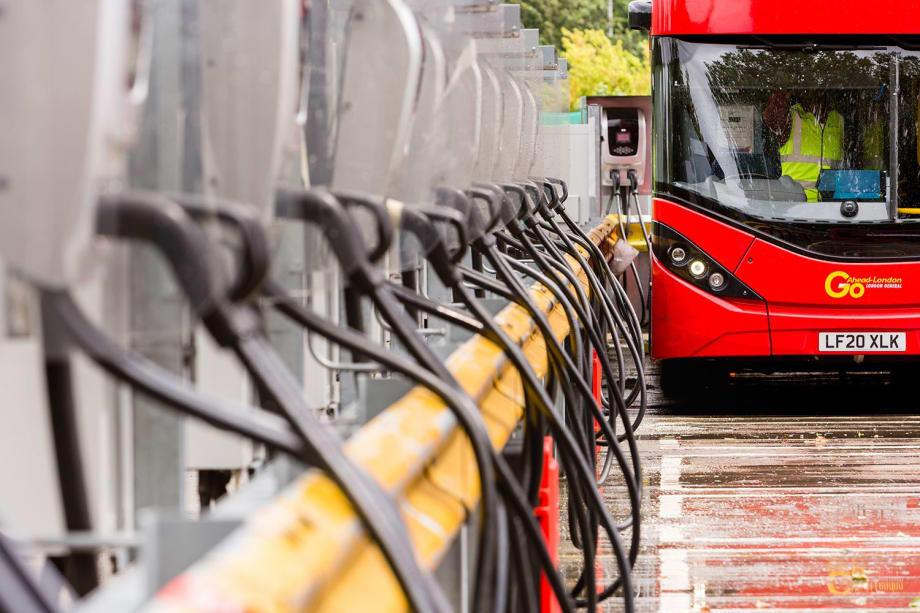
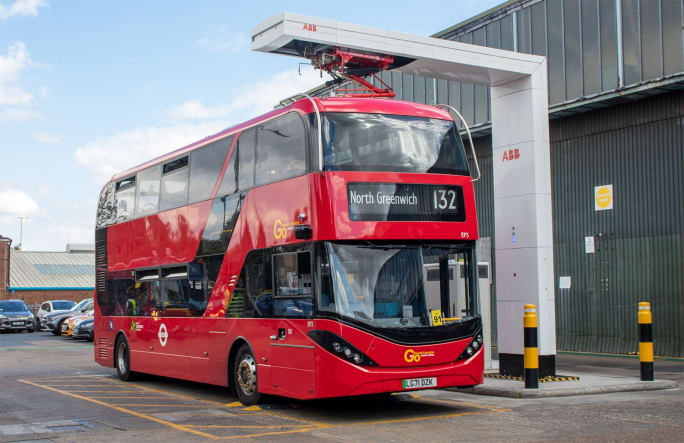
In what officials call one of the most significant electric fleet software deployments globally, Go-Ahead London is expanding the use of BetterFleet’s advanced EV fleet charge management and operations platform across its national fleet.
With over 1,000 electric buses and chargers already in service across 20 depots in the UK, the initiative will grow to over 1,500 units spanning 30 depots by the end of 2025.
Ad Loading...
According to BetterFleet, the partnership marks a pivotal evolution in public transit electrification, not just in scale but also in complexity.
Operating one of the world’s largest fleets of zero-emission buses presents extraordinary data, infrastructure, and operational coordination challenges. Go-Ahead is meeting those head-on with BetterFleet’s platform, which fuses real-time monitoring, predictive analytics, and intelligent automation into a single decision-making and execution layer.
Standardizing Complexity at Scale
Go-Ahead’s deployment isn’t merely a case of plugging in software. The company operates a patchwork of hardware — legacy chargers, new models, varied grid connections, and layered operations — across bustling depots.
Dan Hilson, BetterFleet's CEO, explains that the key to unlocking value lies in the company’s ability to consolidate and harmonize information.
“The initial challenge for the BetterFleet team was integration with old non-networked BYD chargers,” he says. “We had to develop a gateway in our IOT hub that translated the BYD messages to compliant OCPP. We believe we are the only ones to do this in collaboration with BYD, and these chargers are now online and load managed.”
Ad Loading...
Hilson adds that beyond technical integration, the implementation also demanded a fast-paced rollout while live garage operations continued unabated.
Each depot presented unique complications, from intricate circuit layouts to mixed-brand charger environments.
BetterFleet responded by building new visualization tools that allow users to intuitively monitor electrical circuits, system health, and site-wide performance in real time.
Optimizing Energy Use Without Grid Upgrades
The financial implications are substantial. Go-Ahead avoided hundreds of thousands of pounds in costs by retrofitting legacy infrastructure rather than replacing it. But the platform’s impact runs deeper, directly reducing operational expenses and energy infrastructure demands.
“The BYD chargers would have needed replacement, so by integrating them, we saved Go-Ahead many hundreds of thousands of dollars,” says Hilson. “In addition, we have helped them avoid some grid upgrades, and they are looking at optimizations for fewer chargers in the future, given the data we are collecting. The other operational savings come from reductions to maintenance costs as our automated alerting system can better determine when a ‘service truck roll’ is required.”
Ad Loading...
BetterFleet’s intelligent load deferral is a standout feature, which dynamically schedules charging based on real-time grid capacity, minimizing the risk of overload and aligning operations with existing infrastructure limits. This kind of grid-aware energy orchestration is proving vital in the context of an aging utility landscape, says Hilson.
BetterFleet’s support for over 30 charger brands managed through a unified interface means Go-Ahead doesn’t need to standardize hardware to gain operational intelligence.
Photo: BetterFleet/Go-Ahead London
More innovative Incident Management & Predictive Operations
BetterFleet’s system is more than a dashboard — it’s a central nervous system for depot operations.
The platform provides depot managers with mission-critical insights into vehicle charge readiness and automatically distinguishes between routine issues and serious incidents. For example, if a charger malfunctions, the system can determine whether it’s an isolated fault or a broader circuit failure requiring immediate escalation.
“Our systems can detect and report when chargers or vehicles start to operate outside of typical parameters so that this can be picked up before they cause issues,” says Hilson. “Our ‘time to charge’ and ‘range’ reporting require machine learning algorithms to enable operators to see issues that might affect dispatch well ahead of an incident, and our configurable incident management system can be set to detect multiple types of warning signs for major dispatch or safety issues.”
The software also features machine-learning-powered predictive tools. These can spot early signs of vehicle or charger degradation, such as anomalies in charge time or energy draw, and flag potential problems before they impact service delivery.
Ad Loading...
Combined with its incident triage engine, these features dramatically reduce downtime and maintenance costs by avoiding unnecessary technician dispatches.
One Interface, Over 30 Charger Brands
Fleet electrification is often hampered by hardware fragmentation. BetterFleet’s support for over 30 charger brands managed through a unified interface means Go-Ahead doesn’t need to standardize hardware to gain operational intelligence.
The system also provides a “virtual upgrade” for older hardware. BetterFleet's IoT hub acts as a middleware translator, extending the functional lifespan of aging equipment and ensuring continuity across mixed-technology sites.
Both Go-Ahead and BetterFleet see the partnership as a foundation for greater capabilities.
Future updates to the platform will include vehicle-to-grid (V2G) support, microgrid integration with solar and battery systems, and dispatch-aware charging optimization.
Ad Loading...
“We are investing heavily in our dispatch integrated charging, which takes bus schedules and optimizes charging based on the real schedules, even as schedules change through real-time integrations with scheduling platforms,” says Hilson. “We are helping with better visualizing the yard to enable better operational movements, and we are furthering our integration with the grid to respond to real-time day-ahead signals, V2G, and optimization, or microgrid (battery/solar) integration modules.”
Hilson adds that BetterFleet is also preparing a significant redesign and release of its planning software later this year. This effort aims to align the platform more closely with the real-world operational optimizations forward-thinking fleet operators, such as Go-Ahead, actively pursue.
See how three Gillig battery-electric buses powered festival stages while the agency’s new Park & Ride service carried approximately 1,000 attendees, demonstrating another potential use for transit agencies’ electric fleets.
The new name represents a renewed vision for the nonprofit focused on advancing clean, equitable, and affordable transportation solutions that move people and goods.
John Hroncich discusses BAE Systems’ modular and scalable approach, lessons learned from decades of real-world operations, and how agencies can identify electrification strategies that fit their fleets.
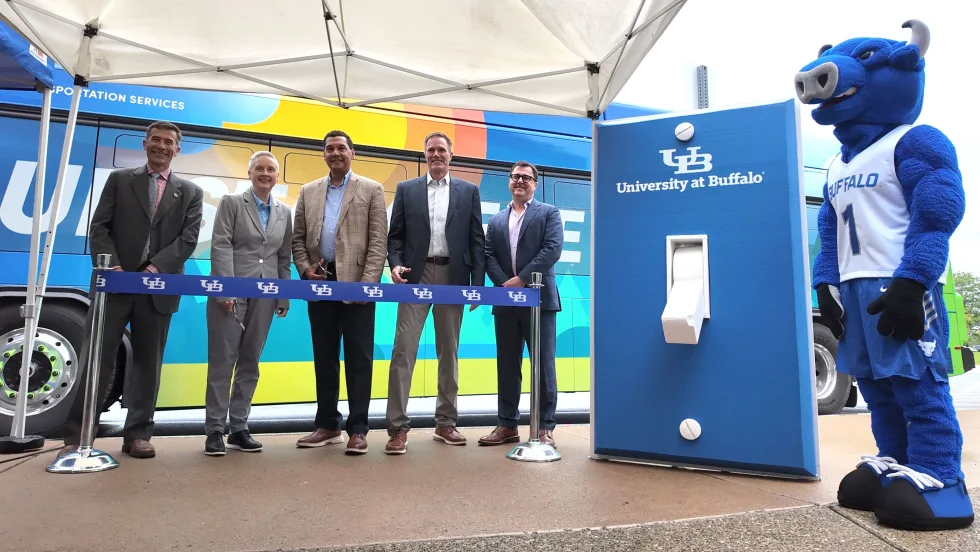
UB, transportation solutions provider WeDriveU, and fleet electrification specialist Zenobē marked the deployment in the presence of students, university administrators, and local officials.
From manufacturers and suppliers to transit agencies and motorcoach operators, these updates offer a snapshot of the projects, partnerships and business moves driving the industry forward.
The agency’s maintenance chief discusses leadership, workforce development, zero-emission technology, and preparing technicians for the future of public transportation.
The firm will work with CTDOT and RVT to define the facility layout, operational requirements, and long-term flexibility for RVT’s growing electric fleet.
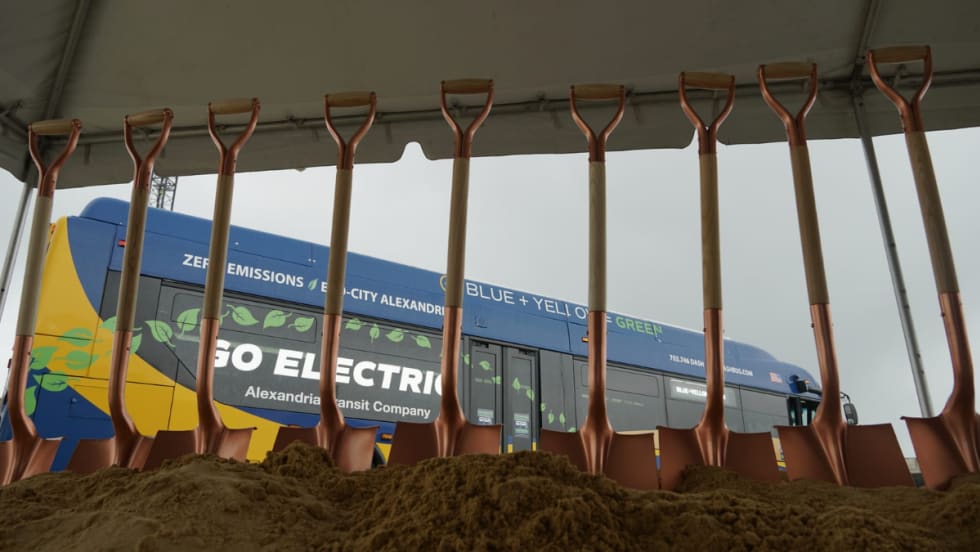
The fast-charging infrastructure will help extend electric bus range, improve fleet utilization, and support DASH's goal of transitioning to a fully zero-emission fleet.