




Clear the Way:How Bus Lane Automation Can Improve City Transit
CapMetro's Driverless Breakthrough: How Austin's Transit Agency Revolutionizes the Bus Yard
From cost savings to tighter parking, the Austin agency's driverless yard tech delivers significant results for fleet efficiency and zero-emission goals.
July 2, 2025
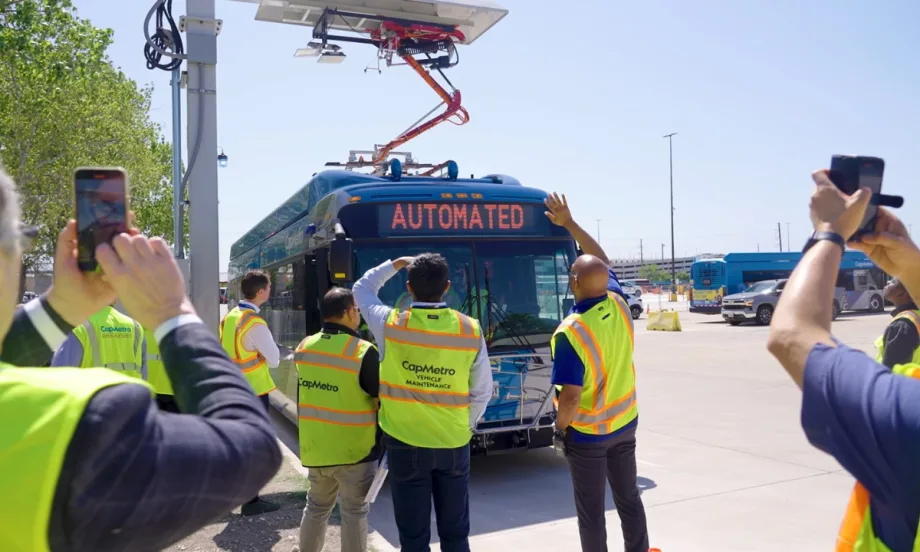
Autonomous transit breakthroughs could mean fewer depots, reduced infrastructure needs, and potentially millions in land and construction savings.
Photo: CapMetro / WSP in the U.S.
5 min to read
- CapMetro has implemented driverless technology in its bus yard to enhance fleet efficiency.
- The new system contributes to significant cost savings and allows for tighter parking within the bus yard.
- This innovation supports CapMetro's goals toward achieving zero-emission transit operations.
*Summarized by AI
When most people think of autonomous vehicles, they picture self-driving taxis gliding through city streets. However, for the Capital Metropolitan Transportation Authority (CapMetro), Austin's regional transit agency, the future of autonomy begins where most bus journeys do: in the depot.
In collaboration with WSP and the agency’s Yard Automation Research and Deployment (YARD) program, CapMetro is pioneering a new future for transit efficiency, maintenance, and operations.
At its North Ops and Maintenance Facility in Austin, a SAE Level 4 automated 40-ft. electric bus (BEB), retrofitted with Perrone Robotics' TONY (TO Navigate You) system, demonstrates how autonomy can transform day-to-day operations.
The bus performs complex tasks in an active transit depot, including braking for unexpected obstacles and parking itself with centimeter-level accuracy underneath a charging pantograph dispenser — all without a human at the wheel.
Severin Skolrud, VP, critical and emerging technology, national transit and rail, at WSP in the U.S., noted that the team has brought a never-before-attempted idea to life — one that may well push manufacturers to take ADAS and ADS applications in transit seriously.
This project, which includes support from Texas A&M Transportation Institute and Clever Devices, represents a significant step in the evolving relationship between automation and public transit.
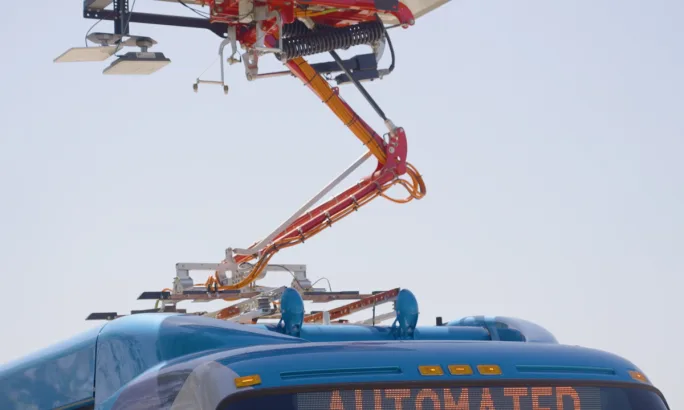
The bus performs complex tasks in an active transit depot, including braking for unexpected obstacles and parking itself with centimeter-level accuracy underneath a charging pantograph dispenser.
Photo: CapMetro / WSP in the U.S.
The Practical Payoffs of CapMetro's Autonomous Bus Yard
This project stands out not just for the tech but also for the practical value it delivers.
According to CapMetro, bus yard automation has the potential to significantly reduce costs for zero-emission fleets, significantly increase existing yard capacity, and boost safety for drivers, mechanics, and others who work in active bus depots.
By automating the pre-trip inspection process, CapMetro estimates it can shave six to eight minutes per trip, a small change with major cumulative impacts. Even more transformative is the 50% to 55% increase in yard capacity, which is made possible by tighter, automated parking configurations.
"The 50-55% increase in footprint correlates with the ability for automated buses to park closer together while still allowing walking space between the vehicles in case they need to be moved manually," said Skolrud.
These breakthroughs could mean fewer depots, reduced infrastructure needs, and potentially millions in land and construction savings, all of which would be bonuses to zero-emission vehicles and reduce local pollution.
Plus, while Phase One met all its core goals, from testing vehicle performance to evaluating workforce impacts, the team is already looking ahead. A potential Phase Two aims to deploy three battery-electric buses (BEBs), add remote dispatch capabilities, and integrate advanced software to prepare buses for duty autonomously.
"Autonomous pull-out procedures will be tied to the corresponding revenue schedule," Skolrud added. "A small Dutch firm named ChargeSim supported this analysis and provided thorough minute-by-minute simulations to illustrate the potential capacity savings while incorporating the necessary charging infrastructure to power a future automated battery electric bus fleet."
But, as the CapMetro team acknowledges, challenges remain: long lead times on charging hardware, the need for clearer standards, and workforce training are all front and center.
"Additionally, storing, sharing, and assessing LiDAR data is an intensive process that requires better coordination and understanding by all project stakeholders," said Skolrud. "LiDAR sensor information provides helpful 'replay' scenarios of where/how/if the vehicle was braking for unknown reasons, and analysts can typically identify the root cause.”
Still, CapMetro's progress shows that driverless transit technology is no longer a futuristic concept. It’s actively taking shape.
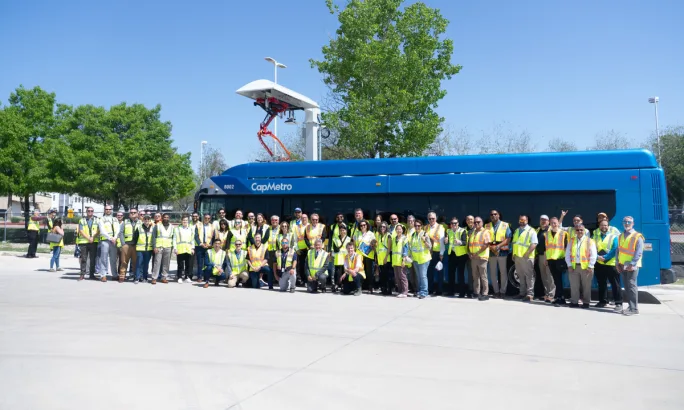
As cities across the U.S. prepare for fleet electrification and more intelligent infrastructure, CapMetro's project offers a roadmap for what's possible when public investment meets private innovation.
Photo: CapMetro / WSP in the U.S.
How FTA Funding, Smart Partnerships Delivered Real Transit Innovation
CapMetro's leadership in automation isn't accidental.
Austin's booming tech scene and the agency's long-standing reputation for innovation made it an ideal host for the pilot, funded in part by a nearly $950,000 award provided through the Federal Transit Administration's (FTA) Advanced Driver Assistance Systems (ADAS) for Transit Buses Demonstration and Automated Transit Bus Maintenance and Yard Operations Demonstration Program.
"The CapMetro Yard Automation Research Development (YARD) Program is a market-leading effort to explore and test the benefits and challenges bus yard automation may provide," said David Carr, CapMetro's former director of the zero emission vehicle program. "While advancements still need to be made, the WSP Team provided excellent technical and programmatic expertise to ensure our program is successful. Due to their efforts, we anticipate extending our work with the Federal Transit Administration through 2027."
According to Skolrud, the FTA Strategic Automation Research (STAR) program was launched in late 2017, providing the industry with the kickstart it needed to start researching automated bus yard concepts.
With clear objectives in place from the start, the pilot has already achieved valuable insights, including:
- Test and assess the potential future benefits and challenges of automated battery-electric buses (BEBs) through routine bus yard maneuvers.
- Share lessons learned from the automated vehicle demonstrations with CapMetro stakeholders and industry partners to improve the technology's capabilities.
- Collaborate with the CapMetro workforce to better understand the potential impacts on current positions supporting yard operations and identify what potential new positions may be required to operate and maintain automated BEBs.
- Determine the long-term viability of fleet-wide bus yard automation for current and future CapMetro bus depots.
WSP’s analysis suggests a conservative Benefit-Cost Ratio (BCR) of 3.25, with an estimated eight-year payback, which makes a compelling case for long-term value.
"The average useful life of a bus is 12 years, so this investment is a great long-term opportunity for transit agencies once this technology becomes more widely available," said Skolrud.
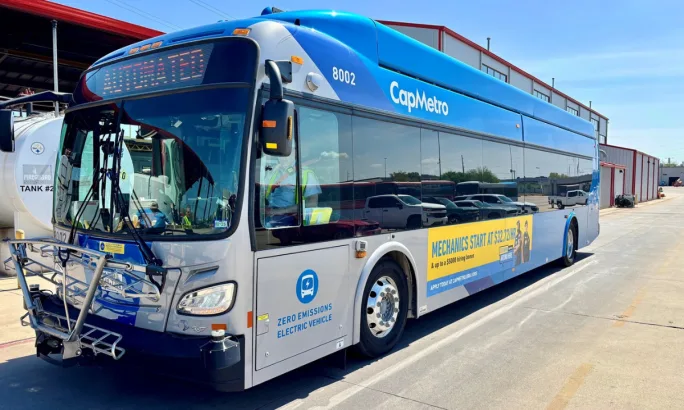
By automating the pre-trip inspection process, CapMetro estimates it can shave six to eight minutes per trip, a small change with major cumulative impacts.
Photo: CapMetro / WSP in the U.S.
Paving the Way for Scalable Transit Tech
As cities across the U.S. prepare for fleet electrification and more intelligent infrastructure, CapMetro's project offers a roadmap for what's possible when public investment meets private innovation.
"It is very important to get this first step right because we're looking toward the future and expanding this on a greater scale," said Dave Kubicek, executive VP, capital construction, engineering, and design, at CapMetro.
While the automated bus yard demonstration marks a groundbreaking step forward, widespread adoption will take time. However, the technology shows clear potential to scale across transit agencies nationwide.
"I realize this sounds unrealistic, but at one point, so were the objectives of the Phase I automated yard demonstration, and the CapMetro project team completed each deliverable," said Skolrud.
Editor's Note: This article was originally published in July 2025 and was updated on August 21, 2025, to correct bus yard capacity percentages.
Quick Answers
CapMetro's driverless technology project is focused on implementing autonomous systems in the bus yard to improve fleet efficiency and support zero-emission goals.
*Summarized by AI
Subscribe to Our Newsletter
More Bus

Scenes from APTA TRANSform & EXPO 2026
Transit leaders, manufacturers, and industry professionals gathered in Chicago to explore new technologies, share ideas, and discuss the future of public transportation.
Read More →
More Than a Summer Job: Building the Next Generation of Transit Talent
The Delaware River Port Authority and PATCO have transformed their internship program into a hands-on professional development experience that introduces students to the breadth of transportation careers — and creates a pipeline for future employees.
Read More →
LA Metro Board Awards 220 Battery-Electric Bus Contract to ENC
The contract, which is the largest base award of battery-electric buses by a U.S. transit agency, will be built in Southern California, sustaining good jobs as LA prepares to welcome the world in 2028
Read More →
Public Transit Conference Returning to GFX in 2027, Call for Papers Now Open
The Call for Papers is now open, allowing transit agency professionals and industry experts to help shape the PTC educational program by submitting session ideas for consideration.
Read More →
Indian River Transit’s Community-Focused Approach Earns National Recognition
Named APTA’s 2026 Outstanding Public Transportation System in its size category, Florida’s Indian River County transit system continues to grow ridership through fare-free service and a focus on evolving community needs.
Read More →
ENC Lands MATA Contract and More in Biz Briefs
In this edition of Biz Briefs, we spotlight the latest developments shaping the future of mobility.
Read More →
From Surviving to Thriving: Building Stronger Transportation Organizations
Bus Business Consultants founder Brian Dickson shares lessons on leadership, organizational health, and creating options for long-term success in a changing transportation industry.
Read More →
Everett Transit, Community Transit Outline Consolidation Agreement
The proposed agreement calls for a 50% increase in bus service in Everett, a new microtransit zone, continued paratransit service, and the transfer of Everett Transit operations to Community Transit.
Read More →
SEPTA Details Accelerate Vision for Transit System
The plan outlines investments in trolley modernization, new Metro and Regional Rail vehicles, accessible stations, and more frequent bus and rail service.
Read More →
Report: Transit Bus Manufacturing Supports 34,100 Jobs, $5.1B in GDP
The “Buses Mean Business” report examines the transit bus manufacturing industry’s economic footprint, supply chain, and rising demand for vehicle replacements.
Read More →