



Gov. Cuomo touts rapid ridership growth on new Second Ave subway
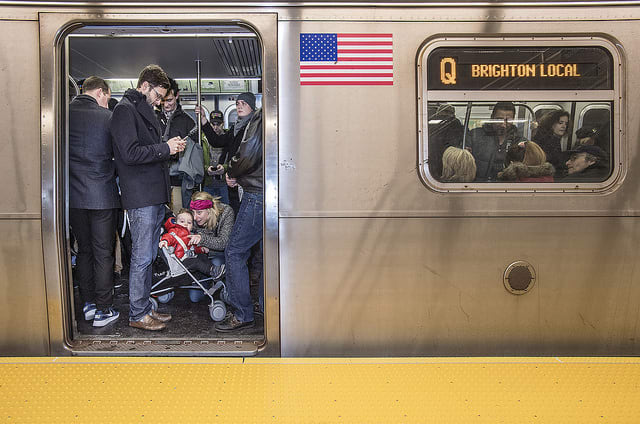
The ridership includes customers entering and leaving 72nd Street, 86th Street, and 96th Street, and the new entrance at 3rd Ave and 63rd Street as well as customers transferring from the F Subway line to Q Subway line at 63rd Street.

All photos via Gov. Cuomo

All photos via Gov. Cuomo
Gov. Andrew M. Cuomo announced initial ridership figures for the New York MTA’s Second Avenue Subway, since the line opened in January, has grown steadily by approximately 8,000 daily riders per week, hitting 155,000 daily riders on Friday, Jan. 27.
“The Second Avenue Subway has already become an integral part of the Upper East Side and these ridership figures show just how important this expansion project is to the neighborhood and our economy,” Gov. Cuomo said. “This project is proof that government can still get big things done and these early ridership numbers send a clear message that when we deliver on our promises New Yorkers respond.”
The Second Avenue Subway expansion is part of the Gov. Cuomo’s sweeping statewide initiative to redevelop and rebuild New York’s aging infrastructure from the ground up. The comprehensive plan includes a new LaGuardia Airport, a transformational renovation of JFK Airport, completely redesigned Penn Station, the LIRR 2nd and 3rd Track projects, the new New York Bridge, and a major expansion of the Jacob K. Javits Center, as well as a complete overhaul and upgrades to the MTA's seven bridges and two tunnels in the metropolitan region.
The ridership includes customers entering and leaving 72nd Street, 86th Street, and 96th Street, and the new entrance at 3rd Ave and 63rd Street as well as customers transferring from the F Subway line to Q Subway line at 63rd Street.
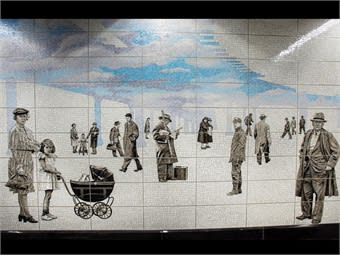
The MTA also released figures for the nearby Lexington Avenue Line, a notoriously crowded line in New York City, which has reduced weekday ridership in four key stations, 68th Street, 77th Street, 86th Street, and 96th Street. According to new ridership figures, the number of daily riders entering and exiting the four Upper East Side Lexington Avenue Line Stations declined by an average of 27% on weekdays and as much as 46% during peak morning rush hours of 8 a.m. to 9 a.m., as compared to the same period last year.
“The opening of the Second Avenue Subway was a singular event, and New Yorkers have been quick to embrace the new line, with ridership climbing quickly,” said MTA interim Executive Director Ronnie Hakim. “The fact that so many daily riders are using the new line has also helped to ease crowding during the morning rush at key stations on the Lexington Avenue line, making commuting easier, faster, and better for thousands of New Yorkers.”
More Management

METRO Opens Submissions for 2026 Motorcoach Awards
Nominations are now being accepted for METRO Magazine’s Operator of the Year and Innovative Operator of the Year awards.
Read More →
New York MTA Advances Final Contract for Second Avenue Subway Expansion
Contract Four is the largest in the Second Avenue Subway Phase 2 project and includes construction of station infrastructure, tracks, and signals for the subway expansion, MTA officials said. Work on Contract Four will begin in 2027.
Read More →
Transit Agencies Highlight Safety Gains at National Summit
Leaders from 15 major transit systems shared crime-reduction results and safety initiatives while discussing the role of continued federal support.
Read More →

NITA Names New Leadership, Expands Reduced-Fare Program at First Board Meeting
The new regional transit authority appointed its first board chair and interim executive director while extending reduced fares across CTA, Metra, and Pace for eligible riders.
Read More →
Beyond the Checklist: A Structured Approach to Transit Maintenance
Reliability-Centered Maintenance helps transit agencies move beyond routine checklists to focus limited resources on the assets and failures that have the greatest impact on safety, reliability, and service.
Read More →
APTA 2026 Nominating Committee Selects Leadership Slate, Names Chair and Vice Chair Nominees
Leadership changes will help shape the association’s priorities and its representation of the transportation industry during the 2026–2027 term.
Read More →
DART Launches Major Security, Fare Enforcement Initiative
The 90-day demonstration will deploy coordinated security teams at five light rail stations while testing controlled access and gathering data to guide future investments.
Read More →
Advancing Fare Collection Through Technology and Innovation
Learn about delivering 1300 gates at 91 stations while managing fare evasion. Explore the large scale deployment, solution customization and real-world results that affect the region. Prepare for deployment in your region now.
Read More →
Game Day in Motion: Moving Millions During the 2026 World Cup
Between packed transit stations and team motorcoaches, see how agencies and operators across North America tackled the transportation demands of the 2026 FIFA World Cup.
Read More →
Surface Transportation Extension Averts Shutdown, Leaves Transit Funding Gap
The stopgap keeps federal transportation programs moving, but missing advance funding could complicate the transit and rail projects agencies are planning next.
Read More →