



Growing ridership, service keys to UTA success
By all indications, 2013 was quite a year for UTA, leading to the agency being named APTA’s 2014 Outstanding Public Transportation System for a transit agency providing 20 million or more passenger trips.

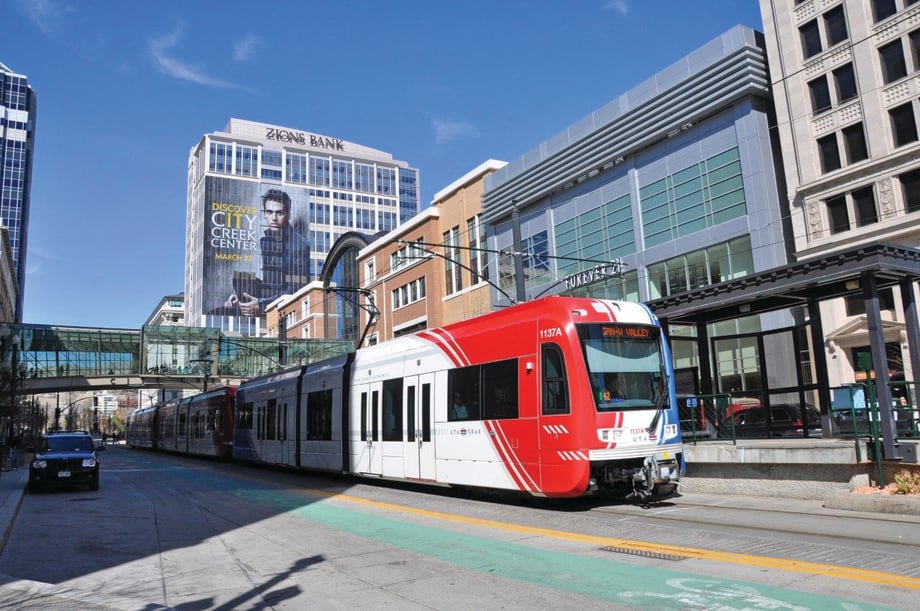
By all indications, 2013 was quite a year for the Utah Transit Authority (UTA), leading to the agency being named APTA’s 2014 Outstanding Public Transportation System for a transit agency providing 20 million or more passenger trips.
“This is a great honor for UTA and confirmation from our peers across the country of what our loyal customers already know, that we have the best multimodal transit system in the U.S.,” said UTA GM Michael Allegra. “Just as we are always studying other transit systems, likewise our peer transit agencies have been contacting us asking for our help, so that they can learn from our experience during a time of record growth. We are more than happy to share what we have learned by building this system, which is no small undertaking.”
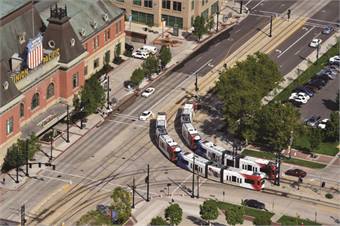
The success of FrontLines 2015 was possible because of the partnerships between UTA and the communities it serves.
Part of UTA’s 2013 success included providing a record 44 million trips on its trains and buses, representing a 3% increase in overall ridership, which was subsequently higher than the 2.1% national average increase.
Much of UTA’s growth came from its FrontRunner commuter rail system, which increased ridership 103% compared to December 2012. Meanwhile, its TRAX light rail system experienced 6.8% growth in 2013.
In a 12-month period, concluding in December 2013, UTA opened four rail lines, including one commuter rail line, two light rail lines and the state’s first modern streetcar line.
The new rail lines were part of UTA’s FrontLines 2015 project, which included four light rail lines and one commuter rail line. The ambitious undertaking broke ground in 2008 with a plan to build 70 miles of rail in seven years. The program was completed two years ahead of schedule and $300 million under budget.
The success of FrontLines 2015 was possible, Allegra said, because of the partnerships between UTA and the communities it serves.
“We are a model in this country for the things that we do — and we do them together,” he said at the time of the opening of the Draper line in August 2013.
UTA also joined several cities around the nation that provide airport service when it opened its Airport TRAX line in April 2013.
The six-mile line provides transportation from downtown Salt Lake City to the Salt Lake City International Airport in 20 minutes. In addition to the airport, the line also offers service to the state Fair Park, a direct connect to the FrontRunner system and the Jordan River Trail, as well as many businesses, offices and neighborhoods along the corridor on North Temple.
Additionally, the launch of UTA’s two-mile S-Line streetcar brought connections to the agency’s existing rail system with commercial districts throughout the two cities it serves — South Salt Lake City and Sugar House.
When the system launched in early December 2013, hundreds braved snow flurries and chilly temperatures, with 2,300 boardings recorded over its opening weekend.
Most recently, the agency revamped its trip planner and added a new “App Center” to its website.
UTA’s trip planner features improved address recognition, automatic fare calculation and information about walking distances. The planner also allows users to plan their trip by rail or bus and map a route using addresses, landmarks or stop identification numbers.
Meanwhile, the UTA App Center lists Web and mobile tools developed by third parties to help riders navigate the UTA system. Apps are now organized by operating system, allowing you to quickly find the app that best suits their needs.
More Bus

New York MTA Plans Largest Bus Fleet Upgrade in More Than a Decade
The agency is seeking manufacturers for 650 new CNG buses to replace aging vehicles, improve reliability, and advance its broader fleet modernization strategy.
Read More →
Building a Flexible Path to Transit Electrification
John Hroncich discusses BAE Systems’ modular and scalable approach, lessons learned from decades of real-world operations, and how agencies can identify electrification strategies that fit their fleets.
Read More →
Bus Tech Talk: Keeping Transit Technicians Ahead of the Technology Curve
LA Metro’s Obed Mejia discusses technician training, evolving maintenance technology, fleet replacement, and strategies for getting the most out of today’s transit fleets.
Read More →
Biz Briefs: RIPTA Unveils New Frontrunners, Clevland RTA Adds New Siemens, and More
In METRO's latest installment, we take a look at recent news from Siemens, Prevost, Dodge, and more partnerships making headlines across the transportation sector.
Read More →
People Movement: Holly Arnold Joins Transdev and More
In this edition, we also cover recent appointments and announcements at Pace, CamTran, MCI, and more, showcasing the individuals helping to shape the future of transportation.
Read More →
The High Cost of Transit Buses: Industry Leaders Look to Procurement Reform
Transit leaders and policymakers examine how standardized bus designs, streamlined procurement, and predictable funding could help agencies stretch budgets and deliver better service.
Read More →
The Business Voice Behind Public Transportation
As chair of APTA’s Business Members Board of Governors, Ray Melleady explains how more than 850 business members are partnering with transit agencies to advance funding, innovation, and industry-wide collaboration.
Read More →
From Surviving to Thriving: Building Stronger Transportation Organizations
Bus Business Consultants founder Brian Dickson shares lessons on leadership, organizational health, and creating options for long-term success in a changing transportation industry.
Read More →
Finding the ‘Happy Medium’: Optimizing Maintenance Without Sacrificing Reliability
The key to maintenance optimization isn’t doing less work—it’s doing the right work at the right time on the right assets.
Read More →
LA Metro, City of West Hollywood, and Partners Advance Smarter Bus Lane Enforcement
The award-winning partnership combines AI-powered detection with human oversight to improve bus reliability, accessibility, and enforcement efficiency.
Read More →