




More News: LA Metro Shows Continued Ridership Growth in January
HID Mass Transit Report Highlights 5 Key Priorities for 2025
HID’s State of Mass Transit Ticketing Hardware Report 2025 shows the continuing shift to contactless and mobile payment methods as companies look for user-friendly interfaces for their fare collection hardware.
March 7, 2025
HID's State of Mass Transit Ticketing Report 2025 is based on a survey sent out to 102 mass transit providers worldwide and shows that nearly half of them are looking into deploying new ticketing and fare collection hardware.
Photo: HID
2 min to read
HID’s recently published State of Mass Transit Ticketing Hardware Report 2025 provides data that highlights five key priorities that transit companies should consider investigating.
Based on a survey of 102 mass transit providers worldwide, the report focuses on the shift to touch-free transactions and the adoption of contactless payment systems.
Reducing Reliance on Cash Payments
The first priority highlighted by the report is the reduction of reliance on cash payments and the streamlining of fare collection and operations.
Among agencies surveyed, 46% of them plan to deploy new ticketing and fare collection hardware, of those planning on these deployments, 88% of them are looking at doing so within the next 12-24 months.
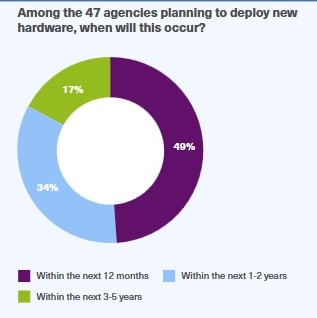
A graph from the report shows when agencies are planning on deploying new fare collection hardware.
Photo: HID
Enhancing Passenger Experience
When looking at new fare collection hardware, nearly two-thirds of agencies rank user-friendly interfaces as the most important feature. By prioritizing convenience and faster ticketing transactions, companies are hoping to enhance the passenger experience.
Expanding Contactless and Mobile Payment
Magnetic stripe ticketing is currently on the way out, while contactless and mobile payment systems are rising in demand.
Currently, 43% of agencies are planning on deploying contactless systems within the next five years. European companies currently lead in mobile ticketing adoption, with 86% using app-based solutions compared to 58% globally.

Collecting Ridership Data to Inform Decisions
More than half of respondents said they would prioritize single ticketing interfaces that can read multiple ticket types and provide data. This is in addition to being user-friendly.
Reducing Dependency on Proprietary Ticketing Systems
The final priority highlighted was the trend of moving away from proprietary systems for ticketing. With 40% of respondents stating that open architecture solutions are a high priority, indicating the need for solutions to evolve as the industry’s needs change.
Proprietary tech remains a significant hurdle for companies, especially in Latin America and the Asia-Pacific.
Other Takeaways
While only five priorities were highlighted, there are some other interesting data points in the report.
According to the survey, 24% of respondents stated that the biggest obstacle to upgrading ticketing hardware is the lack of funding. The second largest obstacle is the use of proprietary technology or legacy fare systems.
Most agencies reported that they have fare collection hardware onboard vehicles at 85%, while approximately half also deploy hardware at stations and interchanges.
Mass transit fare collection and ticketing processes are undergoing a passenger-centric revolution driven by technology. Agencies will need to select the right partner and hardware solutions that can evolve alongside industry demands.
You can find the full report here.
More Management

METRO Opens Submissions for 2026 Motorcoach Awards
Nominations are now being accepted for METRO Magazine’s Operator of the Year and Innovative Operator of the Year awards.
Read More →
New York MTA Advances Final Contract for Second Avenue Subway Expansion
Contract Four is the largest in the Second Avenue Subway Phase 2 project and includes construction of station infrastructure, tracks, and signals for the subway expansion, MTA officials said. Work on Contract Four will begin in 2027.
Read More →
Transit Agencies Highlight Safety Gains at National Summit
Leaders from 15 major transit systems shared crime-reduction results and safety initiatives while discussing the role of continued federal support.
Read More →

NITA Names New Leadership, Expands Reduced-Fare Program at First Board Meeting
The new regional transit authority appointed its first board chair and interim executive director while extending reduced fares across CTA, Metra, and Pace for eligible riders.
Read More →
Beyond the Checklist: A Structured Approach to Transit Maintenance
Reliability-Centered Maintenance helps transit agencies move beyond routine checklists to focus limited resources on the assets and failures that have the greatest impact on safety, reliability, and service.
Read More →
APTA 2026 Nominating Committee Selects Leadership Slate, Names Chair and Vice Chair Nominees
Leadership changes will help shape the association’s priorities and its representation of the transportation industry during the 2026–2027 term.
Read More →
DART Launches Major Security, Fare Enforcement Initiative
The 90-day demonstration will deploy coordinated security teams at five light rail stations while testing controlled access and gathering data to guide future investments.
Read More →
Sponsored•September 9, 2026
Advancing Fare Collection Through Technology and Innovation
Learn about delivering 1300 gates at 91 stations while managing fare evasion. Explore the large scale deployment, solution customization and real-world results that affect the region. Prepare for deployment in your region now.
Read More →
Game Day in Motion: Moving Millions During the 2026 World Cup
Between packed transit stations and team motorcoaches, see how agencies and operators across North America tackled the transportation demands of the 2026 FIFA World Cup.
Read More →
Surface Transportation Extension Averts Shutdown, Leaves Transit Funding Gap
The stopgap keeps federal transportation programs moving, but missing advance funding could complicate the transit and rail projects agencies are planning next.
Read More →