



Holdsworth announces name change to Camira
The name change is designed to reflect the company’s wider ranging product capabilities, encompassing not only moquette fabrics for seating, but high performance upholstery flat cloths and textile ancillary trims.

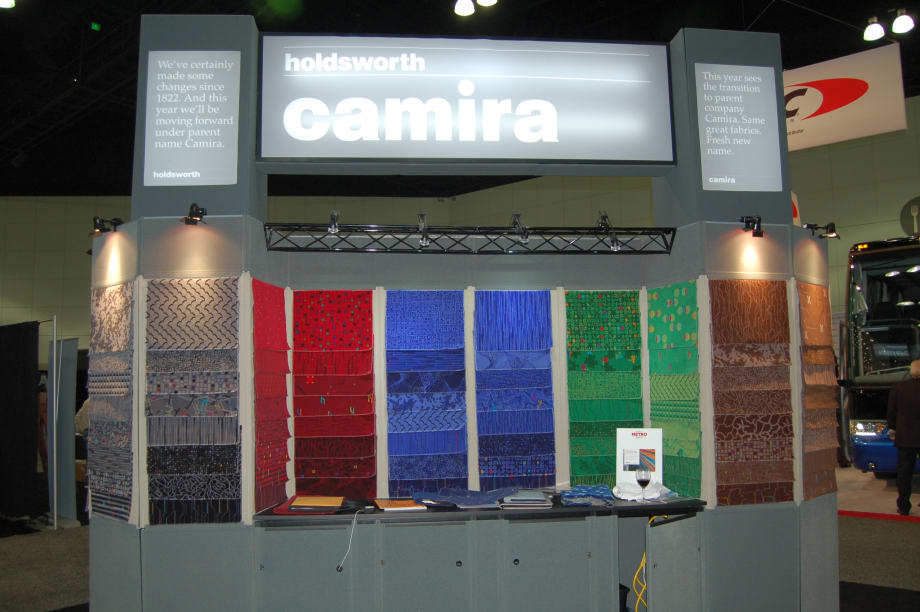
Fabric specialist Holdsworth announced its changing its name to parent company Camira at the United Motorcoach Association (UMA) Expo at Travel Exchange in Los Angeles.
Part of the award winning Camira Group since 2007, the name change is designed to reflect the company’s wider ranging product capabilities, encompassing not only moquette fabrics for seating, but high performance upholstery flat cloths and textile ancillary trims.
The switch to Camira is also part of a global brand building initiative, as the company seeks to strengthen its position as the natural choice for fabric solutions in the worldwide interiors marketplace.
Holdsworth started out in 1822 in the UK textile heartland in Halifax, Yorkshire, England, weaving the original wool moquettes for railcar interiors, then for buses and motorcoaches. After six generations in the Holdsworth family, the business was sold in 2005 for real estate development of its historic mill complex, leaving the assets and Holdsworth brand name to be acquired two years later by UK textile manufacturer and global distributor Camira Group.
As a result of the successful integration and re-invigoration of the transport textile business, Camira now designs and manufactures 10 million yards of fabric a year, sold in 80 countries worldwide. These are used in wide ranging commercial interiors, healthcare, education and mass transit.
Camira is renowned for industry leading environmental sustainability, a current holder of the prestigious Queen’s Award for Sustainable Development, and accredited to the international environmental management standard ISO 14001. The company is celebrating its 40th anniversary in 2014.
More Bus

People Movement: Dan Dipert Coaches Adds Third-Generation Leader, Keolis Names New Valley Metro VP/GM, and More
In this edition, we also cover recent appointments and announcements at the Wabtec, SilverRide, HNTB, and more, showcasing the individuals helping to shape the future of transportation.
Read More →
New York MTA Plans Largest Bus Fleet Upgrade in More Than a Decade
The agency is seeking manufacturers for 650 new CNG buses to replace aging vehicles, improve reliability, and advance its broader fleet modernization strategy.
Read More →
Building a Flexible Path to Transit Electrification
John Hroncich discusses BAE Systems’ modular and scalable approach, lessons learned from decades of real-world operations, and how agencies can identify electrification strategies that fit their fleets.
Read More →
Bus Tech Talk: Keeping Transit Technicians Ahead of the Technology Curve
LA Metro’s Obed Mejia discusses technician training, evolving maintenance technology, fleet replacement, and strategies for getting the most out of today’s transit fleets.
Read More →
Biz Briefs: RIPTA Unveils New Frontrunners, Clevland RTA Adds New Siemens, and More
In METRO's latest installment, we take a look at recent news from Siemens, Prevost, Dodge, and more partnerships making headlines across the transportation sector.
Read More →
People Movement: Holly Arnold Joins Transdev and More
In this edition, we also cover recent appointments and announcements at Pace, CamTran, MCI, and more, showcasing the individuals helping to shape the future of transportation.
Read More →
The High Cost of Transit Buses: Industry Leaders Look to Procurement Reform
Transit leaders and policymakers examine how standardized bus designs, streamlined procurement, and predictable funding could help agencies stretch budgets and deliver better service.
Read More →
The Business Voice Behind Public Transportation
As chair of APTA’s Business Members Board of Governors, Ray Melleady explains how more than 850 business members are partnering with transit agencies to advance funding, innovation, and industry-wide collaboration.
Read More →
From Surviving to Thriving: Building Stronger Transportation Organizations
Bus Business Consultants founder Brian Dickson shares lessons on leadership, organizational health, and creating options for long-term success in a changing transportation industry.
Read More →
Finding the ‘Happy Medium’: Optimizing Maintenance Without Sacrificing Reliability
The key to maintenance optimization isn’t doing less work—it’s doing the right work at the right time on the right assets.
Read More →