




RELATED: Visa, partners to bring contactless fare tech to global transits
If it was easier to pay for public transport, ridership would increase: Study
Complexity in payment is often at the root of many common commuter complaints.
March 25, 2019
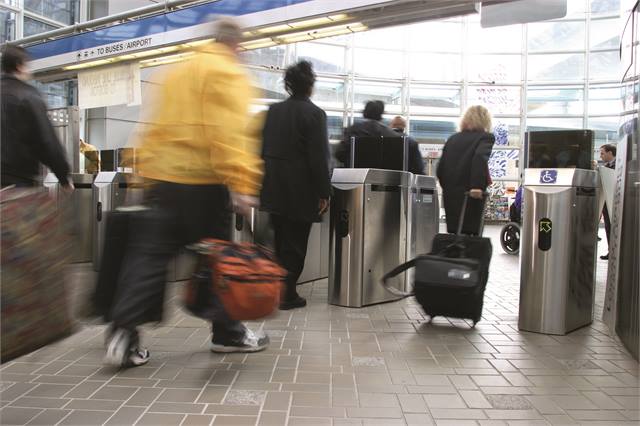
A new study commissioned by Visa recommends creating a seamless payment experience to support commuter journeys with multiple “legs.”
Photo: MBTA
4 min to read
A new study commissioned by Visa recommends creating a seamless payment experience to support commuter journeys with multiple “legs.”
Photo: MBTA
Complexity in payment is often at the root of many common transit commuter complaints, according to a new study. Payments lie at the heart of every form of travel, and will continue to become more integral as more cities move to contactless public transportation, digital payments for parking and rental services such as bikes or scooters, a new report commission by Visa found.
The Stanford University study, “The Future of Transportation: Mobility in the Age of the Megacity” was developed to better understand the challenges commuters face today and in the future.
The study reflects the feedback of 19,000 consumers in 19 countries and identified significant challenges faced by growing urban centers.
According to the research, by 2050, 68% of the world’s population will live in urban centers — and the number of “megacities” with populations greater than 10 million people will rise from 43 today to 51 within that same period.
KEY GLOBAL TRENDS
Commute times:
46% of consumers globally have seen commuting times increase
Half (52%) are frustrated with the experience of using public transport
One third of those surveyed (37%) expect that their commuting time will increase over the next five years.
Car use:
The personal car remains the top mode of transport for both commuting (60%) and personal travel (61%)
Only 42% of Generation Z (aged 18 to 25) respondents use a car to get to work, school or university, or for personal travel
The most disliked aspect of driving is attempting to find a parking space, cited by 64% of respondents,
Followed by the risk of getting a fine if you park longer than anticipated (44%) and
Paying more for parking time than needed (42%)
Public transport use:
Less than half of people surveyed use public transport as a way to get to work, school or university (44%),
That number rises to 54% for personal travel such as entertainment.
Commuters choose transportation type based on three factors: convenience, reliability and overcrowding. Importance of each factor differs depending on age:
Baby Boomers (age 56+) - Convenience (82%), Reliability (84%) and Overcrowding (72 percent)
GenX (46-55) - Convenience (79%), Reliability (82%) and Overcrowding (71%)
Millennials (26-45) – Convenience (74%), Reliability (76%) and Overcrowding (67%)
GenZ (18-25) - Convenience (62%), Reliability (67%) and Overcrowding (55%)
Payments:
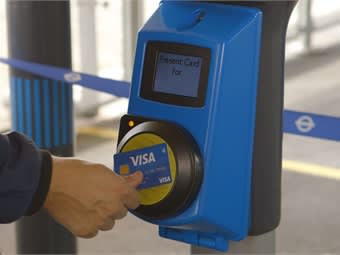
If it was easier to pay for public transport, average use would increase by 27%, according to a new study.
Photo: Visa
Complexity in payment is often at the root of many common complaints.
If it was easier to pay for public transport, average use would increase by 27%.
47% said the need for different tickets for different modes of travel is an issue,
44% said not knowing how much to pay is a problem, and
41% cited services being “cash-only” as an annoyance. According to those surveyed, these frustrations make them less likely to use public transport and more likely to drive their own cars
For car users, 47% would like to see innovations that would advise on the cheapest fuel available
35% would like an app that recognizes the location where they are trying to refuel and pays through the app
TOP FIVE RECOMMENDATIONS
1 Invest in connectivity. City governments needs to invest in an “always on” data infrastructure, which is fundamental to the technology solutions that consumers demand. It supports real-time data exchanges that can inform people about their journey as well as provide insight for cities to ensure that services meet shifting demand.
2 Create a seamless payment experience to support commuter journeys with multiple “legs.” City governments and urban planners need to collaborate with think tanks, automotive and technology firms, and payments providers such as Visa. As a single journey will increasingly involve more than one mode transport (e.g., car+underground+bike) – it becomes imperative to create a simple, streamlined payment experience for the commuter, ranging from contactless transit to in-app payments or platform-based solutions.
3 Integrate personal authentication into the payment experience. As companies and municipalities increasingly incorporate digital payments, they also need to integrate instant authentication. The role of Digital ID in the ecosystem is critical to address the changes in the way people use transportation, ensuring that both payment and personal authentication is easy and seamless.
4 Design commerce systems with all members of society in mind. When designing the commerce ecosystem, all members of the transportation ecosystem need to challenge their thinking to include seniors and the un- or underbanked, ensuring no one is left behind.
5 Develop strategic partnerships to drive insights. Cities should partner with corporations that can broader insight, aiding in planning. Artificial Intelligence in combination with Big Data can be used to analyse data about consumption, movement and changing trends to anticipate needs in real time as well as provide cities with insight that can help with future planning.
More Technology

From Hardware to Digital Partner: Luminator Charts Its Next Chapter
CEO Magnus Friberg discusses Luminator’s shift toward becoming a digital partner, the growing importance of software and interoperability, and how AI can help agencies improve operations and passenger experience.
Read More →
Beyond the Checklist: A Structured Approach to Transit Maintenance
Reliability-Centered Maintenance helps transit agencies move beyond routine checklists to focus limited resources on the assets and failures that have the greatest impact on safety, reliability, and service.
Read More →
NJ TRANSIT Advances Bus Technology Upgrades Across Statewide Fleet
More than 1,500 buses now feature upgraded technology designed to improve arrival predictions and provide free Wi-Fi, with deployment expected to reach nearly 2,000 buses by the end of 2026.
Read More →

Building a Flexible Path to Transit Electrification
John Hroncich discusses BAE Systems’ modular and scalable approach, lessons learned from decades of real-world operations, and how agencies can identify electrification strategies that fit their fleets.
Read More →
Biz Briefs: Alstom Lands Canadian Contract, LYT to Supply California TSP, and More
In METRO's latest installment, we take a look at recent news from Complete Coach Works, Beep, FlixBus, and more partnerships making headlines across the transportation sector.
Read More →
Sponsored•September 8, 2026
From Legacy Silos to Conversational Intelligence
What if transit leaders could ask any operational question and get a trusted answer in seconds? Conversational AI is transforming how agencies use their data.
Read More →
USDOT Announces Rail Vehicle Replacement Grants, Chattanooga AV Shuttle Funding
More than $191 million in federal funding will help three transit agencies replace aging rail vehicles and support a new autonomous shuttle service in Chattanooga.
Read More →
Bus Tech Talk: Keeping Transit Technicians Ahead of the Technology Curve
LA Metro’s Obed Mejia discusses technician training, evolving maintenance technology, fleet replacement, and strategies for getting the most out of today’s transit fleets.
Read More →
Biz Briefs: RIPTA Unveils New Frontrunners, Clevland RTA Adds New Siemens, and More
In METRO's latest installment, we take a look at recent news from Siemens, Prevost, Dodge, and more partnerships making headlines across the transportation sector.
Read More →
Why Simulating Pedestrian Movement Has Become Essential for Modern Rail Stations
Pedestrian microsimulation is helping rail planners identify bottlenecks, test station designs, and prepare complex transit hubs for growing passenger volumes.
Read More →