



Keolis adds light rail to its Australian multimodal network
The approximate 1.7-mile long network features six stations and runs between Wickham and Pacific Park.

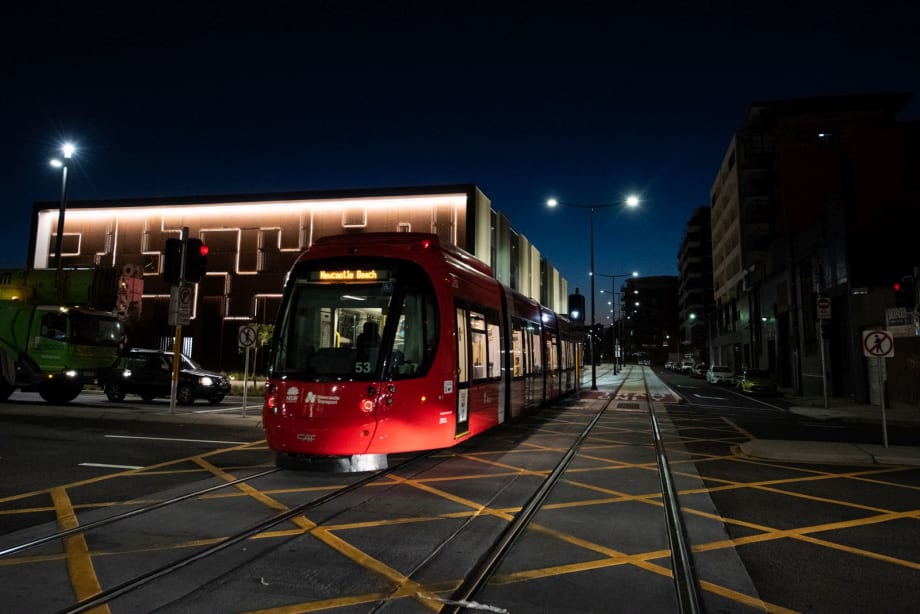
As part of the testing phase, 14 drivers were trained and a record 6,200 miles driven in just over four months, equivalent to 1,000 trips per tram across the network.
Keolis
As part of the testing phase, 14 drivers were trained and a record 6,200 miles driven in just over four months, equivalent to 1,000 trips per tram across the network.
Keolis
Keolis’ Australian subsidiary, Keolis Downer, started operating the new light rail of Newcastle on behalf of Transport for New South Wales a month ahead of schedule. Located north of Sydney, Newcastle is home to 360,000 people who have access to a multimodal transport network operated by Keolis Downer.
Awarded in December 2016, the multimodal transport contract was the first of its kind to be entrusted to a private operator in Australia and covers the operations and maintenance of the entire network (light-rail, buses and ferries) for a period of 10 years. In July 2017, Keolis Downer started operating the bus and ferry services and in January 2018 re-designed the bus service while introducing a real-time, on-demand transport service, powered by Via, the leading developer of shared-ride technology.
Keolis Downer’s team worked relentlessly to launch services ahead of schedule. As part of the testing phase, 14 drivers were trained and a record 6,200 miles driven in just over four months, equivalent to 1,000 trips per tram across the network.
The approximate 1.7-mile long network features six stations and runs between Wickham and Pacific Park. This new network provides Novocastrians with a new way to travel while efficiently connecting with existing bus and ferry services. It has been integral to the revitalization of Newcastle, opening the city back up to its waterfront and connecting it all with an integrated multimodal transport network. Furthermore, the line is catenary free preserving Newcastle’s urban landscape from overhead wires.
More Rail
Amtrak, CN Reach Agreements to Strengthen Passenger Rail Service, Safety
The agreement resolves a more than decade-long proceeding before the Surface Transportation Board concerning the terms and conditions for Amtrak services, such as the City of New Orleans, Illini/Saluki, and Wolverine.
Read More →
New York MTA Advances Final Contract for Second Avenue Subway Expansion
Contract Four is the largest in the Second Avenue Subway Phase 2 project and includes construction of station infrastructure, tracks, and signals for the subway expansion, MTA officials said. Work on Contract Four will begin in 2027.
Read More →
San Diego MTS Breaks Monthly Trolley Ridership Record
Agency officials said July’s ridership indicates MTS’s continued recovery from the pandemic.
Read More →
Report Examines NJ TRANSIT Reliability, Funding Challenges
The Garden State Initiative analysis examines the roles of Amtrak infrastructure, fleet management, and agency operations while recommending a more performance-based approach to improving reliability.
Read More →
Stadler, CapMetro Sign Long-Term Rail Fleet Support Agreement
Beginning in 2027, Stadler will provide on-site technical expertise, spare parts support, training, and obsolescence management to help extend the reliability and longevity of CapMetro’s GTW fleet.
Read More →
Biz Briefs: Alstom Lands Canadian Contract, LYT to Supply California TSP, and More
In METRO's latest installment, we take a look at recent news from Complete Coach Works, Beep, FlixBus, and more partnerships making headlines across the transportation sector.
Read More →
CATS Gold Line Marks 5 Years of Service, 2.8M Passenger Trips
With a six-mile expansion planned, the Charlotte streetcar is positioned to connect more neighborhoods and major transit hubs across the region.
Read More →
Why Simulating Pedestrian Movement Has Become Essential for Modern Rail Stations
Pedestrian microsimulation is helping rail planners identify bottlenecks, test station designs, and prepare complex transit hubs for growing passenger volumes.
Read More →
Amtrak Begins Major Construction at New York’s Sunnyside Yard
The new maintenance facility will support Amtrak’s Airo trainsets while improving maintenance efficiency and turnaround times in New York.
Read More →
Chicago Leaders Unveil Plans for O’Hare Airport Express Train
The privately developed project would offer a 15-minute trip between downtown and O’Hare’s Terminal 2, with trains operating every 15 minutes on a dedicated track. The service would use battery-electric trains and three existing freight rail rights-of-way.
Read More →