



L.A. endorses blueprint for making city a national transportation leader
Plan would cut pollution and increase access to more transportation options in age of ridesharing and autonomous vehicles.

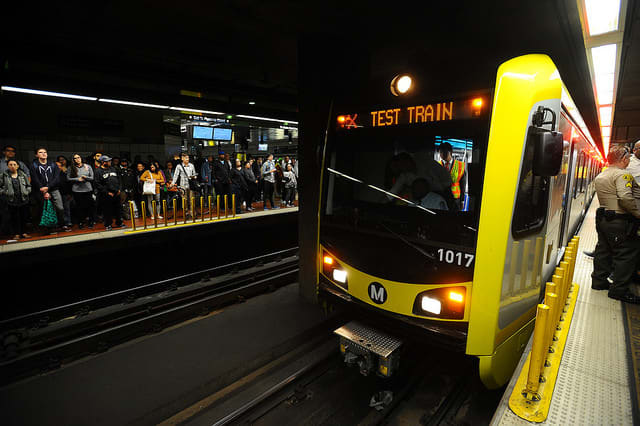
Los Angeles ranks third in the nation for daily public transportation ridership and stands as a national leader on car-sharing, bike-sharing, and environmental sustainability. Photo: LA Metro
Los Angeles ranks third in the nation for daily public transportation ridership and stands as a national leader on car-sharing, bike-sharing, and environmental sustainability. Photo: LA Metro
A new report from the Natural Resources Defense Council, endorsed by the City of Los Angeles, offers cutting-edge recommendations for tackling the city’s notorious transportation challenges, as technology in the form of rides-on-demand and autonomous vehicles revolutionizes how people move around in cities. The recommendations in the report could be replicated in cities around the country.
“Shared mobility has certainly made its mark in cities — sometimes for the better, but not always,” said Amanda Eaken, director of transportation and climate with NRDC’s Healthy People and Thriving Communities program. “This policy framework is designed to put the city on a path to cleaner air and better access to transportation for Angelenos of all income levels — setting a model for cities nationwide to follow.”
Los Angeles ranks third in the nation for daily public transportation ridership and stands as a national leader on car-sharing, bike-sharing, and environmental sustainability. These recommendations can help the city build on the progress it has made and cement its role as a national leader in sustainable urban transportation, according to the group.
"Shared mobility has the power to ease congestion and give people choices, so they can spend less time worrying about getting from A to B and focus on the things that matter to them. We are proud to continue partnerships like the one we have with the NRDC to make sure we bring these benefits where they can do the most good," said Los Angeles Department of Transportation GM Seleta Reynolds.
Los Angeles Shared-Mobility Climate and Equity Action Plan presents a first-of-its-kind policy framework for how shared mobility — such as bike- and ride-sharing services — can better help cities cut climate pollution and increase access to transportation in communities that are historically underserved. The recommendations draw on the most recent research on the impacts of shared mobility, as well as best practices from around the world, and offer a role for city government in shaping this emerging mobility marketplace.
The report takes into account the effects of ride-sharing companies, such as Uber and Lyft, on congestion and the environment, the need for more infrastructure for electric cars and buses, the rapid development of autonomous vehicles, and embedded transportation structures that have neglected low-income communities.
Its recommendations include:
Creating incentives for the use of electric vehicles in ridesharing and other shared mobility options.
Piloting a congestion pricing zone in the city to manage flow in high-traffic areas and create a sustainable funding source for low-carbon mobility choices.
Creating a single routing, booking, and payment platform to enable access to all mobility options.
Developing specifications for gathering data from mobility providers.
Creating an equity advisory committee on transportation to provide greater input into city decision-making.
Reducing or eliminating minimum parking requirements in the city zoning code.
More New Mobility

From Hardware to Digital Partner: Luminator Charts Its Next Chapter
CEO Magnus Friberg discusses Luminator’s shift toward becoming a digital partner, the growing importance of software and interoperability, and how AI can help agencies improve operations and passenger experience.
Read More →
Biz Briefs: Alstom Lands Canadian Contract, LYT to Supply California TSP, and More
In METRO's latest installment, we take a look at recent news from Complete Coach Works, Beep, FlixBus, and more partnerships making headlines across the transportation sector.
Read More →
CharterUP’s Armir Harris on Technology, AI, and the Future of Group Mobility
In a recent episode of METROspectives, CharterUP Founder/CEO Armir Harris discussed the company’s evolution from an online charter bus marketplace into a technology platform supporting public- and private-sector mobility and much more.
Read More →
Jacksonville’s NAVI Project Charts a New Course for Autonomous Public Transportation
Through its NAVI program, JTA is showing how autonomous vehicles, intelligent infrastructure, and coordinated operations can work together to deliver everyday public transportation.
Read More →
Biz Briefs: Luminator Marks Milestone and More
From manufacturers and suppliers to transit agencies and motorcoach operators, these updates offer a snapshot of the projects, partnerships and business moves driving the industry forward.
Read More →
New Tricks for Old Bureaucracies: Joshua Schank on Making Transit Innovation Stick
Former LA Metro Chief Innovation Officer Joshua Schank discusses why good ideas aren't enough, how transit agencies can overcome resistance to change, and why today's challenges demand more innovation.
Read More →
How DART's GoPass Is Redefining Regional Mobility
Serving 14 transit agencies, GoPass simplifies multimodal travel by allowing riders to plan, pay for, and manage an entire trip through one app.
Read More →
Biz Briefs: OCTA Taps Clean Energy for Hydrogen Station, Stadler to Supply Via Rail Vehicles, and More
From manufacturers and suppliers to transit agencies and motorcoach operators, these updates offer a snapshot of the projects, partnerships and business moves driving the industry forward.
Read More →CharterUP Expands Into New Mobility and Autonomous Transportation
Vice President of New Mobility Stephen Joos discusses how CharterUP is leveraging its nationwide transportation network, technology platform, and autonomous vehicle partnerships to expand into workforce mobility, campus shuttles, and transit solutions.
Read More →
METRO Magazine Announces 2026 Innovative Solutions Awards Winners
Projects Recognized for Advancing Mobility Through Technology, Accessibility, Workforce Innovation, and Operational Excellence
Read More →