



LA Metro, SEPTA among FTA 'Low-No' grant awardees
In all, seven transit providers in five states will receive a share of $22.5 million toward transit buses and related facilities that utilize battery-electric, fuel cell, and other innovative technologies to reduce harmful greenhouse gas emissions.

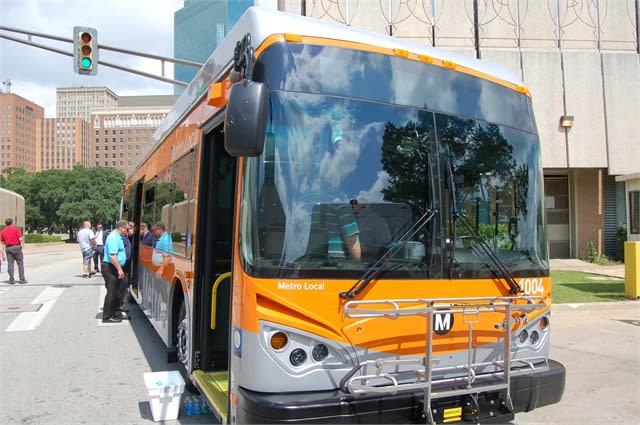
BYD's electric-bus prototype for LA Metro.
BYD's electric-bus prototype for LA Metro.
The Federal Transit Administration (FTA) announced the latest project selections for the Low and No-Emission Vehicle Deployment Program, known as Low-No. Seven transit providers in five states will receive a share of $22.5 million toward transit buses and related facilities that utilize battery-electric, fuel cell, and other innovative technologies to reduce harmful greenhouse gas emissions and improve operating efficiency.
FTA awarded the FY 2015 funds after a highly-competitive review process that prioritized transit agencies and bus manufacturers with strong records in building, deploying, and operating clean buses and infrastructure. The Low-No program helps advance President Obama’s vision for a 21st Century Clean Transportation System and the Department’s Beyond Traffic framework for investing in a strong and sustainable transportation network that will meet the needs of our nation in the years ahead.
Among the projects selected in this round of Low-No funding:
The Southeastern Pennsylvania Transportation Authority (SEPTA) will receive $2.5 million toward the purchase of 25 zero-emission all-electric buses and related equipment. These vehicles will be deployed on bus routes in South Philadelphia and an associated workforce development program will further contribute to the project's economic impact. SEPTA’s extensive local commitment resulted in efficient leveraging of federal funds, allowing them to purchase many more vehicles than other recipients.
The Los Angeles County Metropolitan Transportation Authority (LACMTA) will receive $4.2 million toward five battery-electric zero-emission buses, as well as eight charging stations. This electric bus infrastructure will serve the Metro Orange Line bus rapid transit corridor in the City of Los Angeles. LACMTA will also partner with the Southern California Regional Transit Training Consortium to include workforce development in support of zero-emission technology.
The Stark Area Regional Transit Authority (SARTA) will receive $4-plus million toward three zero-emission American Fuel Cell Buses (AFCBs). This project will build on SARTA’s successful, existing fuel-cell bus program, which has already established hydrogen fuel-cell infrastructure and will soon deploy five additional AFCBs in Stark County, Ohio. SARTA recently held an event in Columbus, Ohio celebrating the launch of the first of those fuel-cell buses, along with FTA regional staff, representatives from the Ohio State University’s Center for Automotive Research and others.
The FTA’s Low or No Emission Vehicle Deployment Program was established under MAP-21 and re-authorized in FAST Act. FTA previously awarded $55 million to 10 projects in February 2015 under the first round of funding made available through this program.
The FAST Act also made the Low-No program, previously funded and managed under FTA’s research programs, a subset of the larger competitive bus program. Interested parties currently have the opportunity to apply for $55 million in FY2016 Low-No funding, for which the application period closes in May 2016.
More Technology

From Hardware to Digital Partner: Luminator Charts Its Next Chapter
CEO Magnus Friberg discusses Luminator’s shift toward becoming a digital partner, the growing importance of software and interoperability, and how AI can help agencies improve operations and passenger experience.
Read More →
Beyond the Checklist: A Structured Approach to Transit Maintenance
Reliability-Centered Maintenance helps transit agencies move beyond routine checklists to focus limited resources on the assets and failures that have the greatest impact on safety, reliability, and service.
Read More →
NJ TRANSIT Advances Bus Technology Upgrades Across Statewide Fleet
More than 1,500 buses now feature upgraded technology designed to improve arrival predictions and provide free Wi-Fi, with deployment expected to reach nearly 2,000 buses by the end of 2026.
Read More →

Building a Flexible Path to Transit Electrification
John Hroncich discusses BAE Systems’ modular and scalable approach, lessons learned from decades of real-world operations, and how agencies can identify electrification strategies that fit their fleets.
Read More →
Biz Briefs: Alstom Lands Canadian Contract, LYT to Supply California TSP, and More
In METRO's latest installment, we take a look at recent news from Complete Coach Works, Beep, FlixBus, and more partnerships making headlines across the transportation sector.
Read More →
From Legacy Silos to Conversational Intelligence
What if transit leaders could ask any operational question and get a trusted answer in seconds? Conversational AI is transforming how agencies use their data.
Read More →
USDOT Announces Rail Vehicle Replacement Grants, Chattanooga AV Shuttle Funding
More than $191 million in federal funding will help three transit agencies replace aging rail vehicles and support a new autonomous shuttle service in Chattanooga.
Read More →
Bus Tech Talk: Keeping Transit Technicians Ahead of the Technology Curve
LA Metro’s Obed Mejia discusses technician training, evolving maintenance technology, fleet replacement, and strategies for getting the most out of today’s transit fleets.
Read More →
Biz Briefs: RIPTA Unveils New Frontrunners, Clevland RTA Adds New Siemens, and More
In METRO's latest installment, we take a look at recent news from Siemens, Prevost, Dodge, and more partnerships making headlines across the transportation sector.
Read More →
Why Simulating Pedestrian Movement Has Become Essential for Modern Rail Stations
Pedestrian microsimulation is helping rail planners identify bottlenecks, test station designs, and prepare complex transit hubs for growing passenger volumes.
Read More →