



LEED-certified existing buildings outpacing new builds
As of this month, square footage of LEED-certified existing buildings surpassed LEED-certified new construction by 15 million square feet on a cumulative basis, according to the U.S. Green Building Council.

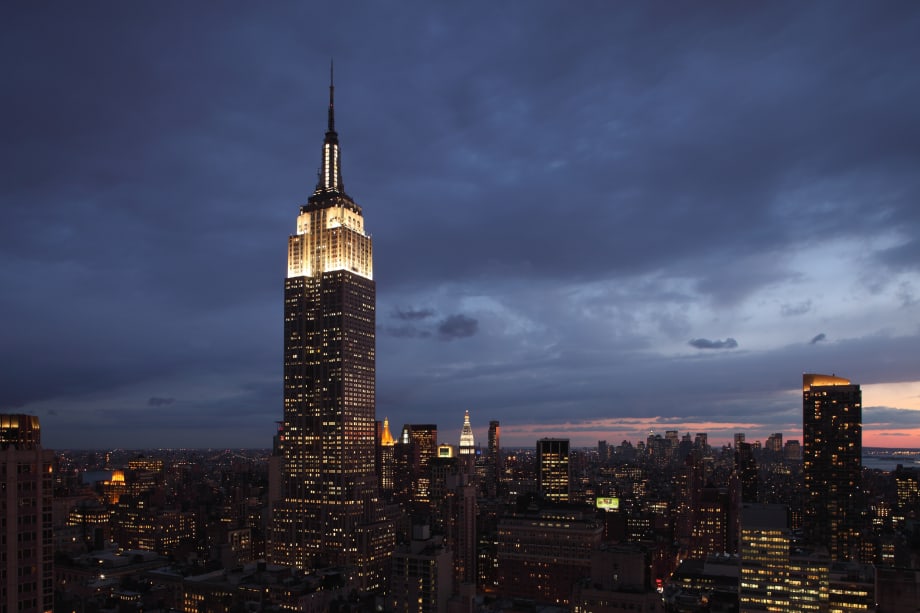
Photo courtesy Empire State Building.
Photo courtesy Empire State Building.
LEED-certified existing buildings are outpacing their newly built counterparts, according to the U.S. Green Building Council (USGBC). As of this month, square footage of LEED-certified existing buildings surpassed LEED-certified new construction by 15 million square feet on a cumulative basis.
"The U.S. is home to more than 60 billion square feet of existing commercial buildings, and we know that most of those buildings are energy guzzlers and water sieves," said Rick Fedrizzi, President, CEO &
Founding Chair, USGBC. "Greening these buildings takes hands-on work, creating precious jobs especially for construction workers. Making these existing buildings energy and water efficient has an enormous positive impact on the building's cost of operations. And the indoor air quality improvements that go with less toxic cleaning solutions and better filtration create healthier places to live, work and learn."
Historically, USGBC has seen the stock of LEED-certified green projects overwhelmingly made up of new construction projects, both in volume and square footage. That began to change in 2008, when the LEED for Existing Buildings: Operations & Maintenance (O&M) program began experiencing explosive growth.
In 2009, projects certified under LEED for Existing Buildings: O&M surpassed those certified under its new construction counterpart on an annual basis, a trend that continued in 2010 and 2011.
"This new data marks the first time that LEED-certified existing buildings have surpassed LEED-certified new construction cumulatively," Fedrizzi continued. "The market is becoming increasingly aware of how building owners can get better performance through green operations and maintenance, and tools such as LEED for Existing Buildings: O&M are essential to cost-effectively driving improvements in our economy and environment. LEED as a rating system is continuing to evolve an ever greater emphasis on performance, not only in energy, but also water, location, indoor environmental quality, and materials."
Projects worldwide are proving that green building doesn’t have to mean building new. By undertaking a large renovation, the recently LEED-certifiedEmpire State Building has predicted it will slash energy
consumption by more than 38 percent, saving $4.4 million in energy costs annually, and recouping the costs of implementation in only three years.
The second tallest building in the world, Taipei 101, earned the tallest honor – LEED Platinum. The skyscraper was designed to use 30 percent less energy, reducing annual utility costs by $700,000 a year.
San Francisco’s Transamerica Pyramid also earned LEED Platinum as an existing building, 39 years after it was originally built. The landmark’s onsite co-generation plant saves an average of $700,000 annually in energy costs.
USGBC is also a strong supporter and working to implement the White House’s Better Buildings Initiative to make America’s commercial buildings more energy- and resource-efficient over the next decade. The plan catalyzes private-sector investment through a series of incentives to upgrade existing offices, stores, schools and universities, hospitals and other commercial and municipal buildings.
A newly issued report by Capital-E found that efficiency financing has the potential to soar from $20 to $150 billion annually, creating over one million jobs, making the American economy more competitive, enhancing national security, and helping slow the impacts of climate change.
In their Green Outlook 2011 report, McGraw Hill Construction found that by 2015, the green share of the largest commercial retrofit and renovation activity will more than triple, growing to 25 percent to 33 percent of the activity by value—a $14 to $18 billion opportunity in major construction projects alone.
To learn more about existing buildings, visit usgbc.org/LEED/EB
More Technology

From Hardware to Digital Partner: Luminator Charts Its Next Chapter
CEO Magnus Friberg discusses Luminator’s shift toward becoming a digital partner, the growing importance of software and interoperability, and how AI can help agencies improve operations and passenger experience.
Read More →
Beyond the Checklist: A Structured Approach to Transit Maintenance
Reliability-Centered Maintenance helps transit agencies move beyond routine checklists to focus limited resources on the assets and failures that have the greatest impact on safety, reliability, and service.
Read More →
NJ TRANSIT Advances Bus Technology Upgrades Across Statewide Fleet
More than 1,500 buses now feature upgraded technology designed to improve arrival predictions and provide free Wi-Fi, with deployment expected to reach nearly 2,000 buses by the end of 2026.
Read More →

Building a Flexible Path to Transit Electrification
John Hroncich discusses BAE Systems’ modular and scalable approach, lessons learned from decades of real-world operations, and how agencies can identify electrification strategies that fit their fleets.
Read More →
Biz Briefs: Alstom Lands Canadian Contract, LYT to Supply California TSP, and More
In METRO's latest installment, we take a look at recent news from Complete Coach Works, Beep, FlixBus, and more partnerships making headlines across the transportation sector.
Read More →
From Legacy Silos to Conversational Intelligence
What if transit leaders could ask any operational question and get a trusted answer in seconds? Conversational AI is transforming how agencies use their data.
Read More →
USDOT Announces Rail Vehicle Replacement Grants, Chattanooga AV Shuttle Funding
More than $191 million in federal funding will help three transit agencies replace aging rail vehicles and support a new autonomous shuttle service in Chattanooga.
Read More →
Bus Tech Talk: Keeping Transit Technicians Ahead of the Technology Curve
LA Metro’s Obed Mejia discusses technician training, evolving maintenance technology, fleet replacement, and strategies for getting the most out of today’s transit fleets.
Read More →
Biz Briefs: RIPTA Unveils New Frontrunners, Clevland RTA Adds New Siemens, and More
In METRO's latest installment, we take a look at recent news from Siemens, Prevost, Dodge, and more partnerships making headlines across the transportation sector.
Read More →
Why Simulating Pedestrian Movement Has Become Essential for Modern Rail Stations
Pedestrian microsimulation is helping rail planners identify bottlenecks, test station designs, and prepare complex transit hubs for growing passenger volumes.
Read More →