



Alstom Delivers First Multilevel III NJ TRANSIT Commuter Railcar
The delivery marks the first car in a 374‑vehicle order and begins the arrival of a new generation of higher‑capacity, more reliable, and more comfortable trains for one of the country’s busiest commuter rail systems.

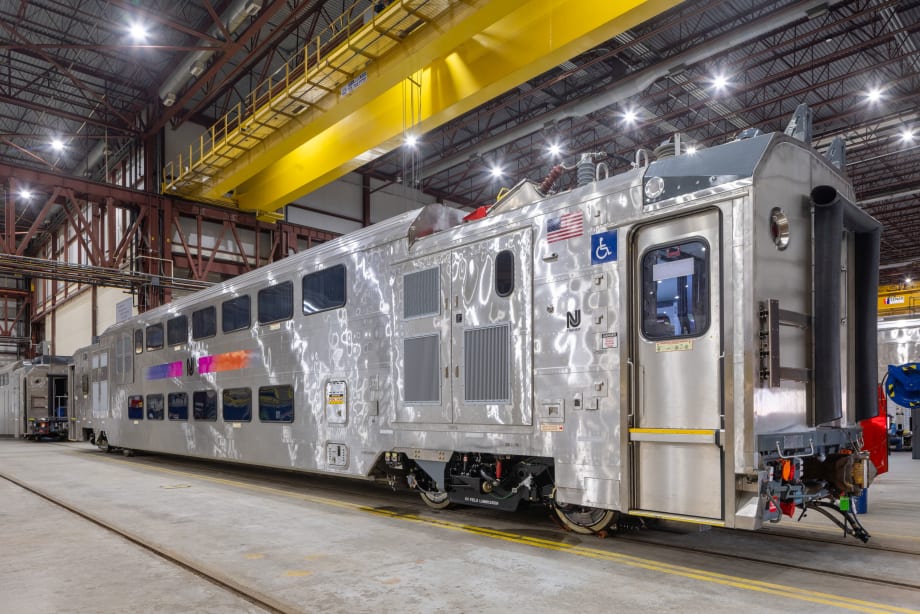
The new double-deck trains will replace legacy single‑level cars that have been in service for more than 40 years, transforming the passenger experience with more seats, improved comfort, and improved travel times, said officials.
Alstom
- Alstom has delivered the first of 374 Multilevel III railcars to NJ TRANSIT.
- This delivery marks the beginning of a new generation of commuter trains.
- The new trains promise enhanced capacity, reliability, and comfort for commuters.
*Summarized by AI
Alstom announced that it has delivered the first Multilevel III commuter rail vehicle to NJ TRANSIT. Alstom delivered the first Multilevel III commuter rail vehicle to NJ TRANSIT.
The delivery marks the first car in a 374‑vehicle order and begins the arrival of a new generation of higher‑capacity, more reliable, and more comfortable trains for one of the country’s busiest commuter rail systems.
NJ TRANSIT’s New Multilevel Commuters
The new double-deck trains will replace legacy single‑level cars that have been in service for more than 40 years, transforming the passenger experience with more seats, improved comfort, and shorter travel times, officials said.
The vehicles are capable of traveling 110 mph, making them up to 30 mph faster than the previous fleet. The boost in speed enables NJ TRANSIT to improve schedule reliability and accommodate increasing passenger demand, officials said.
Additionally, the Multilevel III vehicles feature amenities such as USB charging ports in every row, audio announcements, and digital signs informing passengers of upcoming station stops.
“Our focus remains on delivering a rail system that customers can depend on every day,” said NJ TRANSIT President/CEO Kris Kolluri. “These new multilevel cars will dramatically improve reliability, expand capacity, and significantly enhance the on-board customer experience. For the first time in our agency’s history, we will proudly deliver a fully modernized rail fleet for our customers by 2031.”
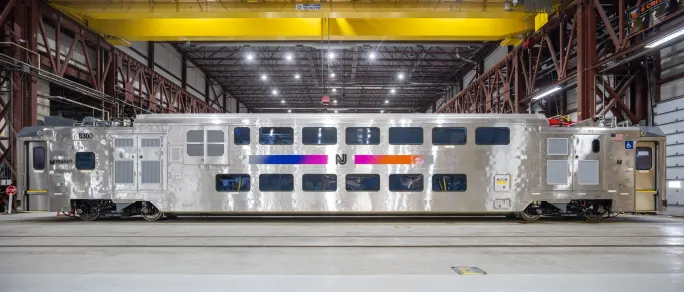
NJ TRANSIT ordered the Multilevel III vehicles in phases over the past seven years.
Alstom
Greater Capacity, Reliability
The first car delivered to the Meadows Maintenance Complex in Kearny, New Jersey, is a power car developed by Alstom in close partnership with NJ TRANSIT to allow trains to operate without locomotives.
The power cars include electric propulsion and more than 100 passenger seats. They will be combined with other power cars, trailer cars, and cab cars to form an Electric Multiple Unit that will accelerate faster, thus improving trip times, while also providing built‑in redundancy, officials said. The flexible design will enable the agency to adjust train lengths to accommodate passenger volumes for service changes and special events.
NJ TRANSIT ordered the Multilevel III vehicles in phases over the past seven years.
The transit agency has ordered 112 power cars, 100 cab cars that include compartments where an operator can control the train, and 162 trailer cars.
The vehicles are Buy-America compliant, consisting of at least 70% U.S.-made content and assembled in Plattsburgh, New York, by Alstom’s unionized workforce
Quick Answers
Alstom has delivered the first car in a 374-vehicle order, marking the arrival of a new generation of trains for NJ TRANSIT.
*Summarized by AI
More Rail
OCTA Declares Emergency to Protect Rail Corridor From Coastal Erosion
The California agency is accelerating shoreline protection and plans to place approximately 690,000 cubic yards of sand along the San Clemente coast to protect a key passenger and freight rail link.
Read More →
More Than a Summer Job: Building the Next Generation of Transit Talent
The Delaware River Port Authority and PATCO have transformed their internship program into a hands-on professional development experience that introduces students to the breadth of transportation careers — and creates a pipeline for future employees.
Read More →
Airo Trains Make Their Amtrak Cascades Debut in the Pacific Northwest
Effective immediately, two cutting-edge Airo trainsets will join the Amtrak Cascades route, operating four daily trips between Vancouver, B.C., Seattle, Portland, and Eugene, Oregon, marking the first introduction of Airo trains into passenger service anywhere in the country.
Read More →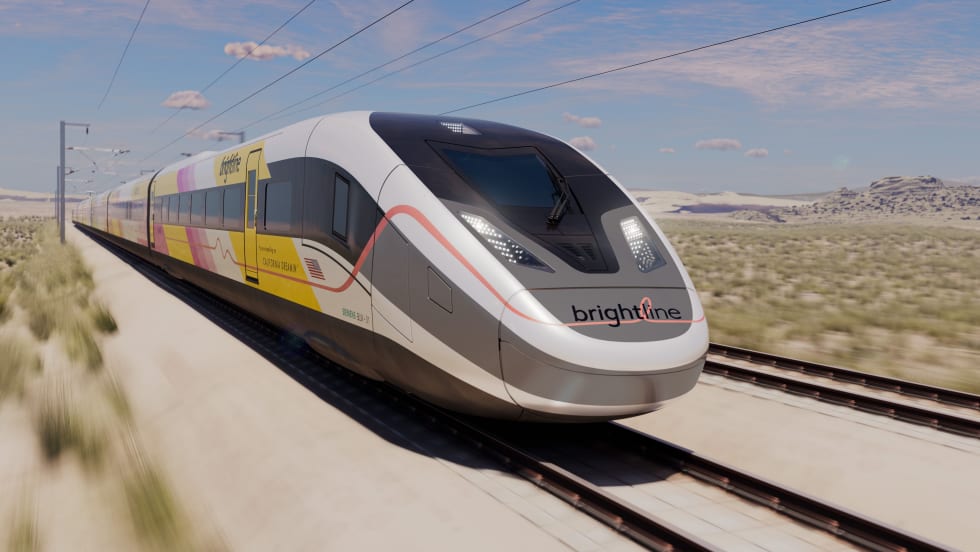
Florida's Brightline Announces Financial Restructuring
Brightline Florida says train operations will continue as normal as certain parent entities enter Chapter 11 and financial stakeholders provide $490 million in new long-term capital.
Read More →
ENC Lands MATA Contract and More in Biz Briefs
In this edition of Biz Briefs, we spotlight the latest developments shaping the future of mobility.
Read More →
Strada360’s Steve Lassey on Turning Transit Data Into Better Decisions
From breaking down data silos to preparing for AI, Strada360 CEO Steve Lassey discusses how transit agencies can use technology to improve operations, customer information, and long-term decision-making.
Read More →
SEPTA Details Accelerate Vision for Transit System
The plan outlines investments in trolley modernization, new Metro and Regional Rail vehicles, accessible stations, and more frequent bus and rail service.
Read More →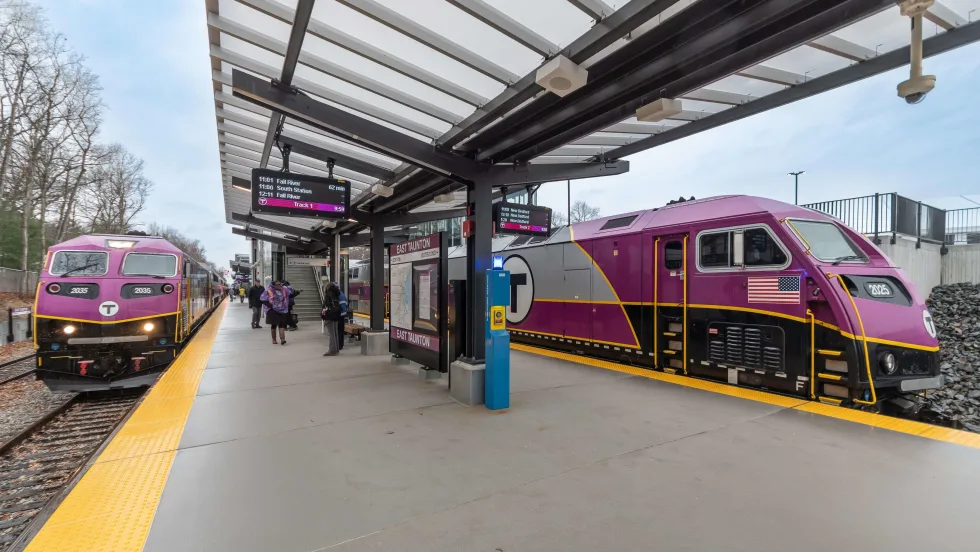
FTA Ends Direct Oversight of MBTA Safety Actions
The federal agency closed its remaining special directive to the Massachusetts Department of Public Utilities following a safety review that began in 2022.
Read More →
Amtrak, CN Reach Agreements to Strengthen Passenger Rail Service, Safety
The agreement resolves a more than decade-long proceeding before the Surface Transportation Board concerning the terms and conditions for Amtrak services, such as the City of New Orleans, Illini/Saluki, and Wolverine.
Read More →
New York MTA Advances Final Contract for Second Avenue Subway Expansion
Contract Four is the largest in the Second Avenue Subway Phase 2 project and includes construction of station infrastructure, tracks, and signals for the subway expansion, MTA officials said. Work on Contract Four will begin in 2027.
Read More →