




RELATED: LIRR completes rail crossing initiative ahead of schedule
LIRR opens upgraded stations with customer-focused improvements
LIRR opened its upgraded Farmingdale station building and also finished a $27 million renovation project at Wantagh Station.
October 31, 2018
LIRR opened its upgraded Farmingdale station building and also finished a $27 million renovation project at Wantagh Station, which included platform replacements and newly installed elevator, among many other added amenities.
2 min to read
LIRR opened its upgraded Farmingdale station building and also finished a $27 million renovation project at Wantagh Station, which included platform replacements and newly installed elevator, among many other added amenities.
New York Metropolitan Transportation Authority and Long Island Rail Road (LIRR) officials announced the opening of two newly renovated railroad stations bringing customer-focused improvements to thousands of riders.
LIRR opened its upgraded Farmingdale station building and also finished a $27 million renovation project at Wantagh Station, which included platform replacements and newly installed elevator, among many other added amenities.
The work at Farmingdale station, which is still ongoing, is part of an $84 million, eight-station renovation package, awarded earlier this year. The work at Wantagh Station was funded through the current MTA Capital Program.
Artwork was commissioned for Wantagh Station that references the surrounding community and enhances the architecture and beauty.
Farmingdale Station
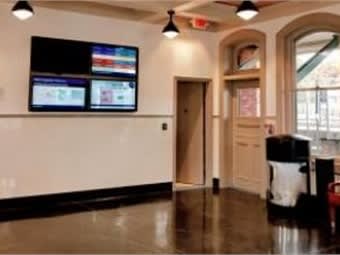
Long Island Railroad's Farmingdale Station interior. Photo: NY MTA
Farmingdale Station, located along the Ronkonkoma Branch in Suffolk County, serves more than 3,800 daily customers. Listed on the National Register of Historic Places, this station, originally built in 1890, has long been a part of this community.
Its facade was fully restored to its original historical brick architecture, capturing and preserving its history and character. To celebrate that, historic photos will be placed alongside a commemorative plaque in remembrance of its past.
Improvements include:
Building upgrades: A new waiting room with terrazzo flooring, newly redone ADA accessible restrooms, tile and wood wall and ceiling finishes, windows, doors, electrical, plumbing and HVAC upgrades.
Easier navigation: The pedestrian underpass rehabilitated, and new wayfinding signage installed along with, bike racks, benches, USB charging stations, technology counters, and LCD information displays to further enhance the customer experience.
Safety: New CCTV cameras installed.
Further upgrades to come:
Improved ADA accessibility with a new ramp by the end of the year.
Platform shelter sheds, LED platform lighting by Q2 2019.
Trash receptacles, free public Wi-Fi, digital information display totems by summer 2019.
Platform repairs, which are expected to be complete by summer 2019.
Wantagh Station
Along the Babylon Branch, the Wantagh Station, built in 1867, was replaced with the current elevated station in 1968.
Wantagh customers — about 6,000 each weekday — can now wait for their trains on newly replaced platforms, which feature snow/ice melting systems to help keep them clear and safe during the winter months. In colder times, customers can take shelter inside a new heated platform waiting room.
Improvements include:
Improved ADA accessibility: an elevator was added to this station.
Existing escalator replaced.
A new center staircase was installed.
Four other staircases were refurbished.
A new segmented platform canopy installed.
Energy efficient platform lighting.
New signage and public address system to further enhance the customer experience.
The replaced east-end platform was opened in February 2018, followed by the start of construction on the west-end platform, which finished this month.
More Rail

New York MTA Advances Final Contract for Second Avenue Subway Expansion
Contract Four is the largest in the Second Avenue Subway Phase 2 project and includes construction of station infrastructure, tracks, and signals for the subway expansion, MTA officials said. Work on Contract Four will begin in 2027.
Read More →
San Diego MTS Breaks Monthly Trolley Ridership Record
Agency officials said July’s ridership indicates MTS’s continued recovery from the pandemic.
Read More →
Report Examines NJ TRANSIT Reliability, Funding Challenges
The Garden State Initiative analysis examines the roles of Amtrak infrastructure, fleet management, and agency operations while recommending a more performance-based approach to improving reliability.
Read More →
Stadler, CapMetro Sign Long-Term Rail Fleet Support Agreement
Beginning in 2027, Stadler will provide on-site technical expertise, spare parts support, training, and obsolescence management to help extend the reliability and longevity of CapMetro’s GTW fleet.
Read More →
Biz Briefs: Alstom Lands Canadian Contract, LYT to Supply California TSP, and More
In METRO's latest installment, we take a look at recent news from Complete Coach Works, Beep, FlixBus, and more partnerships making headlines across the transportation sector.
Read More →
CATS Gold Line Marks 5 Years of Service, 2.8M Passenger Trips
With a six-mile expansion planned, the Charlotte streetcar is positioned to connect more neighborhoods and major transit hubs across the region.
Read More →
Why Simulating Pedestrian Movement Has Become Essential for Modern Rail Stations
Pedestrian microsimulation is helping rail planners identify bottlenecks, test station designs, and prepare complex transit hubs for growing passenger volumes.
Read More →
Amtrak Begins Major Construction at New York’s Sunnyside Yard
The new maintenance facility will support Amtrak’s Airo trainsets while improving maintenance efficiency and turnaround times in New York.
Read More →
Chicago Leaders Unveil Plans for O’Hare Airport Express Train
The privately developed project would offer a 15-minute trip between downtown and O’Hare’s Terminal 2, with trains operating every 15 minutes on a dedicated track. The service would use battery-electric trains and three existing freight rail rights-of-way.
Read More →
OCTA Maps Out 30-Year Strategy to Protect Coastal Rail Corridor
The draft feasibility report identifies strategies to protect the coastal rail line for decades as the agency continues near-term stabilization and sand placement efforts.
Read More →