



M-1 completes first phase of streetcar construction
Construction Manager/General Contractor Stacy and Witbeck Inc., in partnership with the Michigan Department of Transportation and local construction companies and suppliers, began construction of the downtown portion of the rail system in late July

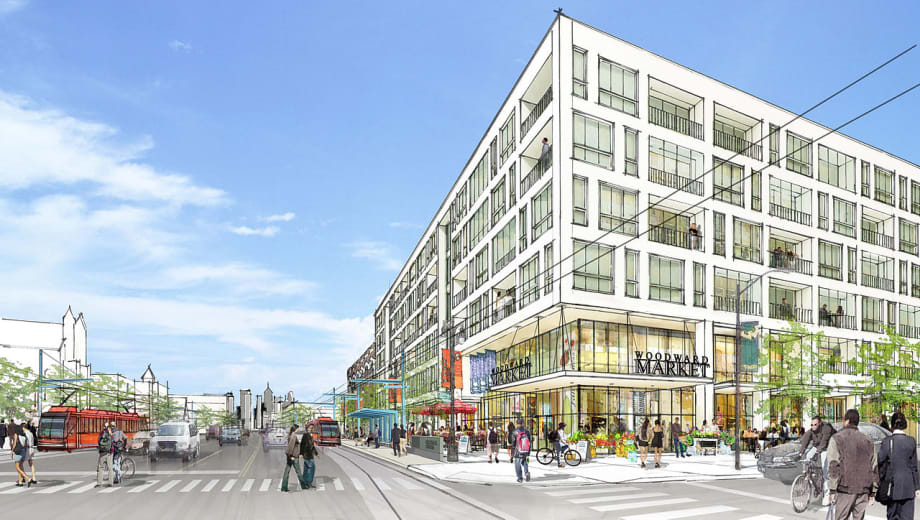
A rendering of the M-1 project.
A rendering of the M-1 project.
“We had an aggressive schedule, along with a high standard for maintaining a clean and safe work site; and our skilled construction crews rose to the challenge,” said Paul Childs, M-1 RAIL chief operating officer. “We’re pleased to be ready to kick off the holiday season in Detroit.”
Construction Manager/General Contractor Stacy and Witbeck Inc., in partnership with the Michigan Department of Transportation (MDOT) and local construction companies and suppliers, began construction of the downtown portion of the rail system in late July. Several Detroit-based firms, including Hart & Associates Construction and Farrow Group have been part of the construction.
After securing the work zone and erecting pedestrian fencing and bridges, detailed surveying was performed by crews prior to moving in heavy machinery to remove layers of asphalt and concrete to make way for the new track slabs. Over the course of four months in downtown, crews:
Installed electrical and telecommunications conduit
Received and welded steel track into 560-foot sections, then moved it onto Woodward Ave.
Reinforced the steel track with an elastromeric grout pad or “rubber boot,” which provides vibration dampening and noise reduction.
Strengthened the imbedded rail with special thermite rail welds.
Built and installed a supportive rebar substructure over the track to better support the concrete.
Poured, levelled and texturized a high-performance, faster-curing type of concrete.
Removed layers of old asphalt, and then resurfaced with high-quality asphalt.
Installed granite curbs, reinforced manholes and completed temporary pavement striping.
More Rail

New York MTA Advances Final Contract for Second Avenue Subway Expansion
Contract Four is the largest in the Second Avenue Subway Phase 2 project and includes construction of station infrastructure, tracks, and signals for the subway expansion, MTA officials said. Work on Contract Four will begin in 2027.
Read More →
San Diego MTS Breaks Monthly Trolley Ridership Record
Agency officials said July’s ridership indicates MTS’s continued recovery from the pandemic.
Read More →
Report Examines NJ TRANSIT Reliability, Funding Challenges
The Garden State Initiative analysis examines the roles of Amtrak infrastructure, fleet management, and agency operations while recommending a more performance-based approach to improving reliability.
Read More →
Stadler, CapMetro Sign Long-Term Rail Fleet Support Agreement
Beginning in 2027, Stadler will provide on-site technical expertise, spare parts support, training, and obsolescence management to help extend the reliability and longevity of CapMetro’s GTW fleet.
Read More →
Biz Briefs: Alstom Lands Canadian Contract, LYT to Supply California TSP, and More
In METRO's latest installment, we take a look at recent news from Complete Coach Works, Beep, FlixBus, and more partnerships making headlines across the transportation sector.
Read More →
CATS Gold Line Marks 5 Years of Service, 2.8M Passenger Trips
With a six-mile expansion planned, the Charlotte streetcar is positioned to connect more neighborhoods and major transit hubs across the region.
Read More →
Why Simulating Pedestrian Movement Has Become Essential for Modern Rail Stations
Pedestrian microsimulation is helping rail planners identify bottlenecks, test station designs, and prepare complex transit hubs for growing passenger volumes.
Read More →
Amtrak Begins Major Construction at New York’s Sunnyside Yard
The new maintenance facility will support Amtrak’s Airo trainsets while improving maintenance efficiency and turnaround times in New York.
Read More →
Chicago Leaders Unveil Plans for O’Hare Airport Express Train
The privately developed project would offer a 15-minute trip between downtown and O’Hare’s Terminal 2, with trains operating every 15 minutes on a dedicated track. The service would use battery-electric trains and three existing freight rail rights-of-way.
Read More →
OCTA Maps Out 30-Year Strategy to Protect Coastal Rail Corridor
The draft feasibility report identifies strategies to protect the coastal rail line for decades as the agency continues near-term stabilization and sand placement efforts.
Read More →