




RELATED: Cost-Cutting Strategies for Your Paratransit Program
Masabi report finds riders combining private, public transit options
It also shows that their primary driver for using public transit is convenience and, as such, technologies including mobile ticketing and vehicle location tracking are having a positive effect on ridership numbers.
May 9, 2018

In Q4 2017 Masabi polled 1,010 Americans who have access to, but do not necessarily ride, public transit.
Chariot
3 min to read
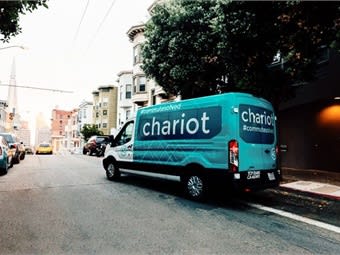
In Q4 2017 Masabi polled 1,010 Americans who have access to, but do not necessarily ride, public transit.
Chariot
Masabi published its “Mass Transit Rider Research Report: Key Factors Influencing Ridership in North America.” The report, based on a survey of over 1,000 U.S. residents with access to public transit services, sheds light on some of the behaviors impacting public transit ridership across the nation and explores the effect new technologies and new urban mobility services, such as ridesharing, are having on the mobility ecosystem.
The survey reveals that riders are combining shared private and public transit options and taking multimodal journeys in greater numbers than expected. It also shows that their primary driver for using public transit is convenience and, as such, technologies including mobile ticketing and vehicle location tracking are having a positive effect on ridership numbers.
Key findings include:
Public transit remains underutilized
70% of Americans drive themselves on at least a weekly basis, while 40% never use public transit despite having access.
Nineteen percent of respondents are using public transportation every week, with 9% now using ridesharing every week.
Citizens feel mostly optimistic about their public transit services
Thirty-two percent report that their local transit options are improving and 49% believe they are remaining the same.
Only 19% say the quality of their local transit is declining.
Convenience is the top priority for passengers when choosing to ride public transit
More than price (24%), travel time (8%), and even necessity (17%), convenience is the number one motivator, with 33% of respondents selecting it as their primary reason for riding.
Ridesharing is connecting public transit for many facilitating multimodal journeys.
More than one-third of respondents (35%) are now combining ridesharing with public transit to reach a destination on at least an occasional basis, while 7% are combining ridesharing with public transit on at least a weekly basis.
Convenience enablers attract riders
Up to a quarter of potential riders report that convenience features, such as combining modes of transit through an app, mobile ticketing, and location tracking, would cause, or already have caused them, to use public transit more often.
Shared mobility use increases likelihood of public transit ridership
Eighty percent of weekly drivers never use public transit, while 95.5% of weekly rideshare riders use public transit, pointing to a future of reduced car ownership in favor of public/private urban mobility options.
“This report paints a picture of the future of public transit and how it can both learn from and operate in partnership with new mobility options, to the benefit of all,” said Brian Zanghi, CEO of Masabi. “By implementing the types of convenience features found in ridesharing and other transportation alternatives and integrating multiple transit modes to deliver full first-last mile mobility, the emerging mobility ecosystem is set to provide a viable alternative to car ownership. Getting there, however, will require public/private partnerships between the agencies and mobility services that Americans already depend on every day.”
In Q4 2017 Masabi polled 1,010 Americans who have access to, but do not necessarily ride, public transit. The full report contains a breakdown of the complete survey findings as well as recommendations for public transit agencies and officials based on the results. Masabi’s report shows that the frequency with which riders are combining services is much higher than others have shown and points to the potential for more interconnected transit systems.
To download the Mass Transit Rider Research Report here.
More New Mobility

From Hardware to Digital Partner: Luminator Charts Its Next Chapter
CEO Magnus Friberg discusses Luminator’s shift toward becoming a digital partner, the growing importance of software and interoperability, and how AI can help agencies improve operations and passenger experience.
Read More →
Biz Briefs: Alstom Lands Canadian Contract, LYT to Supply California TSP, and More
In METRO's latest installment, we take a look at recent news from Complete Coach Works, Beep, FlixBus, and more partnerships making headlines across the transportation sector.
Read More →
CharterUP’s Armir Harris on Technology, AI, and the Future of Group Mobility
In a recent episode of METROspectives, CharterUP Founder/CEO Armir Harris discussed the company’s evolution from an online charter bus marketplace into a technology platform supporting public- and private-sector mobility and much more.
Read More →
Jacksonville’s NAVI Project Charts a New Course for Autonomous Public Transportation
Through its NAVI program, JTA is showing how autonomous vehicles, intelligent infrastructure, and coordinated operations can work together to deliver everyday public transportation.
Read More →
Biz Briefs: Luminator Marks Milestone and More
From manufacturers and suppliers to transit agencies and motorcoach operators, these updates offer a snapshot of the projects, partnerships and business moves driving the industry forward.
Read More →
New Tricks for Old Bureaucracies: Joshua Schank on Making Transit Innovation Stick
Former LA Metro Chief Innovation Officer Joshua Schank discusses why good ideas aren't enough, how transit agencies can overcome resistance to change, and why today's challenges demand more innovation.
Read More →
How DART's GoPass Is Redefining Regional Mobility
Serving 14 transit agencies, GoPass simplifies multimodal travel by allowing riders to plan, pay for, and manage an entire trip through one app.
Read More →
Biz Briefs: OCTA Taps Clean Energy for Hydrogen Station, Stadler to Supply Via Rail Vehicles, and More
From manufacturers and suppliers to transit agencies and motorcoach operators, these updates offer a snapshot of the projects, partnerships and business moves driving the industry forward.
Read More →CharterUP Expands Into New Mobility and Autonomous Transportation
Vice President of New Mobility Stephen Joos discusses how CharterUP is leveraging its nationwide transportation network, technology platform, and autonomous vehicle partnerships to expand into workforce mobility, campus shuttles, and transit solutions.
Read More →
METRO Magazine Announces 2026 Innovative Solutions Awards Winners
Projects Recognized for Advancing Mobility Through Technology, Accessibility, Workforce Innovation, and Operational Excellence
Read More →