



MBTA Establishes New Office Focused on Climate
The MBTA recently released agency-wide goals to guide its work, including a goal focused on reducing environmental impacts and increasing the resilience of the transit system.

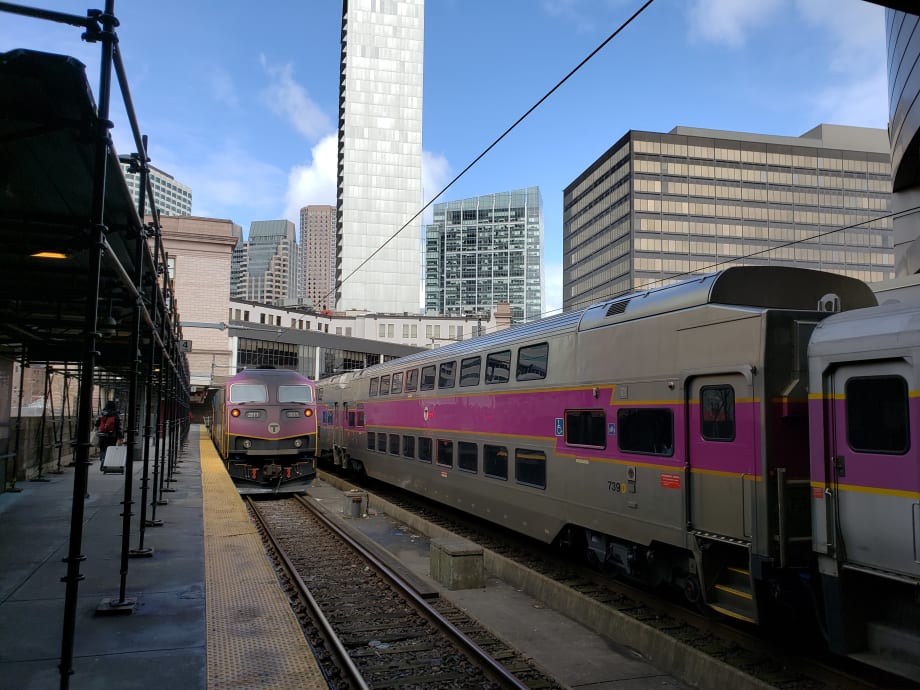
The agency is establishing a new Climate and Resiliency Policy and Planning team as part of the Policy and Strategic Planning Division that will be tasked with decreasing the Agency’s and the Commonwealth’s environmental footprint and increasing the resilience of the MBTA system.
Photo: MBTA
The Massachusetts Bay Transportation Authority (MBTA) announced it has provided an update to the MBTA Board of Directors on its efforts to increase the Agency’s environmental sustainability and resilience.
The MBTA recently released agency-wide goals to guide its work, including a goal focused on reducing environmental impacts and increasing the resilience of the transit system.
In support of this goal, the agency is establishing a new Climate and Resiliency Policy and Planning team as part of the Policy and Strategic Planning Division that will be tasked with decreasing the Agency’s and the Commonwealth’s environmental footprint and increasing the resilience of the MBTA system.
“We have taken meaningful strides in recent years to increase the sustainability and resilience of our state’s public transit system,” said MBTA GM/CEO Phillip Eng. “From securing grants to fund environmental initiatives to reducing emissions through fleet electrification, the MBTA is firmly committed to building a greener, more climate-ready transit network. I know that under Assistant General Manager for Policy and Strategic Planning Lynsey Heffernan’s direction, the team’s work will spark transformative change on sustainability and resilience.”
MBTA's Efforts to Increase Sustainability
The MBTA has taken a number of steps to increase the transit system’s environmental sustainability and resilience, including:
Workforce: Signed a new contract with its largest union that increases operator pay, which will help retain and attract the workforce needed to support sustainability initiatives and increase the reliability of the system.
Finance/Grants: The MBTA is aggressively pursuing all federal funding opportunities including securing over $117 million in federal grants for environmental initiatives. The MBTA has also received funding from the state for flood protection and climate vulnerability assessments.
Emissions reduction: Reduced energy consumption by 20% and emissions by 48% over the past decade. The MBTA has also committed $600 million to modernize the bus facilities to support efforts to electrify the bus fleet by 2040. An additional $120 million is committed to procuring battery electric buses.
Buildings, facilities, materials, and construction: The MBTA requires all new projects to meet new robust design standards addressing both energy efficiency and resilience for the future. For example, the new MBTA Bus Facility Design Guidelines, updated in March of this year, now include extensive guidance on how to construct a resilient facility.
Solid waste: Established single-stream recycling in all stations and is working to expand this program to other lines and modes. The MBTA is also recycling railroad ties and hazardous waste.
Operations: Redesigning its bus network to make transit a more competitive alternative to driving. The MBTA is also increasing frequency on its Commuter Rail lines and exploring new opportunities for regenerative braking.
Public health and resilience: Conducted vulnerability assessments of its rapid transit lines and is investing in flood mitigation and other resilience measures. The MBTA is also working to improve water quality and conservation.
Economic development: Reviewing all transit-oriented development and real estate projects on or adjacent to its property to ensure that they support sustainability and resilience.
Future planning: The MBTA is also in the process of building a Climate and Resiliency Planning group that will be tasked with overseeing this T’s sustainability efforts and goals.
More Management

METRO Opens Submissions for 2026 Motorcoach Awards
Nominations are now being accepted for METRO Magazine’s Operator of the Year and Innovative Operator of the Year awards.
Read More →
New York MTA Advances Final Contract for Second Avenue Subway Expansion
Contract Four is the largest in the Second Avenue Subway Phase 2 project and includes construction of station infrastructure, tracks, and signals for the subway expansion, MTA officials said. Work on Contract Four will begin in 2027.
Read More →
Transit Agencies Highlight Safety Gains at National Summit
Leaders from 15 major transit systems shared crime-reduction results and safety initiatives while discussing the role of continued federal support.
Read More →

NITA Names New Leadership, Expands Reduced-Fare Program at First Board Meeting
The new regional transit authority appointed its first board chair and interim executive director while extending reduced fares across CTA, Metra, and Pace for eligible riders.
Read More →
Beyond the Checklist: A Structured Approach to Transit Maintenance
Reliability-Centered Maintenance helps transit agencies move beyond routine checklists to focus limited resources on the assets and failures that have the greatest impact on safety, reliability, and service.
Read More →
APTA 2026 Nominating Committee Selects Leadership Slate, Names Chair and Vice Chair Nominees
Leadership changes will help shape the association’s priorities and its representation of the transportation industry during the 2026–2027 term.
Read More →
DART Launches Major Security, Fare Enforcement Initiative
The 90-day demonstration will deploy coordinated security teams at five light rail stations while testing controlled access and gathering data to guide future investments.
Read More →
Advancing Fare Collection Through Technology and Innovation
Learn about delivering 1300 gates at 91 stations while managing fare evasion. Explore the large scale deployment, solution customization and real-world results that affect the region. Prepare for deployment in your region now.
Read More →
Game Day in Motion: Moving Millions During the 2026 World Cup
Between packed transit stations and team motorcoaches, see how agencies and operators across North America tackled the transportation demands of the 2026 FIFA World Cup.
Read More →
Surface Transportation Extension Averts Shutdown, Leaves Transit Funding Gap
The stopgap keeps federal transportation programs moving, but missing advance funding could complicate the transit and rail projects agencies are planning next.
Read More →