



MBTA Program Welcomes Riders Back
With more people returning to transit after Labor Day, the MBTA is encouraging the use of public transportation while reminding riders that face coverings are required.
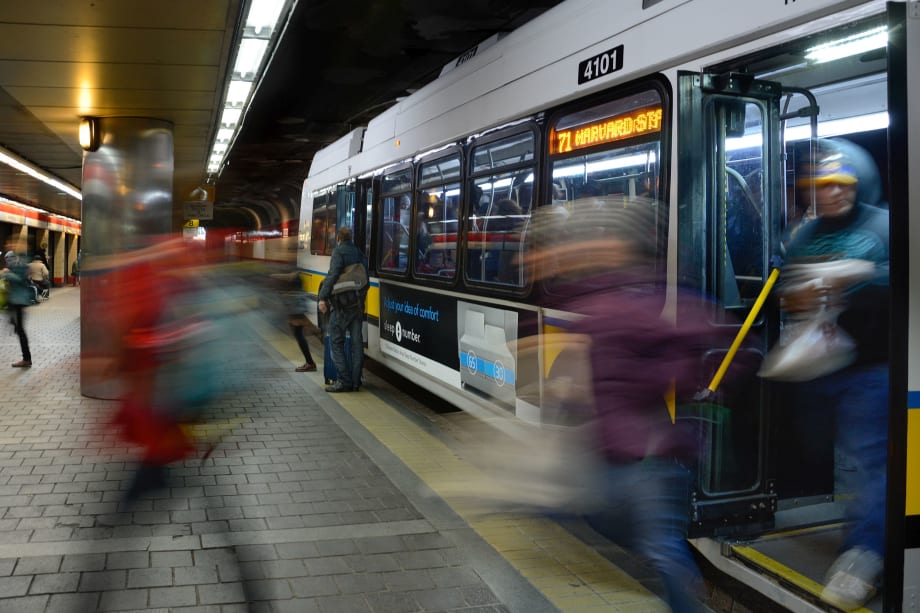
Working in partnership with A Better City, the T produced toolkits for new riders and people who have been away from public transportation during the pandemic.
MBTA
MBTA GM Steve Poftak joined MBTA Transit Police Chief Kenneth Green, A Better City President and CEO Richard Dimino, and others at Back Bay Station for an event highlighting MBTA services and keeping people safe as commuters return to the office and students return to school. With more people returning to transit after Labor Day, the MBTA is encouraging the use of public transportation while reminding riders that face coverings are required.
With workers and students returning to the Boston area and traffic already at near pre-pandemic levels, the T announced today that it is extending its popular 5-day Flex Pass pilot program for Commuter Rail riders to March 15.
“We’re pleased to be able to extend this fare pilot an additional six months in order to encourage riders back to the system in a way that best works for them,” said Poftak. “Our Commuter Rail riders continue to need more flexible ways of riding the system due to the impacts of the pandemic and this includes how they’re able to pay their fare. Commuter Rail customers can purchase a Flex Pass on mTicket and use their five one-day passes any day within a 30-day period, giving them the flexibility to travel when needed at a cost lower than the traditional round-trip ticket.”
The T has been adding back service and increasing frequency across the transit system to meet growing demand. The T is adapting to new post-pandemic travel patterns for riders to have more transit options for their new or hybrid schedules. The MBTA generates significant benefits to Metropolitan Boston residents and businesses through time savings, travel cost savings, and reduced vehicular emissions.
Per federal requirements, the MBTA also reminds riders that face coverings are required while on any MBTA vehicle and on MBTA property. With the safety of riders and employees of paramount importance, the MBTA will have masks available at more than a dozen key locations after Labor Day.
Working in partnership with A Better City, the T produced toolkits for new riders and people who have been away from public transportation during the pandemic. One toolkit is tailored for employers and employees and includes a Monthly Pass Break-Even Calculator. The second toolkit is for college and university students who may be unfamiliar with the T.
“We hope this calculator and the Flex Pass entice people to choose public transit over other modes like driving, which has broader negative implications like increasing congestion on our roads and pollution in our communities,” said A Better City President and CEO Richard Dimino. “Even with reduced days in the office, it is important to demonstrate the value proposition of public transit through hard numbers. As we seek to build back better, the pre-tax benefits and employer subsidies offered through the Perq program can make the ‘break-even’ number of transit trips to recover the cost of a monthly T pass less than one might think. ABC continues to work in partnership with stakeholders to further opportunities that make the T more affordable and fare equitable as they look to induce more riders into the system.”
More Management

LIT Marks 10-Year Milestone at Annual Summit
Hosted by the COTA from September 10 to 13, the Summit carried the theme “Celebrating 10 Years of Excellence, Leadership, and Impact,” with every part of the program honoring the people, agencies, and partners who built LIT over its first decade.
Read More →
People Movement: Dan Dipert Coaches Adds Third-Generation Leader, Keolis Names New Valley Metro VP/GM, and More
In this edition, we also cover recent appointments and announcements at the Wabtec, SilverRide, HNTB, and more, showcasing the individuals helping to shape the future of transportation.
Read More →
METRO Opens Submissions for 2026 Motorcoach Awards
Nominations are now being accepted for METRO Magazine’s Operator of the Year and Innovative Operator of the Year awards.
Read More →

New York MTA Advances Final Contract for Second Avenue Subway Expansion
Contract Four is the largest in the Second Avenue Subway Phase 2 project and includes construction of station infrastructure, tracks, and signals for the subway expansion, MTA officials said. Work on Contract Four will begin in 2027.
Read More →
Transit Agencies Highlight Safety Gains at National Summit
Leaders from 15 major transit systems shared crime-reduction results and safety initiatives while discussing the role of continued federal support.
Read More →
NITA Names New Leadership, Expands Reduced-Fare Program at First Board Meeting
The new regional transit authority appointed its first board chair and interim executive director while extending reduced fares across CTA, Metra, and Pace for eligible riders.
Read More →
Beyond the Checklist: A Structured Approach to Transit Maintenance
Reliability-Centered Maintenance helps transit agencies move beyond routine checklists to focus limited resources on the assets and failures that have the greatest impact on safety, reliability, and service.
Read More →
APTA 2026 Nominating Committee Selects Leadership Slate, Names Chair and Vice Chair Nominees
Leadership changes will help shape the association’s priorities and its representation of the transportation industry during the 2026–2027 term.
Read More →
DART Launches Major Security, Fare Enforcement Initiative
The 90-day demonstration will deploy coordinated security teams at five light rail stations while testing controlled access and gathering data to guide future investments.
Read More →
Advancing Fare Collection Through Technology and Innovation
Learn about delivering 1300 gates at 91 stations while managing fare evasion. Explore the large scale deployment, solution customization and real-world results that affect the region. Prepare for deployment in your region now.
Read More →