



MBTA taps Cubic-John Laing consortium for next-gen fare collection system
Known as AFC 2.0, the new system has a total program value, for capital and operating costs, of approximately $723 million, which includes operating costs through 2031.


Under the new system, MBTA customers will be able to pay fares by tapping debit and credit cards at fare gates and fare boxes.
MBTA
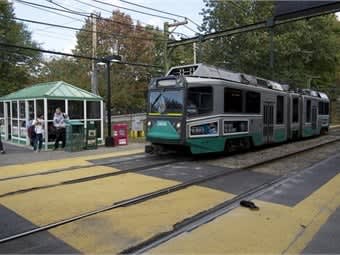
Under the new system, MBTA customers will be able to pay fares by tapping debit and
cards at fare gates and fare boxes.
MBTA
Taking a major step toward a new system that will simplify fare collection and improve the delivery of transit services, the MBTA's Fiscal and Management Control Board voted to award a multi-year contract to the consortium of Cubic-John Laing for the design, integration, and implementation of a new Automated Fare Collection (AFC) system.
Known as AFC 2.0, the new system has a total program value, for capital and operating costs, of approximately $723 million, which includes operating costs through 2031. MBTA customers will begin to experience the first elements of the new system late in 2019. Full implementation will occur by mid-2020 followed by a retirement of the existing system in 2021.
"As the first public-private partnership for the MBTA, this method will allow a major customer service improvement to advance in a cost-effective manner," said MassDOT Secretary and CEO Stephanie Pollack. "The contract structure for AFC 2.0 is a crucial component of this project because it serves as a method to deliver the project, to finance it, and to free up our own internal resources to focus on other critical MBTA efforts."
"This isn’t just the next generation of fare collection, but an entirely new way that our customers will interact with the MBTA," said MBTA GM Luis Manuel Ramírez. "The new system will be compatible with all modes, will provide more options for paying fares, and will have more fare media available for use. To be clear, we still have much work ahead of us to involve our customers, stakeholders, and members of the community to ensure we all realize the benefits of the new system. But today is a major step forward in our partnership with the Cubic-John Laing team to completely transform and modernize our system of fare collection."
AFC 2.0 is moving forward under a public-private partnership model with incentives for the contractor to ensure the infrastructure is operational, with risk-sharing agreements for the financing, and requires the contractor to perform system maintenance over the 10-year agreement.
Under the new system, MBTA customers will be able to pay fares by tapping debit and credit cards at fare gates and fare boxes. The new system will also allow for the use of mobile phones through which customers can use apps such as Apple Pay, Android Pay, and Samsung Pay. In addition, the system includes a contactless fare card, similar to the existing CharlieCard.
The new system will also allow all-door boarding on the Green Line and on buses. Additionally, accessible fare gates will be five inches wider than the current gates; standard fare gates will be seven inches wider.
Benefits of the new system include:
Faster buses and Green Line trains: With shorter lines and reduced boarding times, buses and Green Line trains will have reduced “dwell times.”
Tap everywhere: The ability to tap and board the same way on all buses, trains, commuter rail, and ferries.
Use of smartphone or contactless credit card: Travel without a fare card by tapping with contactless credit cards or smartphones. Even if customers tap with a smartphone, they will be able to reload using cash.
Pay before boarding more easily: Get a new fare card or reload at fare vending machines located in all subway stations and at some bus stops, as well as select retail locations.
Account management: Customers can check their balances, access travel history, reload or replace a lost card online, or by phone through the MBTA’s call center.
Accessibility improvements: The entire system will be designed for a broad range of accessibility needs, by user experience specialists. And the website and mobile app will be compliant with digital accessibility guidelines.
Of utmost importance to the MBTA is protecting each customer’s personally identifiable information (PII), and the necessary protections will be incorporated into the design of the new system. Mobility information will be separated from PII so an individual’s transit trip cannot be linked to that person unless the customer gives his/her permission. The privacy requirements embedded in the MBTA’s new fare collection system are above and beyond the industry standard.
More Technology

From Hardware to Digital Partner: Luminator Charts Its Next Chapter
CEO Magnus Friberg discusses Luminator’s shift toward becoming a digital partner, the growing importance of software and interoperability, and how AI can help agencies improve operations and passenger experience.
Read More →
Beyond the Checklist: A Structured Approach to Transit Maintenance
Reliability-Centered Maintenance helps transit agencies move beyond routine checklists to focus limited resources on the assets and failures that have the greatest impact on safety, reliability, and service.
Read More →
NJ TRANSIT Advances Bus Technology Upgrades Across Statewide Fleet
More than 1,500 buses now feature upgraded technology designed to improve arrival predictions and provide free Wi-Fi, with deployment expected to reach nearly 2,000 buses by the end of 2026.
Read More →

Building a Flexible Path to Transit Electrification
John Hroncich discusses BAE Systems’ modular and scalable approach, lessons learned from decades of real-world operations, and how agencies can identify electrification strategies that fit their fleets.
Read More →
Biz Briefs: Alstom Lands Canadian Contract, LYT to Supply California TSP, and More
In METRO's latest installment, we take a look at recent news from Complete Coach Works, Beep, FlixBus, and more partnerships making headlines across the transportation sector.
Read More →
From Legacy Silos to Conversational Intelligence
What if transit leaders could ask any operational question and get a trusted answer in seconds? Conversational AI is transforming how agencies use their data.
Read More →
USDOT Announces Rail Vehicle Replacement Grants, Chattanooga AV Shuttle Funding
More than $191 million in federal funding will help three transit agencies replace aging rail vehicles and support a new autonomous shuttle service in Chattanooga.
Read More →
Bus Tech Talk: Keeping Transit Technicians Ahead of the Technology Curve
LA Metro’s Obed Mejia discusses technician training, evolving maintenance technology, fleet replacement, and strategies for getting the most out of today’s transit fleets.
Read More →
Biz Briefs: RIPTA Unveils New Frontrunners, Clevland RTA Adds New Siemens, and More
In METRO's latest installment, we take a look at recent news from Siemens, Prevost, Dodge, and more partnerships making headlines across the transportation sector.
Read More →
Why Simulating Pedestrian Movement Has Become Essential for Modern Rail Stations
Pedestrian microsimulation is helping rail planners identify bottlenecks, test station designs, and prepare complex transit hubs for growing passenger volumes.
Read More →