



Metrolink awarded $91.2M in state funds for rail safety upgrades
Will be used for program to build infrastructure to boost regional passenger rail service frequency to at least 30 minutes systemwide.

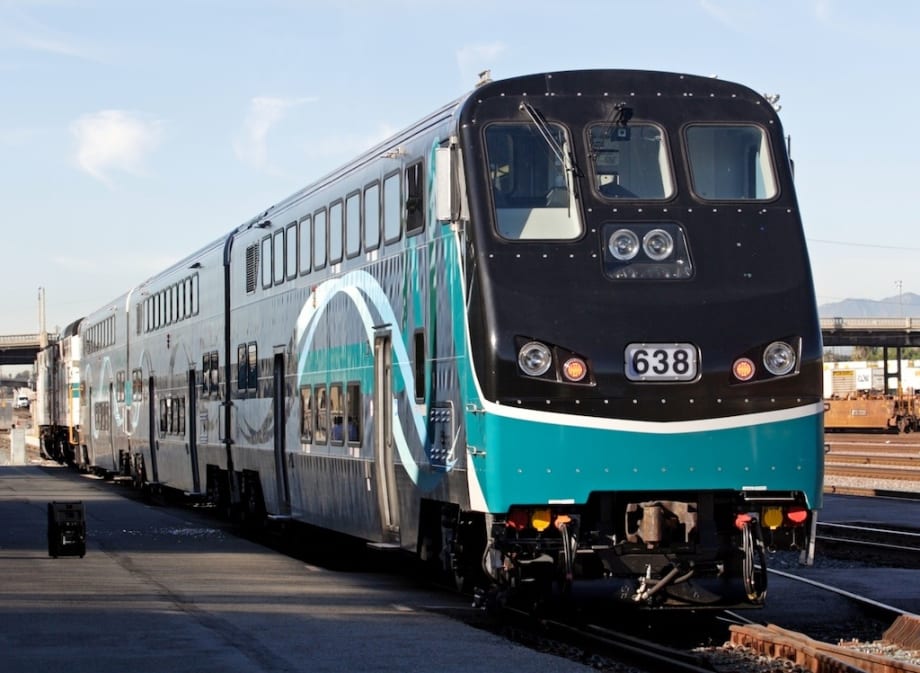
Metrolink currently provides 441 million passenger miles annually, while the average one-way Metrolink trip length is 35 miles.
Metrolink
Metrolink currently provides 441 million passenger miles annually, while the average one-way Metrolink trip length is 35 miles.
Metrolink
The California Transportation Commission (CTC) unanimously approved a $91.2 million allocation to Metrolink to advance design and work on the first projects in the Southern California Optimized Rail Expansion (SCORE) Program. SCORE will improve rail safety and service in time for the 2028 Los Angeles Olympic Games. In all, through a CTC approved multi-year grant agreement, Metrolink will receive a total of $875.7 million over six years.
The funds are provided by a Transit and Intercity Rail Capital Program (TIRCP) grant to kick start work on SCORE, which is a $10 billion plan to build infrastructure enabling regional passenger rail service frequency to at least 30 minutes systemwide. Other benefits of SCORE include better connections with other transit providers.
TIRCP grant funding comes from the Greenhouse Gas Reduction Fund and Senate Bill 1 to fund transformative capital improvements that will modernize the state’s transportation infrastructure.
Metrolink currently provides 441 million passenger miles annually, while the average one-way Metrolink trip length is 35 miles. With 82% of Metrolink riders having an automobile and choosing to take the train, Metrolink directly reduces freeway congestion. Ultimately, SCORE’s goals include the addition of 35.5 million net new riders after 2028, along with the elimination of on average 62.5 million vehicle miles traveled (VMT) from congested Southern California highways, annually, from 2028 and beyond.
SCORE funds more frequent, reliable and faster Metrolink and Amtrak service providing an alternative to crowded freeways and helps reduce air pollution. Included in SCORE are targeted investments for capacity improvements at Los Angeles Union Station and on tracks between Los Angeles and Fullerton, one of the busiest freight corridors in the region.
“As our state’s economy and population continue to grow, adding more capacity for passenger and freight rail is a critical component in preventing a future mobility crisis, and ensuring continued prosperity to our region,” said California Assemblywoman Sharon Quirk-Silva, who represents Fullerton. “California is a world leader in innovation and technology. As such, we should continue to invest in public modes of transportation like this, which is economically sound for our working families and students into the future.”
Other mobility benefits include safety, signal and track upgrades that enable more “Quiet Zones” where trains do not routinely sound their horns when approaching at-grade crossings.
In August, the CTC awarded an initial $6.5 million to begin design, rail operations modeling and environmental assessment on the first of the SCORE projects as part of the projected $875.7 million total.
More Rail

New York MTA Advances Final Contract for Second Avenue Subway Expansion
Contract Four is the largest in the Second Avenue Subway Phase 2 project and includes construction of station infrastructure, tracks, and signals for the subway expansion, MTA officials said. Work on Contract Four will begin in 2027.
Read More →
San Diego MTS Breaks Monthly Trolley Ridership Record
Agency officials said July’s ridership indicates MTS’s continued recovery from the pandemic.
Read More →
Report Examines NJ TRANSIT Reliability, Funding Challenges
The Garden State Initiative analysis examines the roles of Amtrak infrastructure, fleet management, and agency operations while recommending a more performance-based approach to improving reliability.
Read More →
Stadler, CapMetro Sign Long-Term Rail Fleet Support Agreement
Beginning in 2027, Stadler will provide on-site technical expertise, spare parts support, training, and obsolescence management to help extend the reliability and longevity of CapMetro’s GTW fleet.
Read More →
Biz Briefs: Alstom Lands Canadian Contract, LYT to Supply California TSP, and More
In METRO's latest installment, we take a look at recent news from Complete Coach Works, Beep, FlixBus, and more partnerships making headlines across the transportation sector.
Read More →
CATS Gold Line Marks 5 Years of Service, 2.8M Passenger Trips
With a six-mile expansion planned, the Charlotte streetcar is positioned to connect more neighborhoods and major transit hubs across the region.
Read More →
Why Simulating Pedestrian Movement Has Become Essential for Modern Rail Stations
Pedestrian microsimulation is helping rail planners identify bottlenecks, test station designs, and prepare complex transit hubs for growing passenger volumes.
Read More →
Amtrak Begins Major Construction at New York’s Sunnyside Yard
The new maintenance facility will support Amtrak’s Airo trainsets while improving maintenance efficiency and turnaround times in New York.
Read More →
Chicago Leaders Unveil Plans for O’Hare Airport Express Train
The privately developed project would offer a 15-minute trip between downtown and O’Hare’s Terminal 2, with trains operating every 15 minutes on a dedicated track. The service would use battery-electric trains and three existing freight rail rights-of-way.
Read More →
OCTA Maps Out 30-Year Strategy to Protect Coastal Rail Corridor
The draft feasibility report identifies strategies to protect the coastal rail line for decades as the agency continues near-term stabilization and sand placement efforts.
Read More →