




RELATED: MTA seeks shared-mobility to support late-shift program
MTA posts best January metrics for NYC Subway, LIRR, Metro-North
Gains come as agencies undertake historic capital renewal and expansion and report ridership gains.
February 19, 2020
Marc A. Hermann/MTA New York City Transit
3 min to read
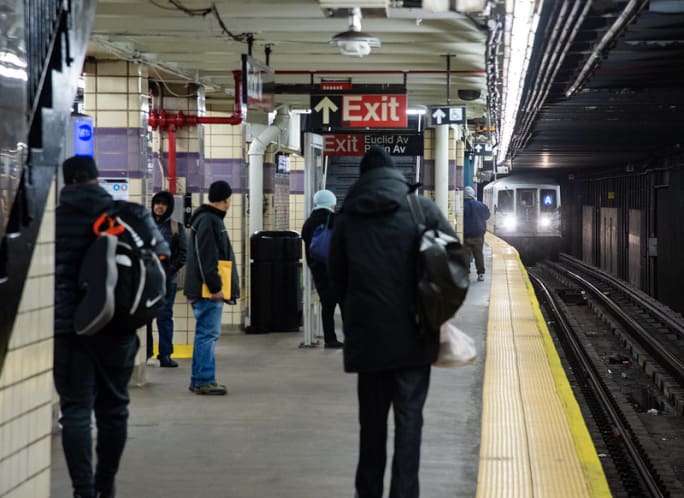
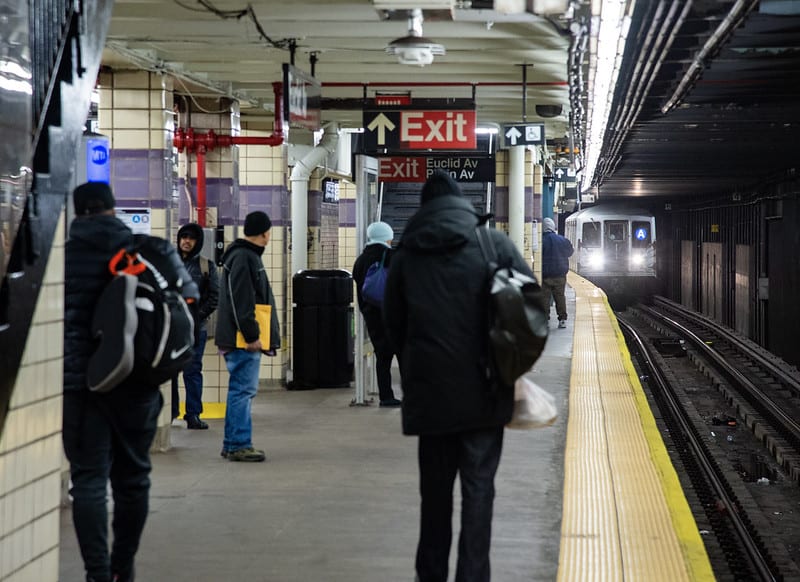
The final run of vintage-1969 R-42 subway equipment on the A terminates at Euclid Av on Wed., February 12, 2020. Marc A. Hermann / MTA New York City Transit
Metropolitan Transportation Authority (MTA) officials announced that on-time performance and other measures of service on the New York City Subway, Long Island Rail Road and Metro-North Railroad continued to improve markedly in the month of January, reaching historically high levels. In tandem with improving performance, subway and railroad ridership increased in 2019, reaching 1.7 billion trips on the subway, or 1.1% above last year, 91.1 million trips for 2019 on the LIRR, the highest since 1949, and 86.6 million on Metro-North, an all-time record.
New York City Transit
Weekday subway on-time performance was 83.3% in January – the highest of any January since 2013. Major incidents that cause disruptions are declining dramatically to the lowest monthly figure since record keeping began five years ago, and customer-based performance numbers are also pointing higher.
January data also shows a continued trend of faster trip times in the system. Rush hour train trips were faster this January than last on nearly every line in the system.
There were just 29 major weekday incidents causing delays in January, a 44% improvement from last year, and the fewest of any month since record keeping began in 2015. Weekday train delays in January were 30,318, a reduction of 28% from January 2019. January was the 17th consecutive month to meet the delay reduction target, which was increased to 34,000 per month as of January.
Train mechanical reliability also improved significantly. The average number of miles subway cars travel before experiencing a mechanical failure in January was 26.4% higher than a year ago, and was the highest of any January in five years. This continues a trend of improvements, with 12-month average mean distance between failures up nearly 8% from a year ago.
Metro-North Railroad
Metro-North’s on-time performance rose to 97.4% in January, 1.5 percentage points better than the prior year. The improvement marks the 14th consecutive month of improved on-time performance for Metro-North and the railroad’s best performance in 69 months, since April 2014.
Ridership on Metro-North’s trains and the connecting ferries and buses operated by the railroad was 6,957,330 in January, or 0.3% above last January. Last year Metro-North carried 86.6 million passengers, an increase of 100,000 over the prior year and the highest ridership on the railroad since it was founded in 1983. Every year for the past ten years, Metro-North has broken or essentially tied its all-time ridership records.
The percentage of peak-period trains operating at their full length in January increased 2.4 percentage points over the prior year, to 99.2%. Trains’ mechanical reliability exceeded its goal, with trains traveling 278,297 miles between experiencing a mechanical failure, meaning trains are traveling more than 39,000 more miles before experiencing a service issue, a 16.3% improvement from 239,188 miles between failures a year prior.
The improved performance measures follow tremendous progress under the Metro-North Way Ahead plan, a roadmap that details actions to enhance safety, service, infrastructure, communications, and transform customers’ day-to-day commuting experience.
Long Island Rail Road
LIRR’s on-time performance of 93.3% for the month of January is 0.6 percentage points higher than a year earlier, and the best record for any January since 2012. The improvements build on the trend of improvement set in 2019 when annual on-time performance rose by 2 percentage points to 92.4%, its best performance in three years.
LIRR ridership for January was 7,171,719, or 0.1% above last January. Last year the LIRR carried 91.1 million passengers, an increase of 1.45% from 2018’s total of 89.8 million riders and the highest ridership on the railroad since 1949.
The percentage of peak-period trains operating at their full length in January increased 2.1 percentage points over the prior year, to 99.1%.
Trains traveled 197,551 miles between experiencing a mechanical failure, exceeding its goal for 2019. The number of cancelled trains fell to 42, from 65 last January.
More Rail

New York MTA Advances Final Contract for Second Avenue Subway Expansion
Contract Four is the largest in the Second Avenue Subway Phase 2 project and includes construction of station infrastructure, tracks, and signals for the subway expansion, MTA officials said. Work on Contract Four will begin in 2027.
Read More →
San Diego MTS Breaks Monthly Trolley Ridership Record
Agency officials said July’s ridership indicates MTS’s continued recovery from the pandemic.
Read More →
Report Examines NJ TRANSIT Reliability, Funding Challenges
The Garden State Initiative analysis examines the roles of Amtrak infrastructure, fleet management, and agency operations while recommending a more performance-based approach to improving reliability.
Read More →
Stadler, CapMetro Sign Long-Term Rail Fleet Support Agreement
Beginning in 2027, Stadler will provide on-site technical expertise, spare parts support, training, and obsolescence management to help extend the reliability and longevity of CapMetro’s GTW fleet.
Read More →
Biz Briefs: Alstom Lands Canadian Contract, LYT to Supply California TSP, and More
In METRO's latest installment, we take a look at recent news from Complete Coach Works, Beep, FlixBus, and more partnerships making headlines across the transportation sector.
Read More →
CATS Gold Line Marks 5 Years of Service, 2.8M Passenger Trips
With a six-mile expansion planned, the Charlotte streetcar is positioned to connect more neighborhoods and major transit hubs across the region.
Read More →
Why Simulating Pedestrian Movement Has Become Essential for Modern Rail Stations
Pedestrian microsimulation is helping rail planners identify bottlenecks, test station designs, and prepare complex transit hubs for growing passenger volumes.
Read More →
Amtrak Begins Major Construction at New York’s Sunnyside Yard
The new maintenance facility will support Amtrak’s Airo trainsets while improving maintenance efficiency and turnaround times in New York.
Read More →
Chicago Leaders Unveil Plans for O’Hare Airport Express Train
The privately developed project would offer a 15-minute trip between downtown and O’Hare’s Terminal 2, with trains operating every 15 minutes on a dedicated track. The service would use battery-electric trains and three existing freight rail rights-of-way.
Read More →
OCTA Maps Out 30-Year Strategy to Protect Coastal Rail Corridor
The draft feasibility report identifies strategies to protect the coastal rail line for decades as the agency continues near-term stabilization and sand placement efforts.
Read More →