



MTA Unveils $1B Transit Modernization and Repair Plan for Maryland
The report identifies the resources needed to maintain a State of Good Repair (SGR) across bus, rail, and

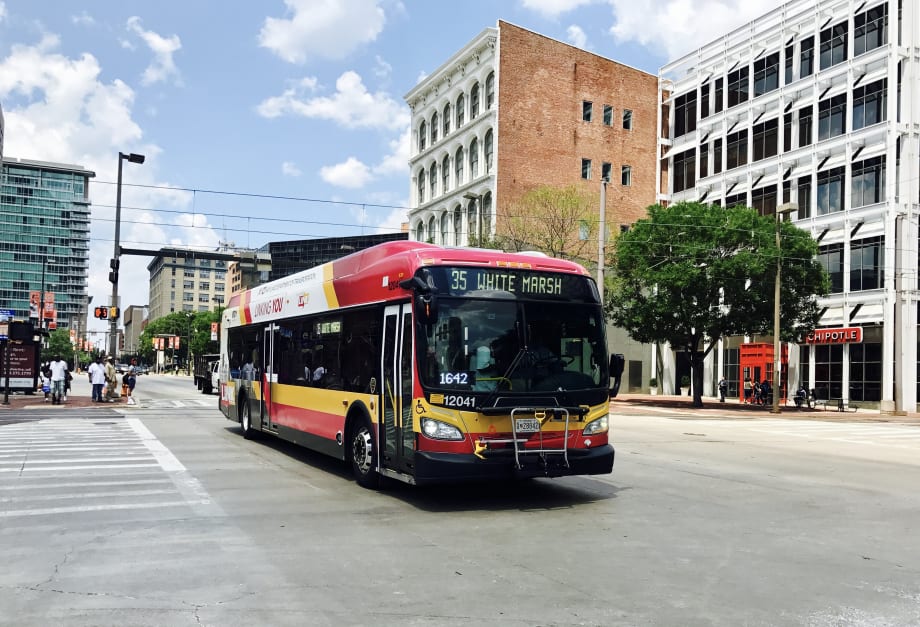
The MTA manages a $14 billion asset portfolio, spanning Local Bus, Commuter Bus, Light Rail, Metro Subway, MARC Train service, and paratransit
Photo: Maryland Department of Transportation Maryland Transit Administration
The Maryland Department of Transportation Maryland Transit Administration (MTA) released its updated Capital Needs Inventory (CNI) and Prioritization Report, outlining a strategic roadmap for investment in the agency’s multimodal transit infrastructure over the next decade.
The report identifies the resources needed to maintain a State of Good Repair (SGR) across bus, rail, and paratransit services while advancing key modernization and customer experience projects.
MTA’s CNI Report
The 10-year CNI includes funding projections for major initiatives such as the Frederick Douglass Tunnel, Purple Line, and several MARC Train improvements.
Central to the plan is the MTA’s continued focus on eliminating the agency’s backlog of deferred maintenance and preservation needs. According to the report, the number of MTA assets outside a State of Good Repair is projected to decline as soon as next year. If funding is sustained at recommended levels, that backlog could be nearly eliminated within a decade.
“These State of Good Repair investments are critical to preserving the core functions of the transit system and supporting its future growth,” said Maryland Transit Administrator Holly Arnold. “Thanks to additional funding in Governor Moore’s budget, MTA will continue to prioritize safety-critical investments that improve reliability for our riders.”
Robust Support in State Transportation Program
Under the Moore-Miller Administration, the state’s Fiscal Year 2025–2030 Consolidated Transportation Program (CTP) includes robust support for MTA, covering more than 90% of its identified SGR needs.
A marquee component of the CTP is a $1 billion investment in the Light Rail Modernization Program, which will replace Baltimore’s aging light rail vehicles with modern, low-floor trains and update stations, power systems, and maintenance facilities to accommodate the new fleet. Once completed, the program is expected to double the frequency of light rail service.
MTA manages a $14 billion asset portfolio, spanning Local Bus, Commuter Bus, Light Rail, Metro Subway, MARC Train service, and paratransit. Through its Transit Asset Management program, the agency employs lifecycle management strategies to assess and maintain the performance of its complex system, comprising vehicles, tracks, stations, and support infrastructure.
Number of Factors Increasing Total Cash Needed
While the agency has made significant progress, total needs have increased due to a combination of supply chain-driven inflation, the impending launch of the Purple Line, and growing commitments to joint projects with Amtrak along the Northeast Corridor. Additional cost drivers include the replacement of aging light rail vehicles and the modernization of legacy rail systems.
Like many U.S. transit agencies, MTA is contending with a national trend of aging infrastructure, inflationary pressures, and limited funding sources. The agency plans to aggressively pursue discretionary federal and state funding further to close funding gaps and support system enhancements and expansions.
Recent MTA projects have included the delivery of new Metro Subway railcars and train control systems, as well as rehabilitation of Light Rail tracks and interlockings, bus fleet replacements, and the completion of a heavy maintenance facility for MARC locomotives at the Riverside Yard.
Additional projects identified for funding in the FY25–FY30 CTP include:
Light Rail traction power substations and track maintenance.
Metro elevator and escalator rehabilitation.
Metro interlocking and facility power upgrades.
MARC safety control systems and vehicle overhauls.
Bus and Mobility vehicle replacements.
The CNI Report is available here.
More Management

METRO Opens Submissions for 2026 Motorcoach Awards
Nominations are now being accepted for METRO Magazine’s Operator of the Year and Innovative Operator of the Year awards.
Read More →
New York MTA Advances Final Contract for Second Avenue Subway Expansion
Contract Four is the largest in the Second Avenue Subway Phase 2 project and includes construction of station infrastructure, tracks, and signals for the subway expansion, MTA officials said. Work on Contract Four will begin in 2027.
Read More →
Transit Agencies Highlight Safety Gains at National Summit
Leaders from 15 major transit systems shared crime-reduction results and safety initiatives while discussing the role of continued federal support.
Read More →

NITA Names New Leadership, Expands Reduced-Fare Program at First Board Meeting
The new regional transit authority appointed its first board chair and interim executive director while extending reduced fares across CTA, Metra, and Pace for eligible riders.
Read More →
Beyond the Checklist: A Structured Approach to Transit Maintenance
Reliability-Centered Maintenance helps transit agencies move beyond routine checklists to focus limited resources on the assets and failures that have the greatest impact on safety, reliability, and service.
Read More →
APTA 2026 Nominating Committee Selects Leadership Slate, Names Chair and Vice Chair Nominees
Leadership changes will help shape the association’s priorities and its representation of the transportation industry during the 2026–2027 term.
Read More →
DART Launches Major Security, Fare Enforcement Initiative
The 90-day demonstration will deploy coordinated security teams at five light rail stations while testing controlled access and gathering data to guide future investments.
Read More →
Advancing Fare Collection Through Technology and Innovation
Learn about delivering 1300 gates at 91 stations while managing fare evasion. Explore the large scale deployment, solution customization and real-world results that affect the region. Prepare for deployment in your region now.
Read More →
Game Day in Motion: Moving Millions During the 2026 World Cup
Between packed transit stations and team motorcoaches, see how agencies and operators across North America tackled the transportation demands of the 2026 FIFA World Cup.
Read More →
Surface Transportation Extension Averts Shutdown, Leaves Transit Funding Gap
The stopgap keeps federal transportation programs moving, but missing advance funding could complicate the transit and rail projects agencies are planning next.
Read More →